
The NASA-ISRO NISAR satellite has provided crucial data revealing the extent of ground displacement caused by recent twin earthquakes in Venezuela. Researchers used the satellite's InSAR technique to map surface changes, showing a significant 60-centimetre shift in areas like Caracas and La Guaira, explaining the severe damage. This marks the first use of NISAR's urgent response system for earthquake surface displacement mapping.
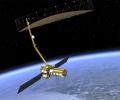
NISAR will not be used for surveillance and will be used to observe the earth.

India and the US on Wednesday marked their maiden space collaboration with the successful flight of a GSLV rocket that placed an earth observation satellite, jointly developed by the two space agencies, in a precise orbit.

It is about proving that the agency can still deliver when the stakes are high.

The US Air Force on Wednesday handed over NISAR, an earth observation satellite jointly developed by NASA and ISRO, to the Indian space agency.
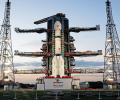
The imaging technology in Nisar can provide very high-resolution data on changes as small as one centimetre in size on the earth's surface.

Twice every 12 days, the NISAR satellite will scan nearly all of earth's land and ice surfaces to measure changes in the planet's ecosystems, growth and retreat of its land and sea ice, and deformation of its crust.

ISRO to launch a 6,500 kg communication satellite built by the US, marking a significant milestone in the Indian space program after the successful launch of the NASA-ISRO NISAR mission.

US Ambassador to India, Sergio Gor, highlighted the evolving US-India space partnership, moving from cooperation to "co-creation" at the Bengaluru Space Expo. He emphasised joint design, funding, and co-authoring the future of human discovery, citing the NISAR satellite and India's participation in the Artemis Accords as key examples of this growing synergy.

'It is not economical to operate GSLV-Mk II due to its cost and complexity. Future launches to be managed with LVM3.'

The NASA-ISRO NISAR mission has entered its 90-day commissioning phase, involving rigorous checks and calibrations to prepare the satellite for Earth observation. Scientists highlight the collaborative benefits and technological advancements of the mission.
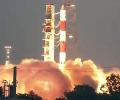
ISRO chairman announces plans for nine major launches by the end of the fiscal year, including the Blue Bird Block2 communication satellite for the US in collaboration with NASA.
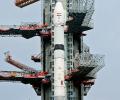
The main focus of the all weather RISAT-1B satellite will be to observe the Indian land with its C-band synthetic aperture radar.
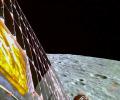
NASA has invited ISRO to join its ambitious Moon Base mission to establish a permanent lunar outpost near the Moon's South Pole, aiming for scientific discoveries and future deep space exploration. This invitation follows discussions at the Civil Space Joint Working Group meeting in Bengaluru, where both nations also advanced cooperation under the Artemis Accords and the TRUST initiative.

BIT Mesra has launched 'HimClimX', an AI-powered platform designed for Himalayan climate intelligence and visualisation. It integrates over a century of climate data to offer trend analysis, anomaly detection, spatial visualisation, impact assessment, and AI-driven forecasting for the Himalayan region.

Weighing 6,100 kg, the communication satellite would be the heaviest payload to be placed into the Low Earth Orbit (LEO) in LVM3 launch history from Indian soil.

Researchers at IIT Mandi have developed a real-time landslide monitoring and early warning system that has been deployed in landslide-prone areas of Mandi district, Himachal Pradesh. The system uses machine learning and sensors to detect ground movements and provide early warnings to authorities and the public.

Kwatra termed India's successful launch of an American communication satellite on Wednesday as a 'very important and big day' for partnership between Washington and New Delhi, saying it caps a series of achievements in 2025 in bilateral space cooperation between the countries.

If all goes on well, the NISAR satellite will be launched in 2021 from India using the Geo-synchronous Satellite Launch Vehicle (GSLV).

ISRO chairman S Somanath said the success gave the space agency "greater confidence," as the GSLV will be next deployed in the NISAR mission, a collaborative effort with the US' NASA.
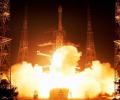
ISRO is part of an exclusive league which has forayed into the Moon and Sun.

'With India's growing capabilities in the space sector, this creates promising opportunities for enhanced collaboration and market access.'

Ahead of Prime Minister Narendra D Modi's meeting United States President Donald J Trump, Russia's ambassador to India and the US charge d'affaires met Indian Space Research Organisation Chairman Dr V Narayanan.

Glimpses from India and around the world that will make you smile and cry.

National Aeronautics and Space Administration will soon provide advanced training to Indian astronauts, with the goal of mounting a joint effort to the International Space Station, a top American diplomat said Friday.

The new year will witness two unmanned missions under the "Gaganyaan" project, deep ocean exploration project, "Samudrayaan" and many more.
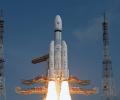
A mission to study the Sun, and launching a climate observation satellite, a test vehicle as part of Gaganyaan human space flight programme and an Indo-US synthetic aperture radar.

Artificial Intelligence, innovation and next-generation technologies figured prominently during the high-stakes discussion between Prime Minister Narendra Modi and US President Donald Trump at the White House, as the two sides announced transformative measures, including the US-India TRUST initiative, roadmap on accelerating AI infrastructure and INDUS Innovation, to boost tech ties.

Scientists are working on conducting various tests for the ambitious Gaganyaan mission and the agency is coordinating with the Navy and others in this connection, he said.

Former National Aeronautics and Space Administration (NASA) Official Mike Gold has said Chandrayaan-3's success is a triumph of Indian innovation, human capital and the capabilities that will take India even further.

ISRO chairman A S Kiran Kumar talks of what's on and what lies ahead for the Indian space agency.
