
The CCS approved the proposal to buy 156 LCH 'Prachand' worth over Rs 62,500 crore from HAL, Defence Minister Rajnath Singh said.

With the Covid-19 pandemic showing signs of ebbing and economic activity picking up, factory owners in Jalandhar had hoped that the worst was over. However, the heat wave in April and extensive power cuts that came with it, have crushed their hopes. The city's large number of micro, medium and small enterprises (MSMEs) are now gearing up for yet another struggle, this time to survive with the shortage of power that is severely impacting their operations.

The government will come out with a credit guarantee scheme for MSMEs to facilitate term loans without collateral or third party guarantee, Finance Minister Nirmala Sitharaman said on Tuesday. Presenting her seventh straight Union Budget, she also said that public sector banks to build in-house capability for credit assessment of MSMEs.
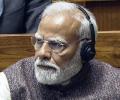
Prime Minister Narendra Modi has lauded the Union Budget as a "people's budget" that fulfills the dreams of every Indian and said that it is a "force-multiplier" that will boost consumption, investment and growth. He highlighted a host of measures for different sectors, including welfare initiatives for gig workers, tax relief for the middle class, and support for the manufacturing sector.
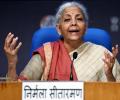
Finance Minister (FM) Nirmala Sitharaman has presented a forward-looking Budget, reinforcing the government's commitment to 'Reform, Perform, and Transform'.
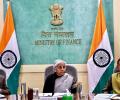
The Budget assumes significance as it comes on the back of lower-than-expected growth numbers during the second quarter and geopolitical uncertainty.

Budget 2025-26 delivers a carefully calibrated strategy-stimulating demand and investment while keeping fiscal discipline intact. In an environment marked by global trade disruptions, and a softening in urban consumption, Finance Minister Nirmala Sitharaman has taken a measured approach.

Reserve Bank on Wednesday announced a slew of measures including loan restructuring for individual and small businesses hit hard by fresh COVID-19 wave. To augment supply of goods for COVID care, the central bank opened Rs 50,000 crore on-tap window to ease access to emergency health services to boost provision of immediate liquidity for ramping up COVID-19 related healthcare infrastructure and services in the country. This liquidity window is being opened till March 31, 2022, he said, adding that under the scheme, banks can provide fresh lending support to a wide ranging of entities including vaccine manufacturers, importers and suppliers of vaccine and medical devices, hospitals and dispensaries and suppliers of oxygen and ventilators importers and also patients for treatment.

India witnessed a record-breaking surge in deal activity in February, with 226 M&A and private equity deals totaling $7.2 billion -- the highest monthly deal volume in the last three years, according to the Dealtracker report of Grant Thornton Bharat. "This represents a 67 per cent increase in volumes and a 5.4-fold increase in values compared to February 2024, while a 14 per cent increase over the previous month," it said.
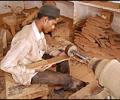
Also seek 5-year tax holiday for SSIs, simplified procedures for SMEs, technology upgrade.

Announcing a slew of measures for the sector, he said GST-registered micro, small and medium enterprises will be sanctioned a loan of Rs 1 crore in just 59 minutes through a new portal.

Reacting to the announcement, MSME Minister Nitin Gadkari said clearing GST dues within 30 days will be highly beneficial for the MSME sector and will also be instrumental in increasing job opportunities.

India's economy is projected to grow between 6.3 per cent and 6.8 per cent in FY26, according to the Economic Survey 2024-25, tabled in Parliament on Friday. The survey highlights that the country's economic fundamentals remain strong, supported by a stable external account, fiscal consolidation, and private consumption. It noted that the government plans to strengthen long-term industrial growth by focusing on research and development (R&D), micro, small, and medium enterprises (MSMEs), and capital goods.

'The dakiyas will be our partners, receiving credit proposals from micro-enterprises at the grassroots level.'

High frequency indicators, like vehicles sales, air traffic, steel consumption and GST E-way bills, point towards a sequential pickup in momentum of economic activity during the second half of the fiscal 2024-25 and sustain moving forward, RBI Bulletin said on Wednesday. However, a strong dollar, driven by US economic resilience and trade policy pivots, could exacerbate capital outflows from emerging economies, push risk premiums higher, and intensify external vulnerabilities, said an article on 'State of the Economy' published in RBI's February bulletin.

The additional amount will be exclusively earmarked for the hospitality and related segments to help them recover to pre-pandemic levels. Presenting the Budget 2022-23 in Parliament, the finance minister said the Credit Guarantee Trust for Micro and Small Enterprises (CGTMSE) scheme will be revamped with required infusion of funds.

Finance Minister Nirmala Sitharaman on Saturday said she is likely to introduce the new income tax bill, which will replace the six-decade-old I-T Act, in the Lok Sabha in the coming week.

The finance minister chaired a meeting through video conference with major private banks and NBFCs to ensure effective rollout of ECLGS and uninterrupted liquidity to Indian MSMEs in this difficult time.
While players in the financial ecosystem are opening up to the idea of receivables funding for the sector, this market needs a regulator, which a Parliament panel feels only RBI can provide.
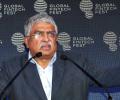
'Binary fission will happen -- startups will lead to more startups.'
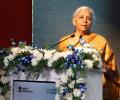
Replying to a question about women empowerment, Sitharaman insisted that patriarchy is a concept invented by the Left.

Demonetisation and GST are the main reasons for the job losses.
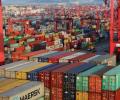
Exporters on Thursday sought a fund of Rs 750 crore for three years to tap USD 25 billion export potential in the US, aiming to seize potential opportunities that may arise as the US President-elect, Donald Trump, has threatened to impose high tariffs on Chinese goods. In its pre-Budget meeting with the finance ministry, Federation of Indian Export Organisations (FIEO) President Ashwani Kumar has also demanded extension of the five per cent Interest Equalisation Scheme (IES).

The Ministry of Micro, Small and Medium Enterprises (MSME) has received "positive" feedback from industry regarding the 45-day payments cycle for MSMEs, according to a senior official familiar with the matter. The comment assumes significance amid concerns raised by some MSMEs that big companies may stop buying from small and medium suppliers and instead choose to make purchases from unregistered enterprises.

The most striking features of this Budget was its focus on simplification and improving the ease of doing business in India, asserts Kaku Nakhate.

'The scrapping of import duty would help Indian companies compete in international markets, thus paving the way for India becoming a space manufacturing hub for the world.'

From the 30-share blue-chip pack, Zomato surged over 7 per cent. Maruti, ITC Hotels, ITC, Mahindra & Mahindra, Asian Paints, Titan and IndusInd Bank were among the biggest gainers. Power Grid, Larsen & Toubro, NTPC, UltraTech Cement, HCL Tech, Tech Mahindra, Infosys and Adani Ports were among the laggards.

These are the highlights of the Union Budget 2025-26 presented by Finance Minister Nirmala Sitharaman in Parliament on Saturday.

The RBI panel has also recommended a government-sponsored 'fund of funds' of Rs 10,000 crore to support the venture capital and private equity firms investing in the MSME sector.

Nibe Space (NSPL), a subsidiary of Nibe, announced its vision to establish India's first multi-sensor, all-weather, high-revisit Earth observation satellite constellation. Aiming to strengthen India's self-reliance in the strategically crucial defence-space sector, NSPL signed memoranda of agreement with Indian and global partners, including Larsen & Toubro, Centum, AgniKul, Skyroot Aerospace, SpaceFields, SISIR Radar, CYRAN AI Solutions, and Thales Alenia Space as a technology partner.

Given the high priority accorded to the manufacturing sector, several policy initiatives around the theme of Atmanirbhar Bharat have been set in motion to address its competitiveness and growth. Some notable examples include the PLI scheme and the employment-linked incentive scheme announced in the recent Union Budget. The Budget also announced the setting up of 12 industrial parks under the National Industrial Corridor Development Programme (NICDP).

'2025 is the year to build a portfolio for the future. Focus this year should be on valuations and visible growth.'

The eight-member committee under Sinha will also examine the factors affecting the timely and adequate availability of finance to the sector.

The Union Cabinet on Wednesday approved additional funding of up to Rs 3 lakh crore at a concessional rate of 9.25 per cent through the Emergency Credit Line Guarantee Scheme (ECLGS) for the MSME sector hit hard by the coronavirus crisis. The ECLGS was the second-biggest component of Rs 21 lakh crore comprehensive package announced by Finance Minister Nirmala Sitharaman last week.

The Industries Association of Uttarakhand, an organisation of MSMEs, has prepared an agenda for the Budget.

She added that the government has extended the PM Garib Kalyan Anna Yojana for five years which is benefiting 80 crore people of the country.
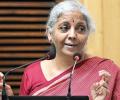
'The finance minister has done as much as she can when you look into the fiscal constraints she had.'

As the Union Budget 2025-2026 (FY26) inches closer, the Indian real estate industry is seeking stamp duty cuts, revised home loan limits and updated affordable housing norms through Pradhan Mantri Awas Yojna (PMAY), single-window clearance and eco-friendly policies, among others. Industry leaders and consultancy firms, including Anarock, Raheja, Gaurs, Kanodia Group, Reach, Urban Space, Justo and Eros Group, have shared their expectations.

The finance minister, in her Budget speech, should focus more on what she is directly responsible for, rather than on programmes where her role is largely supportive, notes Nitin Desai.
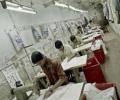
The MSME sector, which is employment-intensive, accounts for 45 per cent of the country's manufacturing, 40 per cent of exports and nearly 8 per cent of gross domestic product.
