
Hyundai Motor India Ltd (HMIL) is set to launch a localised mass-market SUV built on a dedicated EV platform, expanding its EV portfolio beyond the IONIQ 5 and CRETA Electric, while also significantly boosting its charging infrastructure and training its workforce.

The 2026 Tata Tiago EV has faster charging, is more spacious, has more features and a lifetime battery warranty. So how is st still so affordable, wonders Rajesh Alva.

With the 40kWh battery and 65kW faster charging, it is now a legitimate primary car for a small family that can handle weekend trips easily, says Rajesh Karkera.
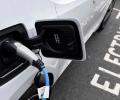
'The testing and certification have been completed, and implementation could occur within a year, depending on the number of vehicles.'

Customers who have already booked earlier variants will also have the option to upgrade to the 79 kWh battery version.

BYD's new charging system is capable of up to 1000kW charging speeds which may be achievable in China, the carmaker's home market, but such high charging speed is not available in India.

VinFast's VF6 storms into India as the most affordable electric SUV above 4 metres, packing premium features, 468km range, and free charging till 2028 to disrupt the EV market, observes Somnath Chatterjee.

The charging infrastructure expansion includes the setup of over 600 DC charging stations by 2030 (including company-owned and company-operated ones) in addition to partnerships with over 10,200 charging points, collaborating with operators like Shell, Charge Zone, and Statiq.

Tata Harrier.ev versus Mahindra BE.06 versus Mahindra XEV.9E -- which one should you buy? Rajesh Karkera offers a checklist of features to influence your decision.
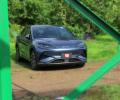
The BYD Sealion 7 offers instant, exhilarating power, effortlessly pinning you to your seat with a 0-100 km/h sprint in just 4.5 seconds -- a performance proudly showcased on its rear badging.

Mahindra Electric's latest offering, the BE 6e, is not just an electric vehicle, it's a revolution, asserts Rajesh Karkera.

German luxury car maker Audi on Thursday launched three all-electric SUVs under its e-tron range with prices starting from Rs 99.99 lakh kicking off its electrification journey in the country. The three all-electric SUVs -- e-tron 50, e-tron 55 and e-tron Sportback 55 -- are priced at Rs 99.99 lakh, Rs 1.16 crore and Rs 1.18 crore respectively (all prices ex-showroom), Audi India said in a statement. Commenting on the launch of the e-tron brand in India, Audi India Head Balbir Singh Dhillon said, "we are launching not one, but three electric SUVs that begin our electrification journey." The three electric SUVs are "the perfect confluence of luxury, zero emissions, performance and everyday usability", he added.

The push given to rooftop solar installation in the Interim Budget ties in with its high rate of adoption in Tier-II and -III cities of India. If original equipment manufacturers (OEMs) in the automobile industry, government, and the solar sector are to be believed, in cities of Rajasthan, Gujarat, and Kerala, 45-50 per cent of electric-vehicle (EV) users are employing rooftop power to charge their vehicles. This is compared to the national average of 25 per cent, say industry sources.

If you are planning to buy an electric car in the near future, it would be highly advisable to wait for these upcoming electric SUVs.

Tata Motors on Wednesday expanded its electric vehicle range in the country with the launch of Nexon EV MAX, priced between Rs 17.74-19.24 lakh (ex-showroom). Equipped with a 40.5 kWh lithium-ion battery pack, the Nexon EV Max offers 33 per cent higher battery capacity than the Nexon EV, delivering ARAI certified range of 437 km (under standard testing conditions), ensuring uninterrupted inter-city travel. ARAI refers to Automotive Research Association of India. The model produces 105 kW (143 PS) of power and delivers a torque of 250 Nm, resulting in 0 to 100 sprint times in under 9 seconds.

The first all electric Mercedes AMG launched in India

At a time when fuel prices across the country are going through the roof with no sign of it moderating, electric vehicles seem the likely choice for car buyers who are looking at saving fuel costs. And add to it the negligible maintenance of electric vehicles. Continuing with this revolution with their 2nd offering in the EV segment, Tata Motors now offers the 2021 Tigor EV to its customers. Tigor petrol with its style-back design has always been a stunner since its launch and it still is.

At Rs 1.24 lakh, it's the most expensive scooter manufactured in the country but the 450 deserves every penny.
