
The Reserve Bank of India has marginally increased its GDP forecast for the current fiscal to 6.7 per cent while slightly lowering the inflation projection to 5 per cent. The central bank noted that while domestic economic activity shows resilience, global turbulence, particularly re-escalating conflicts and volatile oil prices, continues to pose risks to the inflation outlook.

The Reserve Bank of India's Monetary Policy Committee (MPC) has indicated that rate cuts are improbable in the near term, with headline inflation projected to reach 6 per cent in the third quarter. Minutes from the October meeting reveal growing concerns among members about inflation spreading beyond food and fuel, leading to a shift in policy stance towards calibrated tightening.
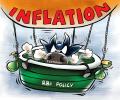
The Reserve Bank of India (RBI) has marginally raised its retail inflation forecast for the current fiscal year (FY27) to 5.2 per cent from 5 per cent, citing increasing price pressures across various commodities. Concurrently, the Monetary Policy Committee (MPC) unanimously decided to hike the key interest rate (repo) by 25 basis points to 5.5 per cent, shifting its stance to 'calibrated tightening'.

India's retail inflation surged to 5.54 per cent in September, primarily due to a significant increase in onion and other food prices, remaining just within the Reserve Bank of India's tolerance band. This marks the highest inflation since the new series with base year 2024 took effect in January.
The Reserve Bank on Wednesday lowered the inflation projection for the current fiscal to 4 per cent from 4.2 per cent earlier, taking into account good agricultural output and falling crude prices.

Members of the Reserve Bank of India's (RBI) Monetary Policy Committee (MPC) have indicated that interest rate hikes may be necessary sooner rather than later, as headline inflation is projected to rise from its current benign levels in the coming months, according to the minutes of the August review.

India's wholesale price-based inflation (WPI) increased to 9.92 per cent in August, up from 9.78 per cent in July, primarily due to rising prices across food, manufactured items, and fuel and power sectors.

A clerk at a private construction firm in Jharkhand's Giridih district was allegedly abducted and murdered after he refused to prepare inflated fuel bills, leading to the arrest of four individuals, including two company employees.
Economists widely anticipate the Reserve Bank of India's Monetary Policy Committee will increase the repo rate by 50 basis points, likely split between the October and December meetings, as retail inflation is projected to peak at 6.1 per cent in the third quarter, exceeding the RBI's tolerance limit.

India's economy is projected to lose momentum in the second half of fiscal 2026-27, with tighter financial conditions, elevated energy prices, and broadening inflation pressures posing significant risks, according to DBS Bank economist Radhika Rao.

Moody's Ratings has sharply increased India's GDP growth forecast for fiscal 2026-27 to 7 per cent, making it the fastest among G20 economies, driven by economic resilience despite the Middle East conflict. However, the agency flagged significant inflation risks stemming from elevated oil prices and potential El Nino disruptions.
'A balance had to be struck between the economic cost of taking action at this point against the need not to fall behind the curve in controlling inflation and anchoring inflation expectations.'

The Asian Development Bank (ADB) has revised down India's GDP growth forecast for fiscal year 2026-27 (FY27) to 6.6 per cent from an earlier 6.9 per cent, primarily attributing the change to elevated energy prices stemming from the Middle East conflict. Despite this moderation, India is still expected to remain the world's fastest-growing major economy.
The Reserve Bank of India (RBI) is widely expected to keep its benchmark repo rate unchanged in the August monetary policy review, with economists citing elevated inflation risks and the pending closure of the FCNR(B) deposit scheme as key factors. Most anticipate a 'Neutral' policy stance but with a hawkish tone due to geopolitical tensions, high crude oil prices, and an uneven monsoon.

India's wholesale price index (WPI) inflation surged to 9.68 per cent in May, up from 8.26 per cent in April, primarily due to significant increases in the prices of fuel and power, manufactured goods, and food items.

Most members of the Reserve Bank of India's Monetary Policy Committee (MPC) expressed concerns about inflation becoming generalised and highlighted uncertainties surrounding both inflation and growth prospects due to the West Asia conflict, according to the recently released minutes.

India's retail inflation, measured by the Consumer Price Index (CPI), rose to 4.45 per cent in July, up from 4.38 per cent in June, primarily due to higher food prices, particularly onions and ginger. This marks the second consecutive month the inflation rate has remained above the Reserve Bank's median target.

The Reserve Bank of India (RBI) has maintained its benchmark policy rate at 5.25 per cent for the fourth consecutive meeting, prioritising clarity on inflation trends, particularly concerning energy costs and geopolitical developments.

India's wholesale price index (WPI) inflation marginally eased to 9.78 per cent in July 2026, down from 9.87 per cent in June, primarily due to a cooling in the prices of fuel, power, and food items, marking the first month-on-month drop under the new 2022-23 base year.
India's wholesale price inflation (WPI) increased to 9.87 per cent in June, up from 9.68 per cent in May, primarily due to significant price increases in non-food and food products, with food inflation alone rising to 5.49 per cent.
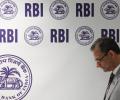
The Reserve Bank of India on Wednesday raised its policy repo rate by 25 basis points to 5.50 per cent, beginning a rate-hike cycle as rising inflation risks, elevated global yields and resilient domestic growth strengthened the case for tighter monetary policy. The decision by the Monetary Policy Committee marks a shift from its August policy, when it kept the repo rate unchanged at 5.25 per cent and retained a neutral stance while seeking greater clarity on the inflation outlook and growth-inflation balance.

A 25-basis-point increase would restore some real monetary restraint when expected inflation has risen, liquidity remains easy and growth is strong, points out Amarendu Nandy.

Gold and silver prices are expected to continue their upward trend next week, driven by anticipation of key US inflation data and Federal Reserve signals, though profit-booking may occur at higher levels.

Analysts predict that the Reserve Bank of India's interest rate decision, crude oil prices, and global bond yields will be the primary factors influencing the Indian stock market this week, alongside macroeconomic data and foreign investor activity.
The Reserve Bank of India has increased its retail inflation projection for 2026-27 to 5.1 per cent, up from an earlier estimate of 4.6 per cent. This revision is primarily attributed to mounting input costs, driven by the pass-through of higher global energy prices to domestic petrol and diesel rates, which have seen significant increases since May.
Fitch Ratings has increased India's GDP growth forecast for the current fiscal year (FY'27) to 6.9 per cent, up from 6.4 per cent, attributing the revision to robust economic growth in the June quarter and overall economic resilience. The agency also anticipates the Reserve Bank of India (RBI) will raise interest rates by 0.25 per cent in October.

Bollywood actor Dino Morea was questioned by Mumbai police's Economic Offences Wing (EOW) for six hours regarding the alleged Rs 65 crore Mithi river desilting scam. The investigation focuses on financial irregularities in a Brihanmumbai Municipal Corporation (BMC) sanitation contract, where key accused allegedly siphoned off funds. Morea's name emerged due to communications and suspected financial transactions with one of the accused. Federal agencies, including the ED, are also probing the case for money laundering.

"Pressure on the current account is a temporary problem. Sooner rather than later, our external sector will improve," said RBI Governor Sanjay Malhotra.

"Our endeavour is to bring headline inflation in line with the target over the medium term," said RBI Governor Sanjay Malhotra, addressing concerns about the central bank's policy stance and economic outlook.

The ongoing US conflict with Iran has cost the Trump administration an estimated $45.1 billion, according to a Pentagon estimate provided to the US Congress on Friday, CNN reported, citing two sources familiar with the matter.

Indian stock markets closed lower, with the Sensex falling 429 points, after the Reserve Bank of India raised its benchmark interest rate for the first time in nearly four years, coupled with rising crude oil prices and persistent foreign fund outflows.

Indian IT stocks have experienced their most significant weekly surge in 18 years, with the Nifty IT index climbing 11.72 per cent, as a global sell-off in AI-linked equities redirected investor attention towards India's IT services sector. This shift aligns with a JP Morgan report identifying India as a 'natural AI hedge' due to its large, liquid market and strong domestic institutional investor base.

Indian benchmark indices, Sensex and Nifty, saw early gains driven by lower crude oil prices and buying in Reliance Industries, even as the Reserve Bank of India maintained its benchmark policy rate for the fourth consecutive meeting, reinforcing confidence in the domestic economy.

'Your retirement corpus isn't just a big pile of cash for 'one day' -- it is the salary you pay yourself when you no longer want to go to work.'

Chief Economic Advisor V Anantha Nageswaran stated that the second half of the current fiscal year (FY27) is expected to be challenging due to increased downside risks to global growth and rising interest rates worldwide.

Reserve Bank of India (RBI) on Wednesday upped inflation projection for the current fiscal to 6.7 per cent from 5.7 per cent forecast in April. RBI Governor Shaktikanta Das said the upside risk to inflation persists and the recent spike in tomato prices would fuel food inflation. Also, high global crude oil prices would add to the upside pressure on inflation. The upward revision in inflation projection comes as domestic retail inflation has remained above RBI's comfort level of 6 per cent for four months in a row, mainly due to the Russia-Ukraine war which has impacted the prices of commodities across the globe.

Fitch Ratings forecasts a 9 per cent aggregate revenue increase for rated Indian corporates in the current fiscal year (FY27), a stronger outlook compared to the 5 per cent estimated for FY26, which is expected to keep credit metrics stable despite potential global and domestic challenges.
India's retail inflation rose to 4.38 per cent in June, driven primarily by costlier food items, pushing it above the Reserve Bank of India's median target of 4 per cent for the first time under the new series.

India's services sector experienced its strongest growth in three months in September, with the HSBC India Services PMI Business Activity Index rising to 55.2, driven by a sharp increase in new orders and strengthening domestic demand.

The Reserve Bank of India's 25-basis point increase in the repo rate to 5.5 per cent is expected to exert pressure on housing affordability and buyer sentiment, particularly affecting interest rate-sensitive segments and potentially moderating sales during the crucial festival season.
