
Experts from the International Centre for Integrated Mountain Development (ICIMOD) suggest that an ice-rock avalanche originating in a high-altitude area likely triggered the devastating flash floods that swept across central Nepal districts, killing at least 95 people and leaving nearly 500 missing.

'There needs to be a monitoring of glaciers in high altitude areas and one needs to check regularly how geological changes are taking place.' 'We can mitigate that by regular monitoring but unfortunately, hardly any monitoring is happening.' 'And without monitoring those higher altitudes of Himalayas, people are suffering.'

Scientists are examining how a possible glacial collapse and ice-rock avalanche may have triggered the devastating flash floods along Nepal's Bhote Koshi River, with preliminary assessments indicating that debris may have temporarily blocked the Lhende River and created a landslide dam that subsequently gave way.

Following devastating flash floods in Nepal, experts are calling for systematic scientific assessments of glaciers to understand and mitigate hazards, alongside the development of a robust land use policy for the Himalayan region. The floods, which killed over 460 people and left thousands missing, are believed to be linked to climate change impacts on glaciers and permafrost.

'The valley is around 16 km from the Nepal border, and it took just 8-10 minutes for the ice and rocks to reach the Nepal border. You can imagine how fast it must have travelled!'

'The trigger for the flood was definitely natural, but the damage that it caused was human-made.'
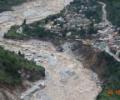
The Kathmandu-based International Centre of Integrated Mountain Development has launched a project to set up a hi-tech flood early warning system in the flood prone districts of Eastern Assam's Dhemaji and Lakhimpur.

'The Weather Channel argues that India faces the gravest challenge: Climate change-induced health vulnerability.' 'This is an issue often neglected, alerts Claude Arpi: "Prolonged summers, unpredictable rains, floods, droughts, and rising sea levels are the harsh realities of climate change in the country. These factors increase the frequency and severity of illnesses, pushing people into poverty, and forcing migration".'
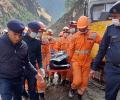
'Events like the one we saw on Sunday are complex geological processes which can be impacted by weather and climatic conditions.' 'It is difficult to attribute something like this to just one factor or to a particular time period, especially when we have still not understood the exact cause.'
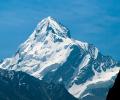
'Glaciers are melting all across the region.'
