
Frankly, I never expected to be offroading in an electric vehicle, let alone an SUV of this calibre, raves Rajesh Karkera/Rediff after a test drive.
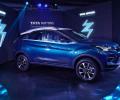
Tata Motors has emerged as the biggest market-share gainer among India's leading passenger vehicle (PV) makers in the first eight months of 2026, securing the No. 2 position in the PV market.

The Tata Harrier.ev is a car that makes you feel safe and powerful within a luxurious cocoon, raves Rajesh Karkera/Rediff after a gruelling test drive.

Tata Motors Passenger Vehicles is gearing up for the next phase of electric vehicle adoption in India, targeting over 30% EV penetration by FY31. The company plans to launch four new products and over ten refreshes by FY31, expanding its portfolio to ten EV nameplates. This strategy aims to move beyond early adopters to engage the early and late majority consumers, focusing on enhanced range, faster charging, and improved battery technology.

Tata Motors expands its market leadership in India's electric passenger vehicle (ePV) segment, capturing 39 per cent of the market in Q1FY27, while simultaneously strengthening its position as the nation's second-largest carmaker amidst fierce competition and rapid market growth.

Tata Harrier.ev versus Mahindra BE.06 versus Mahindra XEV.9E -- which one should you buy? Rajesh Karkera offers a checklist of features to influence your decision.

The Harrier EV is the first mainstream EV in India to offer a dual-motor, all-wheel-drive (AWD) which the company has termed as QWD, The Quad Wheel Drive, reports Rajesh Karkera.

The 1.5-litre Hyperion petrol engine masterfully blends everyday driving with a sophisticated, tech-laden interior that elevates the entire experience.
Tata Motors (TaMo) is aiming to gain market share across its passenger vehicle (PV) and commercial vehicle (CV) businesses - targeting a 40 per cent share in CVs and a 16 per cent share in PVs by 2027. Meanwhile, it has already achieved earnings before interest, tax, depreciation, and amortisation (Ebitda) breakeven in its electric vehicle (EV) business at 1.2 per cent (up 830 basis points), ahead of its target of 2025-26 (FY26).
