
A top SBI official has highlighted the challenges bankers face in lending to MSMEs using only GST data, advocating for the integration of alternative data sources like power consumption and telecom records through credit bureaus to improve credit assessment.

A year after GST rates were rationalised, retail growth in automobiles has sustained beyond the initial festival surge, led by two-wheelers and passenger vehicles (PVs), with the Fada data showing rural markets emerging as a key driver of the post-GST demand recovery.

The GST Council is set to consider a proposal allowing businesses to file for GST registration in multiple states via a single application and standardise the documents required by tax officers, aiming to enhance ease of doing business.

The Goods and Services Tax (GST) Council is set to discuss proposals aimed at transforming the complex indirect tax system into a more business-friendly regime, focusing on simplifying compliance, reducing administrative burdens, and potentially raising the prosecution threshold.
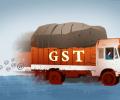
India's Goods and Services Tax (GST) receipts, after accounting for refunds, surged by 18.1 per cent annually to approximately 1.77 trillion in September, marking its fastest growth in six months. This increase was primarily driven by a significant rise in tax revenue from imports, which grew 26 per cent annually.

State Bank of India (SBI) is developing an innovative solution to assess the creditworthiness of small businesses lacking GST registration by utilising UPI transaction data. This initiative aims to provide end-to-end digital loans within a day, addressing the financial exclusion of many small enterprises.

India's GST Council has approved changes allowing small online sellers to register in states without physical premises by using an e-commerce operator's warehouse as their principal place of business, aiming to boost national sales for small businesses.
India's gross Goods and Services Tax (GST) collections surged by 15.4 per cent to over Rs 2.11 lakh crore in July, driven by increased mop-up from both domestic transactions and imports.
GSTAT has crossed 75,000 filings but disposed of only 83 cases, highlighting the huge backlog facing India's new GST appeals tribunal.

Analysts predict that the Indian stock market's sentiment this week will be primarily influenced by the domestic GDP data announcement, crude oil prices, and the crucial US non-farm payrolls report.

Rural commercial vehicle (CV) registrations have consistently outpaced urban sales from April to July 2026, driven by a significant diversification of the rural economy and the positive impact of GST-led consumption, according to experts and data from Fada.

The Goods and Services Tax (GST) Council has announced that Input Tax Credit (ITC) will now be available on health and life insurance policies provided by employers to their employees, a move expected to significantly reduce costs for businesses, especially MSMEs.

Central tax authorities detected input tax credit (ITC) fraud worth Rs 74,781.56 crore across 30,162 cases in FY26, more than doubling the number of cases from the previous year, according to the Ministry of Finance.

75% of India's 60 million digital-payment merchants have never recorded a transaction above 2,000.

Chief Economic Advisor V Anantha Nageswaran stated that the second half of the current fiscal year (FY27) is expected to be challenging due to increased downside risks to global growth and rising interest rates worldwide.
As India marks a decade of the Goods and Services Tax (GST), the focus is shifting towards enhancing efficiency through artificial intelligence, data sharing, and process simplification. The reform, which unified India's indirect tax system, has significantly broadened the tax base and boosted revenues, with future plans including a streamlined two-tier rate structure and continued technological integration to reduce compliance costs and combat evasion.

India's Goods and Services Tax (GST) collections saw a significant 14 per cent increase in June, reaching approximately Rs 1.95 lakh crore. This surge was primarily driven by a substantial 34.6 per cent growth in tax mop-up from imports, alongside a 6.5 per cent rise in domestic supplies, reflecting the country's economic resilience despite global uncertainties.

India's passenger vehicle (PV) exports saw a 17 per cent year-on-year decline in August, contrasting sharply with a 36.5 per cent surge in domestic dispatches, which reached a record high for the month as automakers prepared for the festive season.
India's eway bill generation reached 139.08 million in August, marking the third-highest monthly count on record and indicating sustained momentum in goods movement and formal economic activity, according to official data.

Delhi Police have arrested Shantaram Barku Shelke, the alleged mastermind behind a Rs 40 lakh visa fraud conspiracy that duped 41 individuals seeking overseas jobs in Russia and Israel. Shelke, proprietor of M/s SS Overseas Travels Agency, issued fake documents and evaded authorities before being apprehended in Nalasopara, Maharashtra.
Businesses may eventually have to file returns largely based on invoices uploaded by suppliers, with limited scope for manual changes.
India's gross GST collections increased by 3.2 per cent to over Rs 1.94 lakh crore in May, driven by improved supplies of goods and services and a continued expansion in collections from imports.

India's deposit growth has reached a 15-year high of 17.8 per cent, primarily driven by a surge in foreign currency non-resident (bank), or FCNR(B), deposits. This influx of funds is expected to lead to a softening of corporate loan rates as banks seek to deploy their excess liquidity.

Citron, a brand under Stellantis, anticipates that three-fourths of its sales in India will originate from Tier-II, Tier-III, and smaller cities within the next five years, a significant increase from its current 55 per cent, as it expands its retail network beyond major urban centres.

India's MSME sector faces a significant formal credit gap of approximately Rs 60 lakh crore, with traditional channels meeting only a fraction of the demand. A new report suggests that a centralised, interoperable digital layer could effectively bridge this gap and enhance productivity across the formal business sector by digitising workflows and enabling cash-flow-based underwriting.

Indian passenger vehicle manufacturers are significantly increasing production and stocking dealerships in anticipation of strong festival season demand, with new launches planned and supply bottlenecks being addressed. However, the industry faces potential moderation in growth during the second half of FY27 due to a high base from last year's post-GST surge, commodity inflation, and elevated inventory levels.

As the world's most populous country, India's economy looks large in the aggregate even as its average incomes stay modest.

'They are claiming that they are very good in governance. All governments do propaganda. This is the propaganda of the government that they are doing very well, in spite of all the troubles.'
'They are claiming that they are very good in governance. All governments do propaganda. This is the propaganda of the government that they are doing very well, in spite of all the troubles.'
India's gross Goods and Services Tax (GST) collection reached an unprecedented Rs 2.43 lakh crore in April, marking an 8.7 per cent increase and surpassing the previous record set last year.

India's retail inflation, measured by the Consumer Price Index (CPI), rose to 4.45 per cent in July, up from 4.38 per cent in June, primarily due to higher food prices, particularly onions and ginger. This marks the second consecutive month the inflation rate has remained above the Reserve Bank's median target.
GSTN has put on hold its planned enhancements to the e-way bill system, providing businesses with crucial time to adapt to the proposed changes amid widespread industry concerns.

The Indian government has introduced a 0.4% transaction fee on Unified Payments Interface (UPI) payments exceeding Rs 2,000 for merchants, effective October 15, marking the end of nearly six years of free service. Person-to-person transfers and small-value transactions below Rs 2,000 remain free. The new Merchant Discount Rate (MDR) is capped at Rs 300 for transactions above Rs 75,000, with differentiated rates for essential sectors and investments, and safeguards to prevent costs from being passed to consumers.

The Indian government has introduced a 0.4% Merchant Discount Rate (MDR) on UPI person-to-merchant (P2M) transactions exceeding Rs 2,000, effective October 15. This move ends nearly six years of fully free UPI payments, though person-to-person (P2P) transfers and small P2M payments remain free. The charges aim to bolster investment in UPI infrastructure, with specific exemptions and caps for essential sectors.

Economists highlight that resolving domestic policy bottlenecks, particularly through land reforms and improving the ease of doing business, will be critical for Prime Minister Narendra Modi's 'next-generation reforms' and India's economic transformation towards its 'Viksit Bharat' vision for 2047.

The Maharashtra government has approved the deployment of sovereign artificial intelligence solutions from Sarvam AI for its departments, with a two-year outlay of Rs 11.26 crore. This initiative includes the Indus AI workspace for 2,500 users, ensuring government data remains within India, along with citizen outreach agents and speech models for the MahaAI platform.

The Indian government has imposed stockholding limits on bulk sugar consumers, restricting them to a 15-day supply if they use over 10 tonnes monthly, effective September 1 to November 30, to stabilise prices ahead of the festival season.

BMW India CFO Carsten Lammers has expressed surprise at the extensive scale and prolonged duration of tax and Customs litigation in India, advocating for faster dispute resolution and simpler procedures to ensure business stability.

'You have to get private investment to somewhere between 35% to 36% of GDP. It is hovering about 30%-31%.'
India's passenger vehicle industry is poised for a record-breaking year in 2026, propelled by robust dispatches in the first half of the calendar year and strong demand for utility vehicles, despite facing several economic challenges.
