
The index options also touched a record high of Rs 4.9 lakh crore.
The rumour verification process would now be triggered by changes in price or 'material price movements', as the paper defines it. What this means is that companies would need to verify rumours only if the share price moves significantly.

The rout in Adani Group stocks after US-based short seller Hindenburg Research released a report on January 24 has sparked a rebound in trading activity this month. The average daily trading volume (ADTV) for the cash segment (both NSE and BSE combined) so far in February stands at Rs 59,346 crore, and is around 15 per cent more than the previous month's tally of Rs 51,844 crore, which was the lowest in six months. The ADTV for the futures and options (F&O) segment rose to a record Rs 204 trillion (notional turnover) against Rs 202 trillion in January.

The equity cult has grown at a rapid pace in India in the last few years, with retail investors latching on to the stock markets like never before. At 126.6 million, the number of dematerialised (demat) accounts, where investors hold their securities in electronic form for trading purposes, are at record high levels. The growth rate, on an annualised basis, stood at 27 per cent in 2022-2023, up from barely 6 per cent a decade ago.

ITC was the top loser in the Sensex pack, tumbling over 5 per cent, followed by ICICI Bank, Kotak Bank, Axis Bank, SBI and HDFC Bank. NSE Nifty sinks 354 points to 17,857.25.

Leading stock exchanges BSE and NSE on Friday decided to drop Yes Bank from Futures and Options segment from May 29. The existing Futures and Options contracts across all expiries will expire on May 28.

The domestic stock market may face volatility amid the monthly derivatives expiry scheduled this week, while investors would mainly await the outcome of RBI's interest rate decision on Friday, said analysts. Global market movement would also continue to drive sentiment amid a bearish trend recently following rate hikes by the US Federal Reserve and other central banks. The Reserve Bank of India (RBI) may take cues from its global counterparts to raise interest rate for the fourth time in a row to control inflation.
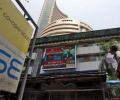
TCS was the top gainer in the Sensex pack, rising over 1 per cent, followed by Infosys, Reliance Industries, HUL, Nestle India and ITC. NSE Nifty ended 10.05 points higher at its new closing record of 16,634.65.

The exchange cited issues with its telecom service providers that prevented stocks and index quotations from getting updated.

PowerGrid was the top loser in the Sensex pack, shedding around 3 per cent, followed by Asian Paints, Axis Bank, Kotak Bank, Bajaj Auto, SBI and M&M.
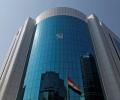
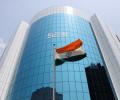
Markets regulator Sebi has restrained an Infosys employee and his connected person, who is an employee of Wipro Ltd, from the securities market till further orders in a matter related to alleged insider trading in Infosys shares. The market regulator has also directed impounding of illegal proceeds of Rs 2.62 crore, according to a Sebi order dated September 27. The alert system of Sebi had generated insider trading alerts for Infosys' scrip around the corporate announcement about the strategic partnership of Infosys with Vanguard.

Investor wealth worth over Rs 13.44 lakh crore was wiped off on Thursday as the domestic equity markets tumbled along with global risk assets, after Russia launched military operations against Ukraine. Amid intensifying rout in the global financial markets, the 30-share BSE Sensex plummeted 2,702.15 points or 4.72 per cent to end at 54,529.91. The carnage on Dalal Street eroded investor wealth worth Rs 13,44,488.54 crore, taking the total market capitalisation (m-cap) to Rs 2,42,24,179.79 crore on the BSE.

SBI was the top gainer in the Sensex pack, jumping around 3 per cent, followed by Kotak Bank, Axis Bank, Bajaj Auto, Tech Mahindra, UltraTech Cement and PowerGrid. NSE Nifty rose 36.40 points to 15,337.85.
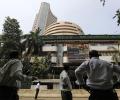
Bajaj Finserv was the top gainer in the Sensex pack, rallying nearly 7 per cent, followed by Bajaj Finance, Axis Bank, Reliance Industries and IndusInd Bank.

Sundararaman Ramamurthy has been an interesting choice for the publicly-listed BSE, which has seen its chief move to bigger rival -- the National Stock Exchange (NSE) -- in July. Having spent nearly two decades at the country's largest bourse, Ramamurthy is among the early architects of NSE and understands all the cogs of the exchange wheel like only a few others in the country. Just like NSE's core team, which includes its founder RH Patil, the 59-year-old Ramamurthy has worked at the Industrial Development Bank of India (IDBI) before moving to NSE in 1995.

Benchmark indices failed to hold on to early gains and closed in the red for the seventh straight session on Thursday, with participants remaining in wait-and-watch mode ahead of the RBI's interest rate decision. Unabated selling by foreign funds added to the pressure, though a modest recovery in the rupee cushioned the fall, traders said. After rallying in early trade, the 30-share BSE Sensex came under selling pressure in the afternoon session and closed 188.32 points or 0.33 per cent lower at 56,409.96.

The broader NSE Nifty closed below the 10,200-mark by slumping 99.85 points, or 0.98 per cent at 10,124.905.

Influenced by ads like 'Make money sitting at home', 'Make Rs 10 lakh with just Rs 1,000', to YouTube influencers promoting 'pump-and-dump' stocks, a vast majority of small investors who mushroomed during the COVID-19 period are losing money in reckless overtrading in the market, cautions Dr V K Vijaykumar, Chief Investment Strategist at Geojit Financial Services.

The S&P BSE Sensex ended down 157 points at 28,052 and the Nifty50 slipped 28 points to settle at 8,639.


The S&P BSE Sensex shed 119 points to close at 27,977 and the Nifty50 dropped 45 points to finish at 8,591.

L&T was the top loser in the Sensex pack, dropping 4.99 per cent, after the engineering major posted a 45 per cent decline in consolidated net profit for the September quarter. Titan, ONGC, Axis Bank, HUL, NTPC, M&M and HDFC were the other major laggards, shedding up to 3.32 per cent. NSE Nifty fell 58.80 points or 0.50 per cent to 11,670.80.

Maruti was the top loser in the Sensex pack, shedding around 4 per cent, followed by Bharti Airtel, HUL, NTPC, Bajaj Finance, UltraTech Cement, ONGC and Reliance Industries. NSE Nifty declined 224.50 points to 14,324.90.

This is not the first time that users of Zerodha clients have faced technical issues. As recently as February, 2019, the platform faced a connectivity issue that led to a pile-up of orders.


At close, the Sensex was up seven points at 24,556 and the Nifty gained 11 points to end the session at 7,330.

Bharti Airtel was the top loser in the Sensex pack, dropping 2.23 per cent, followed by Reliance Industries, L&T, Sun Pharma, HDFC Bank, Maruti, Titan and Kotak Bank.

Equity benchmarks mustered gains for the first time this week on Thursday as investors piled into the recently-battered metal, bank and IT stocks amid expiry of monthly derivative contracts. Snapping its three-session losing streak, the 30-share BSE Sensex rallied 503.27 points or 0.94 per cent to settle at 54,252.53. On similar lines, the broader NSE Nifty gained 144.35 points or 0.90 per cent to end at 16,170.15.
The 30-share Sensex ended down 55 points at 25,314 and the 50-share Nifty ended down 11 points at 7,569.

The S&P BSE Sensex gained 122 points to end at 26,525.
The Sensex ended higher by 38 points at 19,894 mark and the Nifty was up by 8 points at 5,882 levels.


Higher levels could not be sustained as participants offloaded their long positions in view of September series expiry.
The S&P BSE Sensex shed over 255 points and ended at 25,062.67 while the CNX Nifty traded 76 points lower and ended at 7,493.20.

Top laggards among the Sensex pack included Yes Bank, SBI, HDFC, Axis Bank, Kotak Bank, ITC, RIL, M&M, Tata Motors and ICICI Bank, losing up to 3.61 per cent.

The Securities and Exchange Board of India (Sebi) is working on a new payment system for the secondary market, which could prevent brokers from accessing their client funds. It will be on the lines of the Application Supported by Blocked Amount (ASBA) process used for subscribing to initial public offerings (IPOs), where funds move out of an investor's bank account only after the trade is confirmed. Sebi chairperson Madhabi Puri Buch on Wednesday said that despite the challenges, the new system would be ready in a few months.

Equity benchmark Sensex rebounded 454 points on Thursday, boosted by gains in index heavyweight Reliance Industries amid a positive trend in global markets.

In the case of Indian equities specifically, all eyes will now be on the next RBI monetary policy scheduled for September 29.

The top losers from the Sensex pack are ONGC, Coal India, Vedanta, Reliance Inds and L&T.
Reliance Industries was the biggest loser in the Sensex pack, falling 2.62 per cent, followed by Nestle India, IndusInd Bank, UltraTech Cement, M&M and SBI.
