
'We are in touch with industry to further compress the timelines.'

WhatsApp is testing new ways for users in India to confirm their age as it prepares to comply with upcoming legal requirements, including those related to the Digital Personal Data Protection (DPDP) Act, the Meta-owned messaging platform said on Tuesday.

A data breach does not end when the headlines fade. For victims, stolen personal information can fuel fraud, identity theft and financial losses for years.

The Supreme Court of India has agreed to examine petitions challenging the constitutional validity of the Digital Personal Data Protection (DPDP) Act, 2023, focusing on concerns about its impact on the Right to Information Act.

The United States Trade Representative (USTR) has expressed concerns that India's Digital Personal Data Protection (DPDP) Act, particularly the lack of a deemed consent mechanism for credit information companies, and the Information Technology (IT) Rules of 2021, along with frequent internet shutdowns, could negatively impact the ability of US companies to operate and trade in India.

'We do have some concerns with the timeline being shortened from 18 to 12 months.'

Companies, particularly those that are notified as Significant Data Fiduciaries, will have to make extensive investments in data mapping, process modification, consent management tools, tools to enable Data Principal Rights, and establish a well-structured Data Privacy Officer organisation.

A new report by ADP reveals that one in two Indian companies plan to adopt AI-powered payroll systems within the next 12 months, driven by the need for automation in workforce management, compliance, and compensation decisions. However, firms are increasingly cautious about data protection risks, especially with the implementation of the Digital Personal Data Protection (DPDP) Act, 2023.
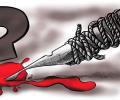
'By extending the definition of 'personal' to include institutions and not just individuals, the State has equipped itself with a tool to block access to most kinds of information.'

'The impact will be minimal and it will only increase compliance cost on consent, data flows, localisation timelines, internal audits, data mapping, and new tooling.'

The "construct of the DPDP Act" cannot be changed at this stage, though there may be some minor tweaks in the language of the Rules and formats in certain legitimate cases.

The new rules allow for a staggered implementation road map, giving companies, data fiduciaries, data principals, and other stakeholders up to 18 months to comply with the administrative guidelines under the DPDP Act.

DPDP Act (2023) gives individuals the right to decide how their personal data is collected and used. For many businesses, this means reworking longstanding data practices, notes Ravi Duvvuru.

'One has to be very mindful because it will be applicable for big tech platforms and even for banks and insurers, whose business is completely different.'

'Digital arrests are the cutting edge of the problem and the most challenging part of the ecosystem right now.'

The draft rules have been issued after Parliament approved the Digital Data Protection Bill 2023 about 14 months back.

'Unless the government comes up with the rulebook, the technical requirements will not be clear to us.' 'Going by the Act, non-technical provisions can be complied with within six months.' 'But we need up to 24 months for provisions like parental consent.'
'By leveraging user data from WhatsApp, Meta can enhance its technology.' 'It (user data) is collected by me, it's my personal property. Shall I give it to my competitors?'

'Check every SMS you get. Many people ignore them.' 'Remember if there is an activity in your account, your financial institution will send you an SMS, not a WhatsApp message.'
A new law that defines how companies should process users' data came into force with the President giving assent to the Digital Personal Data Protection (DPDP) Act passed by Parliament in the just-concluded monsoon session. The law arms individuals with greater control over their data while allowing companies to transfer users' data abroad for processing, except to nations and territories restricted by the Centre through notification. It also gives the government power to seek information from firms and issue directions to block content.

Digital Personal Data Protection (DPDP) law aims to protect the privacy of Indian citizens while proposing a penalty of up to Rs 250 crore on entities for misusing or failing to protect digital data of individuals.

What all global leaders need to understand is that no Generative AI regulation will work unless they start with the basics, which is data collection, asserts Prosenjit Datta.

The government on Thursday tabled the Digital Personal Data Protection Bill 2023 in the Lok Sabha with an aim to protect the privacy of Indian citizens, while proposing a penalty of up to Rs 250 crore on entities for misusing or failing to protect digital data of individuals.

India is headed for general elections early next year, and the DIA is expected to be legislated only after the 2024 polls and the formation of the government.

After the draft data protection bill, the government is now all set to bring another key legislation -- Digital India Bill -- that will be made available for public consultation by the month-end, Minister of State for IT Rajeev Chandrasekhar said on Thursday. The Digital India Bill, which will replace the 22-year old Information Technology (IT) Act, will be contemporary and a modern piece of legislation, the Minister promised. The proposed bill, alongside the Digital Personal Data Protection (DPDP) Bill whose draft was released recently, will contribute to the evolving framework which is light on regulation, safeguards consumer rights and catalyses innovation, the minister said while speaking at CII Global Economic Policy Summit 2022.

It is sad that the legislative pre-consultation on such an important bill is being done in a very biased manner, notes Shailesh Gandhi, former Central Information Commissioner, recounting his experience with Minister Rajeev Chandrashekhar.
