
Deutsche Bank India CEO has grand plans for the region.

Global capability centres (GCCs) are increasingly looking to tap into revenue opportunities from the Indian market, which is already a critical talent hub. While capturing the potential of the Indian market has been in the works over the past few years, it's only of late that companies are gaining momentum. India is home to more than 1,580 GCCs, with a total market size of $46 billion and growing at a compound annual growth rate (CAGR) of 11.4 per cent, according to a Nasscom-Zinnov report.

Citing the sharp rise in food prices, economists at a foreign bank have forecast a steeply higher retail inflation print for July, pegging it at 6.7 per cent, up 190 basis points from the previous month. Deutsche Bank India economists led by chief economist Kaushik Das, in a report on Monday ahead of the monthly inflation print and the Reserve Bank's monetary policy review, said that the July consumer price-based inflation index (CPI) is likely to print at 6.7 per cent on-year as against 4.8 per cent in June. The Reserve Bank is widely believed to leave the key interest rates unchanged for the fourth time in its upcoming bi-monthly monetary policy decision on August 10.

Overseas investors, as well as other key stakeholders, such as brokers, custodians, and clearing corporations, are yet to iron out critical issues, even as the shift towards a shorter trade settlement cycle approaches new phases. Several industry players said foreign portfolio investors (FPIs) are still facing impediments over the trade confirmation timelines, foreign exchange (forex) bookings, and pre-funding requirements. This could potentially act as a roadblock when it comes to moving entirely to the new T+1 settlement cycle from next year.

India's stock exchanges have decided to jointly introduce the T+1 settlement cycle in phases from February 25, beginning with the bottom 100 stocks by market capitalisation. From March 2022, on the last Friday (or the immediate next trading day) of every month, the next 500 stocks from the bottom will be subject to T+1 settlement. The phase-wise implementation is expected to give all market participants, including foreign portfolio investors (FPIs), ample time to shift to the shorter cycle. The settlement cycle represents the time period within which the stock exchanges have to settle security transactions.

S Ramadorai, Tata Consultancy Services CEO, been selected the Business India Businessman of the Year 2004.

Banks say they themselves red-flagged the transactions to RBI. It must be noted that these transactions are not outright evidence of fraud or proof of nefarious activities.
Deutsche Bank on Monday completed the first forex option transaction in India. The transaction, which was a 6-month dollar/rupee risk reversal, was inked by Deutsche Bank for Reliance in Mumbai, an official release said.
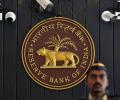
The Reserve Bank of India (RBI) is precariously balancing two opposing objectives - maintaining easy financial condition in the domestic market, while ensuring external stability - and economists have started taking note. They say India is going through the classic trilemma of the 'Impossible Trinity'. The RBI cannot have an independent monetary policy (setting domestic interest rates) in an environment of an open capital account and flexible exchange rates. What is even more complicated for the central bank now is that financial market stability overlays all the other three objectives.
The beleaguered Deutsche Bank announced major overhaul of its business, which included discontinuing loss-making equities trading business, creating a new 'bad bank', and cutting 18,000 jobs. Deutsche Equities India employs 35 people, all of whom could face the job axe.

They are small town boys who went on to make it big in global financial powerhouses.
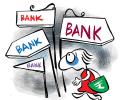
Banks now ride on what is defined as a "banking outlet". This is a fixed-point service unit, manned by either the bank's staff or its business correspondent (BC), where all kinds of services - acceptance of deposits, encashment of cheques, cash withdrawal or lending of money - are provided for a minimum of four hours per day, for at least five days a week. Banks are now turning to reposition the manner in which they acquire customers, report Abhijit Lele and Raghu Mohan.

Among Sensex components, shares of Reliance Industries, India's largest company by market value, stole the show by surging 1.61 per cent to their highest in over three months.

There was net outflow of $7.2 billion from the Indian market in June of which $5.4 billion was from debt market triggered by global risk aversion and currency weakness, Deutsche Bank India Equity Strategy report said.

Experts say the market is more bullish on the BJP as it will ensure continuity in policymaking.

Gill, who studied at Modern School and Hindu College in Delhi, joined Deutsche Bank in 1991 and became its India CEO in 2012.

The next key battle the market will watch out for will be in Congress-ruled Karnataka

Steps to improve governance, instill confidence in the government machinery and streamlining function across the different ministries are also important to feed the positive mood, the DBS report added.

The regulatory actions, undertaken by the RBI and the government, came hours after finance ministry sources confirmed that SBI was directed to bail out the troubled lender. For the next month, Yes Bank will led by the RBI-appointed administrator Prashant Kumar, an ex-chief financial officer of SBI.

With more favourable view on Indian economy and business environment under the Narendra Modi government, the risk premium for Indian papers began to climb down.

Further outperformance hinges on pickup in industrial activity, buying by local investors.

Sebi's new FPI regulation has helped attract new capital pool, up registrations.

It won't be an easy ride for the markets, reckon experts, considering the multiple state elections in 2018 and general elections next year.

The culture of these firms is alien to the Indian financial system. Distressed assets funds are known for their ruthless recovery ethics. Slicing and dicing a company and selling it on a piecemeal basis is their usual practice. This is something Indian banks are finding a little uncomfortable.

Deutsche Bank in India has managed to avoid the bad-loan problems plaguing its rivals such as Standard Chartered Plc.

Deutsche Bank could be the next to trim its retail operations.

Faced with a situation where the spouse's transferable job keeps taking the family to different locations, thus jeopardising their own careers, many women simply fall off their career track and resign themselves to relocation every time their husband gets transferred, says Sudha Menon.
