
Avenue Supermarts, the operator of DMart retail chain, reported good results for the July-September quarter (Q2FY24) with strong earnings before interest before interest, taxes and depreciation (Ebitda) and profit before tax (PBT) growth, but lower PAT due to higher tax incidence. The operating margin improved, and like-to-like store sales growth was strong. Average bill value also increased though this may be a seasonal effect to some extent. Analysts are assuming this means the slowdown in retail may have bottomed out.

The meltdown in Dalal Street that wiped out investor wealth to the tune of 44 trillion in 2025 also seems to be having a ripple effect on the country's vibrant automobile retail sales.

The share of EVs in the luxury segment rose from 7 per cent in January-May 2024 to 11 per cent during the same period in 2025, marking a 66 per cent growth in the electric luxury segment.

Research and development (R&D) spending by BSE 100 companies has grown steadily, rising from 0.89 per cent of revenue in FY20 to 1.32 per cent in FY24, averaging around 1 per cent over the period in-between, according to data compiled from Bloomberg and company annual reports. Also, these companies more than doubled their R&D spending in absolute terms over these five years: From Rs 25,041 crore to Rs 63,072 crore. While this reflects a prioritisation of innovation, corporate R&D investment remains relatively conservative.

'India is a very strategic geography. The business is growing over 37-38 per cent year-on-year.'

Listed paint majors posted another lacklustre showing in the January-March quarter (Q4) of 2024-25 (FY25), with average revenue growth under 3 per cent. Sales were weighed down by Asian Paints - the market leader and the only major to report a year-on-year (Y-o-Y) decline.

Toyota Kirloskar Motor (TKM) has reported a consolidated net profit of Rs 4,787 crore for 2023-24 (FY24) - more than three times the earnings recorded the previous year. This growth can be attributed to robust demand for its vehicles, particularly hybrid models and cross-badged cars from the Toyota-Suzuki alliance.

Bharat Forge, the Pune-based automotive component maker, has been one of the top-performing companies in its segment. The company's stock price is up 39.3 per cent since the beginning of the 2023 calendar year, surpassing other leading automotive component makers such as Bosch and Samvardhana Motherson International. The stock also outperformed the benchmark BSE Sensex, which is up 17.3 per cent year to date so far.

Automobile (auto) retail sales in India grew by an impressive 14 per cent in July compared to the same period last year, driven by a surge in the rural economy, good product availability, and product launches. While passenger vehicles (PVs) saw a 10 per cent increase during this period, inventory levels have surged to a historic high of 67-72 days in PVs, equating to Rs 73,000 crore worth of stock, according to the Federation of Automobile Dealers Associations (Fada). This poses a risk to dealer sustainability. Inventory levels in July 2023 were only 50-55 days, equating to a stock worth Rs 49,833 crore. In June 2024, inventory was between 62 and 67 days, with a stock value of Rs 60,000 crore.

Inflows into equity mutual fund (MF) schemes declined for the third month in a row in March even though the equity market recovered sharply. Equity MF schemes raked in a net Rs 25,082 crore in March, down 14 per cent from February.

Fast moving consumer goods (FMCG) companies are expected to see muted topline growth, with uneven spread of the monsoon impacting demand. Rural demand recovery, too, remains elusive in the July-September quarter. Brokerages expect volumes to remain steady in the quarter on a sequential basis.

The combined net profit of "early bird" companies, those that have declared their quarterly results, rose for the third consecutive quarter in July-September 2023 (Q2FY24). But the figures suggest a continued slowdown in revenue growth and stagnation in earnings over recent quarters. This slowdown is severe for companies in the manufacturing and non-financial service sectors.

Kotak Mahindra Bank's loan and deposit growth are likely to be affected after the Reserve Bank of India (RBI) asked the private-sector lender not to take on board new customers through the bank's online and mobile banking channels and not to issue any new credit cards, according to analysts. The bank's share price fell 10.85 per cent on Thursday to close the day at Rs 1,643 on the BSE. The RBI's action came after market hours on Wednesday.
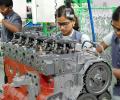
Genset manufacturer Cummins India has seen its share price rise by 45 per cent in the past three months. The management has reaffirmed that growth would be in double digits over the coming two fiscal years. Growth is expected to be driven by a pickup in domestic infrastructure spending.

Investors attribute the revival to the country's strong public markets, which are boosting confidence in initial public offering (IPO)-bound startups offering viable exit opportunities.

Pharma major Dr Reddy's Laboratories delivered a muted operational performance in the fourth quarter of financial year 2024-25 (Q4FY25), even as revenue growth remained healthy. Lower gross margin performance and muted domestic growth are key concerns. Most brokerages have a "Sell" or "Reduce" rating as there are uncertainties related to the development of a new product portfolio and the launch timelines.

The Indian cement industry is hopeful of greener pastures after a long period of stress led by pricing pressures and other factors. The second half of FY25 is expected to bring respite due to price hikes, cost benefits and higher volumes, said analysts. The optimistic momentum also makes cement stocks attractive, analysts added, advising to buy dips following a period of bearish sentiment in these stocks.

Top executives from Siam and major carmakers recently met with Heavy Industries Secretary Kamran Rizvi to discuss the matter. Officials from NITI Aayog were also present.

'This year overall hiring has seen a slight improvement as compared to the dip seen during the last financial year.'

The life insurance industry reported a 25.28 per cent decline in new business premium income in November 2023 to Rs 26,494.83 crore from Rs 34,588.8 crore recorded a year ago. The fall in group premium and change in taxation norms for policies with a higher ticket size dragged the premiums of the state-run Life Insurance Corporation of India (LIC) and private insurers, respectively. According to the data released by the Life Insurance Council, the premium of private insurers slipped 9.33 per cent Y-o-Y to Rs 10,360.29 crore from Rs 11,426.73 crore as a result of a change in product mix due to the measures taken to counter the impact of tax imposed on the premiums of Rs 5 lakh.

Life Insurance Corporation of India (LIC) declared disappointing results in Q1FY24. While it reported a net profit of Rs 9,540 crore in Q1FY24, this was attributable to the transfer of Rs 7,490 crore from non-participating (non-par) products to shareholders' accounts due to the accretion on available solvency margin. In operational terms, annualised premium equivalent (APE) declined and value of new business (VNB) margin was flat. But the medium-term prospects may be better.

Crude and gas supply concerns have eased amid reports that Israel and Hamas have struck a peace deal. The International Energy Agency estimates oil demand may drop slightly in calendar 24 but Opec probably has enough pricing power to maintain $80/ barrel Brent prices. Russia's share of India's crude imports remained strong at about 35 per cent in September 2023.

Brokerages on DMart Q3 results: Avenue Supermarts (DMart) shares slipped as much as 5.74 per cent to hit an intraday low of Rs 3,474 per share on Monday. However, the stock recovered slightly to close at Rs 3,507.95, down 4.82 per cent. Notably, the 52-week low for DMart shares is Rs 3,400. The downward movement in DMart's share price was triggered by the company's 2024-25 (FY25) October-December quarter (Q3) results, which missed Street expectations.

ICICI Prudential Life Insurance Company (IPru) is struggling to generate growth in the value of new business (VNB). This is due to a combination of weak growth through the parent bank's channels, a shifting product mix in favour of unit-linked life insurance policies (ULIPS), and higher payouts to third-party channels. Leverage from current investments, a further reduction in contributions from ICICI Bank, and a pick-up in non-participating policies from the end of the year is key for this metric in the near to medium term.

Long-term macro trends indicate growth in demand for air travel. Trends from the ticketing website MakeMyTrip indicate a likely annual growth of between 11-17 per cent in Indian air travel demand over FY24-30. Through that period, InterGlobe Aviation or IndiGo may continue to make gains in market share in both domestic and international travel, aided by large fleet additions. IndiGo is the largest global customer of Airbus by far with 950 aircraft orders outstanding.

Corporate earnings got a big boost from the fall in commodity and energy prices in July-September 2023 (Q2FY24) despite a slowdown in revenue growth during the quarter. The combined net profits of 3,123 firms that have declared their results so far were up 38 per cent year-on-year (Y-o-Y) to Rs 3.07 trillion in Q2FY24, up from Rs 2.24 trillion a year ago. Earnings were, however, down 3.5 per cent on a sequential basis from Rs 3.18 trillion in April-June (Q1) FY24.

The number of domestic air travelers in India grew 2.42 per cent year-on-year (Y-o-Y) in April, reaching 13.2 million, according to data by the Directorate General of Civil Aviation (DGCA) on Tuesday.

A robust margin performance in the September quarter (Q2FY25) led to a 12 per cent rise in the stock of defence major Bharat Electronics (BEL). While the stock has given up most of those gains in the recent market correction, analysts are positive on the company due to its strong order book, new order inflows, and margin trajectory. The near-term trigger has been the operating performance in Q2FY25.

The past 18 months have seen a resurgence in the real estate industry, with developers regaining the ground lost to the Covid-19 pandemic. But it is once again adding inventory at a pace faster than sales. The industry's inventory rose by 28 per cent year-on-year (Y-o-Y) in H1FY24, com-pared to a 25.5 per cent year-on-year increase in net sales during the same period.

77 per cent of all transactions in the January-March 2025 period took place digitally, indicating continued preference for online car purchases.

Shares of Bajaj Finance sprinted 4.7 per cent to Rs 7,732 per share on the BSE in Thursday's (January 4) intra-day trade as the non-bank finance company's (NBFC's) December quarter business update reflected minimal impact of the Reserve Bank of India's ban on two of its lending products. The shares, eventually, ended 4.4 per cent higher at Rs 7,710 per share as against 0.69 per cent gain in the benchmark S&P BSE Sensex. The NBFC's asset under management (AUM) topped the Rs 3-trillion-mark at the end of December 2023, swelling by roughly Rs 20,700 crore (35 per cent year-on-year) to hit Rs 3.11 trillion-mark.

The Centre's fiscal deficit touched 74.5 per cent of the annual target at the end of January 2025, according to the data released by Controller General of Accounts (CGA) on Friday.

Households may be feeling the pinch of higher inflation but corporate India is enjoying record high margins and profits. The combined quarterly net profit of listed companies scaled a new high in the April-June 2023 quarter owing to a sharp rise in operating and net profit. The expansion in margins more than compensated for the slowdown in revenue growth, which slipped into single digits in Q1FY24 after a gap of nine quarters.

Power Grid Corporation of India (PGCIL) was one of the top Sensex gainers in trade on Monday, ending with gains of nearly 9 per cent. The stock has gained about 42 per cent year-to-date. For the March quarter, the company reported a revenue of Rs 12,000 crore, which was down 3 per cent year-on-year (Y-o-Y) but up 4 per cent quarter-on-quarter (Q-o-Q). The drop was on account of one-time arrears related to the Nagapattinam tariff bid competitive bidding (TBCB) project in Q4 FY23.

The controlling shareholders of smaller and mid-sized companies are reducing their stakes at levels seldom seen since the 2008 global financial crisis. Over 20 per cent of companies listed on BSE MidCap and BSE SmallCap have seen a decline in promoter holdings for five consecutive quarters, reveals data from DSP Mutual Fund, shared with Business Standard. In the latest June quarter, the figure stood at 22.6 per cent.
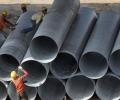
Analysts are advising a cautious stance on the steel sector due to a combination of factors. The major one is that China has maintained momentum on steel exports in CY24 and there could also be domestic over-supply in the medium-term. Trade data for Jan-Feb'24 shows that China's finished steel exports rose 31 per cent year-on-year (Y-o-Y) to 15.9 MT.

Road awards were muted in Q1FY25. But the pace will accelerate with a bidding pipeline of Rs 1.1 trillion (September 2024), mostly dominated by HAM (Hybrid Annuity Model) projects, which contribute 47 per cent and engineering procurement and construction or EPC projects, which have about 36 per cent share. Hence, infrastructure companies mostly reported revenue decline on a year-on-year (Y-o-Y) basis in Q1FY25.

Airfares on major domestic routes such as Kolkata-Bagdogra, Delhi-Bengaluru, and Delhi-Mumbai have witnessed an increase of up to 12.7 per cent year-on-year (Y-o-Y) in May this year, according to data by Thomas Cook (India) and SOTC Travel. The recent increase in aviation turbine fuel prices, rupee depreciation, reduction of flights by key players, and grounding of planes due to engine supply issues have contributed to the rise in airfares, said aviation industry experts. However, the data also shows that summer airfares on key routes such as Delhi-Leh and Delhi-Kolkata have significantly decreased due to the introduction of new flights.
Siemens's share price has lost ground in the past few sessions following weak management commentary. The management indicated challenges to the growth outlook due to stagnant private capex and concerns over semiconductor shortages for digital industries. Government infra-spending may regain momentum from January 2025.

There are conflicting views on Delhivery. The logistics player's results for the July-September quarter (Q2FY24) are being interpreted as good by some analysts and disappointing by others. As India's largest listed logistics player, the company stands to benefit from the formalisation across the mostly unorganised logistics space. Delhivery provides solutions to 23,113 customers, including e-commerce marketplaces, direct-to-consumer e-tailers, and enterprises across verticals.
