
Among urban users, 57 per cent mentioned a preference for accessing Internet content in vernacular languages.

India's four listed Real Estate Investment Trusts (Reits) collectively distributed 13 per cent more funds to their shareholders in fourth quarter of financial year 2024-25 (Q4FY25) at Rs 1,553 crore on year, reflecting the growing strength of the sector fuelled by strong leasing activity, especially from Global Capability Centres (GCCs).

Shares of Tata Consultancy Services (TCS), the country's largest IT services provider, continue to remain under pressure, hitting a new eight-month low of Rs 3,624.90 intraday on Tuesday before closing at Rs 3,631, down 1.19 per cent. In the past two trading sessions, the stock price has declined 4 per cent on fears of a slowing US economy.

Info Edge (India) reported good Q2FY24 results with hiring across other segments helping offset weak IT performance. The revenue increased 11.5 per cent year-on-year (Y-o-Y) to Rs 593 crore, (up 1.5 per cent quarter-on-quarter or Q-o-Q). The earnings before interest, taxes, depreciation, and amortization (Ebitda) margin was excellent at 40.7 per cent, up 200 basis points year-on-year (Y-o-Y).

In the July to September quarter of 2023-24 (Q2FY24), Voltas' revenues grew by 29.7 per cent year-on-year (Y-o-Y), but the adjusted net profit was down by 63 per cent Y-o-Y. The revenues hit Rs 2,290 crore, led by growth in the Unitary Cooling Products segment (up 15.4 per cent Y-o-Y, and in the EMP (Electromechanical project) business (up 66.8 per cent Y-o-Y). The UCP revenue rose to Rs 1,200 crore in Q2FY24, driven by volume growth despite weak consumer spending - the three-year annual growth is 18 per cent.

LIC Housing Finance (LICHF) delivered a healthy FY24 with improvements in net interest margin (NIM) and credit costs and an improved return on assets of 1.7 per cent compared to an average of 1.3 per cent between FY14-FY23. Loan growth was low due to technology upgrades to the platform in H1FY24, though momentum improved in H2FY24. In Q4FY24, the net interest income (NII) came in at Rs 2,250 crore.

Home appliance maker Crompton Greaves Consumer Electricals reported better than expected performance in the second quarter (Q2) of 2024-25 (FY25), outperforming peers due to a strong showing in the electrical consumer durables (ECD) segment. The company's standalone sales rose by 10.5 per cent, while the ECD segment continued its growth momentum with a 12.5 per cent increase in revenues, driven by volume and pricing gains.

Titan's October-December quarter (Q3) business update claims 22-23 per cent revenue growth in the standalone jewellery sales (excluding bullion sales), implying a 4-year compound annual growth rate (CAGR) of 21.3 per cent. Store additions also looked healthy, with 21 new Tanishq stores opened in Q3, taking the total count to 466 (+43 in 9 months of FY24) including two in the US and one in Singapore. Titan added 90 stores in Q3, pushing its total retail outlets to 2,949 (including CaratLane).

The June quarter is usually considered as a seasonally strong period for the IT sector.

The revenue growth of Indian companies for the July-September quarter is estimated to be 5-7 per cent year-on-year (Y-o-Y), marking the slowest growth in 16 quarters, rating agency CRISIL said on Thursday.

India has set an ambitious target of textile exports worth $100 billion by 2030, but the recent data released by the Ministry of Textiles pertaining to India's textile and apparel trade puts achievement of the goal in jeopardy.

With more than 1.2 million Indians stuck in green card backlogs, investor-driven EB-5 programme sees rising interest as a secure route for migration to the US.

Godrej Properties (GPL) reported strong pre-sales of Rs 22,500 crore in FY24, up 84 per cent year-on-year (Y-o-Y). The performance was led by new launches, which increased 65 per cent to Rs 23,000 crore in FY24, and contributed 70 per cent to total pre-sales. The sales volume increased 31 per cent Y-o-Y to 20 million square feet (msf), while realisation rose 40 per cent Y-o-Y, driven by contribution from high-realisation markets of National Capital Region (NCR) Delhi and Metropolitan Mumbai Region (MMR) and positioning in the premium segment.

Life Insurance Corporation of India (LIC) reported weak growth through H1FY24 but it witnessed a boost in embedded value (EV) due to equity-market performance. But concerns regarding its stock include loss of market share as it is outpaced by private sector rivals, sticky operating expenses (reduced slightly year-on-year but up in Q2FY24 versus Q1FY24), and high sensitivity of embedded value to equity volatility. Traders may also factor in the likelihood of another stake sale by the Government of India.

This could fundamentally transform the industry that had been a major source of employment in countries like India and the Philippines.
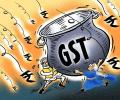
Gross GST collection in March grew 9.9 per cent to over Rs 1.96 lakh crore, government data showed on Tuesday.

The April-June quarter (Q1) of the current financial year (FY25) may be soft for banks with loan growth moderation, net interest margin (NIM) pressures, and higher staff and credit costs inching up, according to analysts. Credit growth could ease due to the lagged impact of the Reserve Bank of India (RBI) tightening and deposit growth has weakened, and the current account and savings account (CASA) ratio has declined 10-370 basis points (bps) quarter-on-quarter (Q-o-Q) for many banks.

The auto major is not just looking at domestic sales, but also planning to ramp up exports to key markets from here, like the Middle East, North Africa and Australia.

The pharmaceuticals sector is expected to post a revenue growth of around 13.5 per cent and a net profit growth of 30.3 per cent for the third quarter of 2023-24 (FY24), riding on the approval for niche drugs in the US market, fall in raw material prices and correction in shipping rates. In the healthcare segment, hospitals are expected to post revenue growth of 13 per cent during the coverage, while net profit growth would be around 37 per cent, ICICI Securities said in a note. However, the performance may not be comparable on a sequential basis due to the offset of the festive season in Q3FY24, the analysts noted.

Bajaj Finance, IndusInd Bank, State Bank of India, Maruti, Tata Motors, ITC, Tata Steel and Reliance Industries were also among the gainers. Nestle, NTPC, Kotak Mahindra Bank, Power Grid and Titan were among the laggards.

Dixon Technologies' January-March quarter (Q4) results came in well below expectations, but the potential for signing up a new mobile client, and plans for backward integration into display manufacturing kept investors happy. Dixon's Q4FY24 revenue grew 52 per cent year-on-year (Y-o-Y) to Rs 4,660 crore, below Street consensus, due to weakness in consumer electronics (Rs 890 crore) and home appliances (Rs 294 crore) segments.

Big, listed FMCG (fast-moving consumer goods) companies such as Hindustan Unilever, ITC, Nestl, and Britannia have been top-performing stocks on the bourses in recent weeks. The Nifty FMCG index, which tracks the share prices of the country's top 15 listed FMCG companies, is up 1.9 per cent month-to-date in May compared to a 2.4 per cent decline in the benchmark Nifty 50 in the period.

Siemens reported solid results in the July-September quarter (fourth quarter, or Q4) of 2022-23 (FY23), with the top line growing 25 per cent year-on-year (Y-o-Y) to Rs 5,808 crore. The operating profit margin stood at 12.1 per cent, led by lower employee costs and other operating expenses. The company follows the October-September financial year.


Competition in the fast-growing quick commerce sector is heating up as Swiggy Instamart faces a tough challenge in narrowing the gap with Blinkit, which currently dominates the market. In the second quarter (Q2) of 2024-25 (FY25), Instamart's gross order value (GOV) rose by 42.1 per cent quarter-on-quarter (Q-o-Q) and 75.5 per cent year-on-year (Y-o-Y), reaching Rs 3,382 crore.

Bharti Airtel vice-chairman & managing director Gopal Vittal on Wednesday said while a call on exercising the option of converting pending spectrum dues into government equity would be taken by its board, the company had reached out to the Department of Telecommunications (DoT) to confirm whether it could do so. "On the adjusted gross revenue (AGR) conversion, it was simple.

Propelled by strong demand and lower costs, the country's largest airline, InterGlobe Aviation (IndiGo), reported solid operational performance in the 2024-25 (FY25) October-December quarter (Q3). While demand was driven by the festival season, year-end increase, and higher consumer spending, lower fuel and rental costs helped deliver a beat at the operating profit level.

Once declared a dud stock, Suzlon has generated stellar returns for investors thus far this calendar year. On a year-to-date (YTD) basis, Suzlon's share price has doubled investor wealth by soaring 109.35 per cent on the bourses. By comparison, the benchmark BSE Sensex has gained just 11.2 per cent.

Qcom alone is expected to account for a 60 per cent surge in gig hiring, adding 1.5 million to 2 million roles.

The medium-term scenario for oil marketing companies (OMCs) is high risk due to the surging crude and gas prices. Apart from OPEC-plus cutting production, the Hamas-Israel conflict has caused fears of supply disruption. The July-September quarter of 2023-24 (Q2FY24) saw positive surprises for OMCs. Strong gross refining margins (GRMs) more than offset weak marketing margins.

Hero MotoCorp Ltd (HMCL) has been the best-performing auto stock over the last three months, gaining over 17 per cent during this period. Multiple tailwinds, especially on the rural front, are expected to boost its volumes. In addition to the demand drivers, new launches too should help drive growth both in the commuter and premium motorcycle categories.

BMW Group India recorded its highest annual sales on the back of strong demand for its top-end ICE (internal combustion engine) and electric vehicles (EVs). The German luxury automaker on Thursday announced that its domestic car sales jumped 18 per cent year-on-year (Y-o-Y) to 14,172 units in calendar year 2023 (CY23). This mirrored a trend in the luxury space, with its peers also reporting record numbers.

Stocks of Indian steel companies are reeling from pricing pressure that is partly blamed on cheap imports. The stocks have declined up to 9 per cent on the NSE in one month, likely allowing investors an opportunity to use the correction to enter the pack as pricing pressure eases. "In steel or any other commodity, if prices or spreads are nearing their bottom, it can be an opportune time to invest in those stocks. In India, domestic fundamentals such as steel consumption remain robust, hence one can take fresh positions in these counters," said Amit Dixit, an analyst at ICICI Securities.
Despite state-owned Life Insurance Corporation (LIC) reporting an improvement in value of new business (VNB) margin in Q1FY25, analysts believe the growth has not been satisfactory in the context of the insurer's medium-term targets on margins. VNB margin is a measure of profitability of life insurance companies. LIC's VNB margin improved by 20 basis points (bps) to 13.9 per cent in Q1FY25 over the same period last year due to a change in the business mix of the insurer.
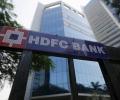
The country's largest private sector lender HDFC Bank on Saturday said it will grow its loan book slower than the industry in the current financial year (FY25). The move comes as the lender looks to bring down its elevated credit - deposit (CD) ratio to pre-merger levels. "We will bring down the CD ratio faster than what we had anticipated.

With the rains at unprecedented low in August, kiranas are thinking twice before stocking up on goods. "With August 2023 rain shortfall at almost a 100-year low, we are seeing kiranas stocking up very carefully," Akshay D'Souza, chief of growth and insights at Bizom. He added, "As we look ahead, it does seem that the impact of rains in September will be critical to the sowing season.

The Nifty IT index rose by 5.14 per cent on Friday (January 12), marking its best performance in a day since July 2020, followed by another 1.9 per cent rally on Monday. With this, the index, which tracks the share prices of India's 10 biggest information technology (IT) services companies, has increased 7.1 per cent in the past two sessions. However, the substantial rally in the index occurred at a time when India's four largest IT companies reported their worst quarterly performance in over five years.

Private life insurers experienced reasonable growth in the July-September quarter (second quarter, or Q2) of 2023-24 (FY24), and the October data is also encouraging. The individual weighted received premium (WRP) for private players grew by 19.8 per cent year-on-year (Y-o-Y) in October. However, Life Insurance Corporation (LIC) of India had slower growth, pulling the industry growth rate down to 13 per cent Y-o-Y.

Brokerages have maintained their ratings and target prices on FSN E-Commerce Ventures, the parent company of Nykaa, after the fashion and beauty online retailer posted in-line numbers during the October-December quarter (Q3) of financial year 2023-24 (FY24). They have, however, cut earnings before interest, tax, depreciation, and amortisation (Ebitda) estimates after weak demand weighed across line items in Q3. "While revenue growth was healthy at 22 per cent year-on-year (Y-o-Y), gross margins declined 90 basis points (bps), weighed by higher discounting in own brands and lower ad income.
Goods and Services Tax (GST) collection rose 12.6 per cent Y-o-Y to an all-time high of about Rs 2.37 lakh crore in April, which the government said shows resilience of the Indian economy and the effectiveness of cooperative federalism. The gross GST mop-up was Rs 2.10 lakh crore in April 2024 -- the second highest collection ever since GST was rolled out on July 1, 2017. The net mop-up was Rs 1.92 lakh crore.
