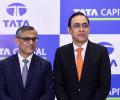
Tata Capital remains confident in its 23-25 per cent growth guidance, driven by strong momentum in Retail and SME segments, despite facing pressures from rising funding costs and potential impacts from new RBI regulations on revolving credit.

The initial public offering of non-banking financial company Tata Capital Ltd got fully subscribed on the final day of bidding on Wednesday. The company's Rs 15,512 crore share sale received bids for 45,84,78,044 shares against 33,34,36,996 shares on offer, translating into 1.38 times subscription, according to NSE data till 13:36 hours.

Seven of them posted losses, led by Air India, with their combined net loss widening to Rs 31,823 crore in FY26 from Rs 17,553 crore a year earlier and Rs 1,555 crore in FY20.
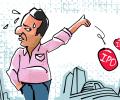
The primary market is set for a busy week as two major companies, Tata Capital Ltd and LG Electronics India Ltd, gear up to launch their initial public offerings (IPOs), collectively worth more than Rs 27,000 crore.

Tata Capital is set to launch India's largest ever initial public offering (IPO) by a non-banking financial company (NBFC), valuing the Tata group firm at Rs 1.38 trillion. This will make the company India's fifth-most-valued NBFC after Bajaj Finance (Rs 6.12 trillion), Bajaj Finserv (Rs 3.2 trillion), Jio Financial Services (Rs 1.87 trillion), and IRFC (Rs 1.59 trillion).

Non-banking financial company (NBFC) Tata Capital is set to launch its much-anticipated $2 billion (Rs 17,200 crore) initial public offering (IPO) in the week beginning September 22, market sources familiar with the matter said on Sunday. The issue is expected to value the company around $11 billion, they added. Tata Capital is likely to make its stock market debut by September 30.
Tata Capital Ltd, set to launch its IPO next week, has identified green financing and digital innovation as its core growth pillars, backed by the merger of its IFC-backed subsidiary Tata Cleantech Capital in 2024. By FY25, the cleantech and infrastructure finance book reached Rs 18,000 crore, growing at a 31.8 per cent CAGR over the last two years, the NBFC said on Friday.

N Chandrasekaran not only faces muted financial performance from the group's listed companies, but also mounting losses at Tata Sons' unlisted subsidiaries, many of which have been set up by him in the last decade.

Commercial vehicle manufacturer Tata Motors Ltd reported an impressive 83 per cent increase in consolidated net profit, reaching Rs 2,556 crore for the first quarter ending June 30, primarily boosted by a significant mark-to-market gain on investments in Tata Capital Ltd.

A stake sale by Tata Trusts will help it to have a larger corpus that could be used to balance the unequal dividends that flow from Tata Sons on an ongoing basis.

Tata Power has partnered with Norway's Ocean Sun to introduce innovative membrane-based floating solar technology to India. A 300 kWp pilot project will be undertaken at Tata Power's Mulshi reservoir in Maharashtra to evaluate the technology's performance, reliability, and cost-effectiveness under Indian conditions. This collaboration aims to leverage India's significant floating solar potential and contribute to its renewable energy goals.

Chandra's tenure also saw a big jump in Tata Sons' other income, such as brand fee from group companies, treasury gains, and other non-recurring income.

'...but should prepare for listing unless a court grants effective interim relief.'
The RBI once again said the Tata group holding company's application for deregistration as an NBFC remains under examination.
The search for N Chandrasekaran's successor as Tata Sons Chairman has reportedly narrowed to Tata Steel CEO T V Narendran, Tata Sons Executive Director Saurabh Agrawal, and NSE MD & CEO Ashish Chauhan, with Chauhan emerging as a potential 'dark horse' candidate.

Tata Sons has the balance sheet to support them, for now.

'Members of Indian family businesses have considered it their birthright to work there and responsibility to take care of it.'

Noel Tata, chairman of Tata Trusts, has presented a proposal for the Shapoorji Pallonji (SP) group to sell its 18.37 per cent stake in Tata Sons for approximately 25,000 crore, aiming to address the SP group's liquidity needs without a public listing of Tata Sons.

Chandrasekaran's exit is more than a change of chairman. It represents the breakdown of the informal consensus that governed the Tata system under Ratan Tata.

The Tata Sons board has voted to reappoint N Chandrasekaran as chairman for a third five-year term, a decision influenced by the Reserve Bank of India's rejection of the company's application to surrender its NBFC registration, which revives the prospect of a stock market listing.

Natarajan Chandrasekaran, credited with stabilising Tata Sons after a boardroom coup and overseeing significant expansion, has announced his resignation as chairman, capping a nearly decade-long tenure marked by both successes and escalating tensions with the group's controlling charitable trusts.
The Reserve Bank of India (RBI) has rejected Tata Sons' application to surrender its non-banking finance company (NBFC) licence, a decision that mandates a public markets listing for the conglomerate's holding company as it is classified as an upper-layer NBFC.
Tata Sons, the holding company of the Tata group, continues to be classified as an 'upper-layer non-banking financial company' (NBFC) by the Reserve Bank of India (RBI), despite its application to deregister as an NBFC-Core Investment Company (CIC) remaining under consideration. This classification subjects it to enhanced regulation and a mandatory listing requirement, which remains uncertain.

Corporate leaders' half-life has shrunk over the past few decades. That is the Tata experience as well. Over 144 years till 2012, Tata Sons had just five chairmen. However, in the 15 years till 2027, the same group will see three, points out R Gopalakrishnan.

Jio Platforms Ltd's Rs 30,213-crore initial public offering (IPO) achieved full subscription within 100 minutes of opening, making it the fastest among India's mega issues, surpassing previous records set by companies like Reliance Power.

'... that work is done. The task is to reallocate what has been built, with the courage of a founder and the discipline of an owner.'

Indian companies, including NBFCs, filed proposals to raise $7.696 billion through external commercial borrowings (ECBs) and foreign currency convertible bonds (FCCBs) in July 2026, a significant increase from $6.09 billion in June.

'whom he believes in ... or whom he has faith in. But we don't know whether that person will be competent or not. This will lead to a lot of uncertainty in the minds of investors and shareholders of the Tata group companies.'
Jio Platforms Ltd, the digital and telecom arm of Reliance Industries, is poised to launch India's largest-ever initial public offering (IPO) at Rs 30,213 crore, surpassing Hyundai Motor India's Rs 27,870-crore offering.

Tata Steel more than doubled its Indian capacity through acquisitions and expansion, strengthening cash generation as it pursued a costly restructuring of its European operations.

Air India has commenced construction of a new multi-facility Maintenance, Repair, and Overhaul (MRO) hangar at Delhi's Indira Gandhi International Airport. This nine-acre facility aims to centralise engineering and maintenance activities, enhancing fleet upkeep, improving reliability, and reducing aircraft ground time for the Tata Group-owned airline.

Tata Sons Chairman N Chandrasekaran affirmed India's robust economic position amidst global uncertainty, emphasising that energy security, advanced manufacturing jobs, and investment in human capital are 'critical' for sustaining the nation's long-term growth.

Indian stock markets witnessed a significant rebound, with the Sensex rallying 1,109 points and the Nifty closing above 22,720, driven by strong performances in IT and financial sectors, a recovering rupee, and Finance Minister Nirmala Sitharaman's comments on long-term capital gains (LTCG) tax.
Tata Sons' unlisted ventures, including Air India, Tata Digital, and Tata Electronics, reported combined net losses of approximately 25,568.8 crore in FY25, a 58.3 per cent increase from the previous year, despite Tata Sons itself remaining profitable for over a decade.

Tata Consumer Products reported healthy revenue growth in Q1 FY27, driven by its India branded business and accelerating momentum in newer segments, which are now expected to sustain double-digit sales growth and improve profitability.

In essence, Tata Sons will continue to be a CIC, whether registered or unregistered. It will have to follow the 90:60 principle.
If it qualifies as belonging to the upper layer, public listing will be one of the regulatory requirements. However, if it qualifies as 'unregistered CIC', it will escape from prudential regulation, explains Tamal Bandyopadhyay.

Indian benchmark indices, Sensex and Nifty, closed lower on Tuesday, with the Sensex declining 329.91 points to 74,529.08 and the Nifty dipping 85.30 points to 23,329, primarily dragged by underperformance in IT, financial, and capital goods stocks despite positive global market trends and easing crude oil prices.

Over a dozen mutual fund houses in India have temporarily suspended fresh subscriptions in their gold fund of funds (FoFs) and gold-silver FoFs, a move believed to be influenced by directions from the Securities and Exchange Board of India (Sebi) ahead of the festive season.

Tata Steel plans to invest approximately Rs 20,000 crore in capital expenditure during the current financial year (FY27), a significant increase from the previous year, with 60 per cent of this allocation directed towards its India business for expansion, new technologies, and sustainability.

Indian IT stocks have experienced their most significant weekly surge in 18 years, with the Nifty IT index climbing 11.72 per cent, as a global sell-off in AI-linked equities redirected investor attention towards India's IT services sector. This shift aligns with a JP Morgan report identifying India as a 'natural AI hedge' due to its large, liquid market and strong domestic institutional investor base.
