
Suzuki Motor Corporation is set to revolutionise its operations by halving vehicle development times and significantly boosting efficiency by 2030, while committing to a diverse multi-powertrain strategy that includes BEVs, hybrids, and carbon-neutral fuels.

Maruti Suzuki India is strategically investing in the premium hatchback segment, launching a refreshed Baleno with advanced driver assistance systems (ADAS) to capture a significant share of the evolving Indian passenger vehicle market, even as SUVs continue their dominance.

Maruti Suzuki India announced a price hike of up to Rs 20,000 on select models, effective from September 2026, marking its third increase since May, citing continuous increases in input costs and inflationary pressures.

Maruti Suzuki India has significantly increased its capital expenditure (capex) outlay to Rs 77,500 crore for the five-year period ending FY31, aiming to boost capacity, develop new models, and enhance R&D, as announced by MD and CEO Hisashi Takeuchi.
Maruti Suzuki India will increase the prices of its vehicles by up to Rs 30,000 across all models from August 2026, citing a sustained increase in input costs.

The Indian Road Transport Ministry has amended the Central Motor Vehicles Rules to permit flex-fuel vehicles capable of running on up to E100 (nearly pure ethanol), a move aimed at reducing dependence on imported crude oil and promoting alternative fuels.
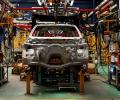
Passenger vehicle dispatches in the domestic Indian market are estimated to have surged by 33 per cent to approximately 4.7 lakh units in July, with market leaders Maruti Suzuki and Hyundai reporting record sales, alongside significant growth from Tata Motors and Mahindra & Mahindra.
Maruti Suzuki India Ltd has launched the Wagon R, India's first flex-fuel car, capable of running on any blend of ethanol and petrol from E20 to E100, aligning with national energy security and sustainability goals.

India's passenger vehicle sales are estimated to have surged by approximately 35 per cent to about 4.5 lakh units in August, driven by strong performances from major automakers like Maruti Suzuki India, Tata Motors Passenger Vehicles, and Mahindra & Mahindra, with the industry entering the festive season with optimism.

The updated Maruti Suzuki Baleno redefines the premium hatchback segment in India with its aggressive new look, advanced Level 2 ADAS features, and a more fuel-efficient Z series petrol engine, catering to the evolving demands of tech-savvy car buyers.

Maruti Suzuki India's CFO, Arnab Roy, has urged the central government to introduce an amnesty scheme or an 'as-is' settlement option to resolve past indirect tax disputes, aiming to clear legacy litigation and foster growth in the automotive industry. Roy emphasised the need for a 'smarter way to address the past' to provide long-term certainty for businesses.

The 200-DMA is a closely watched indicator of a stock's long-term trend and can serve as an early warning of trouble.
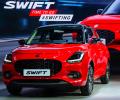
Maruti Suzuki India (MSIL) reported a mixed Q1 FY27, with record quarterly sales driving strong revenue growth, but operating performance was below expectations due to higher commodity and other costs impacting margins. Brokerages anticipate sustained sales growth for the company in the current fiscal year, supported by new launches, robust demand, and significant capacity expansion.
The Road Transport Ministry has updated the Central Motor Vehicles Rules 1989 to allow flex-fuel vehicles capable of running on up to E100 (nearly pure ethanol). These amendments include E100 alongside E85 for emission certification and raise the vehicle weight limit for light petrol and diesel vehicles. This move supports India's strategy to reduce crude oil import dependence, with major automakers already developing flex-fuel models for the Indian market.

Indian equity benchmarks Sensex and Nifty experienced a decline in early trade, primarily due to a sell-off in power and metal stocks, mirroring a broader downturn across Asian markets. Elevated crude oil prices and firm US bond yields further dampened investor sentiment, while an expert warned of an impending correction in overvalued mid and small-cap segments. Track Sensex, Nifty on October 22.

Domestic passenger vehicle dispatches in India are estimated to have grown by approximately 21 per cent to 4.60 lakh units in September, with major carmakers like Maruti Suzuki, Tata Motors, M&M, and Hyundai all reporting double-digit growth, driven by increased supplies for the upcoming peak festival season and healthy demand.

Indian benchmark equity indices, Sensex and Nifty, closed lower for the fourth consecutive session, driven by a surge in crude oil prices above USD 114 per barrel due to escalating tensions in West Asia, coupled with broad-based selling and FII outflows.

India's entry-level passenger vehicle market is experiencing a significant recovery, with mini car wholesales surging 86.3 per cent year-on-year in the first half of FY27, driven by improved affordability and stronger overall demand.

Maruti Suzuki, India's leading passenger vehicle manufacturer, is experiencing robust growth in the June quarter, driven by a recovery in the entry-level segment, easing supply constraints, and significant market share gains. Despite potential headwinds from El Nio, analysts remain optimistic about the company's future performance.
Maruti Suzuki India (MSIL) reported a 9.1 per cent year-on-year decline in net profit for the April-June quarter of 2026-27, marking its second consecutive quarterly fall. This dip occurred despite a significant 29.3 per cent jump in sales volume, primarily due to escalating commodity prices, increased energy costs, and logistics disruptions stemming from the West Asia conflict.

Indian benchmark equity indices, Sensex and Nifty, ended sharply lower, with the Sensex tumbling 876.37 points and the Nifty dropping below 22,900, primarily due to a decline in private bank stocks like HDFC Bank and Axis Bank, alongside weak global market trends.

Indian equity benchmarks Sensex and Nifty rallied up to 1 per cent in early trade, driven by strong performance in IT stocks, Reliance Industries, and favourable global market sentiment, rebounding from previous losses.

Indian equity benchmark indices extended losses for a second consecutive session, with the Sensex dropping 143 points, driven by a sell-off in power, banking, and financial stocks, coupled with elevated crude oil prices and persistent FII selling.

Apple's highly anticipated and most expensive foldable smartphone, the iPhone Duo, has completely sold out its first week's stock in India through pre-bookings, ahead of its official sale date of October 23. This strong demand, particularly at Apple Stores in Mumbai and New Delhi, signals a significant entry into the premium foldable market.
'With inflationary pressures now at elevated levels and the adverse cost environment persisting, the company has to pass on a portion of the increased costs to the market, while continuing to ensure that the impact on customers is kept to the minimum extent possible.'

Air India, SkyDrive, and Suzuki Motor Corporation have signed an initial pact to conduct a joint feasibility study on using electric vertical take-off and landing (eVTOL) aircraft for medical air logistics in India. This collaboration aims to address severe traffic congestion in major Indian cities, which poses challenges for time-critical medical transport, by developing last-mile emergency medical solutions.

India's Ministry of Power has notified the third phase of Corporate Average Fuel Economy (CAFE-III) norms for passenger vehicles, effective from April 1, 2027, which set relatively softer efficiency targets for lighter cars and demand greater improvements from heavier vehicles, a move expected to benefit manufacturers like Maruti Suzuki India.

A cyberattack on an automaker can spread through its wider supply chain and create significant financial losses.

Maruti Suzuki India reported a significant 147 per cent year-on-year increase in mini-car sales (Alto and S-Presso) during April-May 2026, reaching 32,341 units, driven by eased production constraints and a surge in demand for CNG vehicles amidst rising fuel prices.

Maruti Suzuki India's shares gained over 2.5 per cent after a strong March-quarter performance, with analysts maintaining a positive medium-term outlook driven by buoyant domestic market volumes, capacity expansion, and export growth, despite anticipated near-term margin pressures from higher commodity prices and startup costs.

Japan's national cricket team, led by Kendel Kadowaki-Fleming, will play a historic one-off T20 International against India on September 22 in Sano.

India's sedan market is experiencing a notable divergence: affordable entry-level sedans are gaining market share, while midsize sedans are seeing a significant decline as buyers increasingly opt for SUVs in higher price brackets.

Shriram Finance, a leading Indian NBFC, is aggressively expanding its gold loan and electric vehicle (EV) financing segments, targeting a Rs 20,000 crore gold loan portfolio within two years and expecting significant growth in EV disbursements.

September marked India's highest-ever monthly EV retail volume. More than one in nine two-wheelers retailed in September was electric.

Automotive (auto) stocks have been among the best performers in the BSE 200 index in recent months. More than half of the top 15 gainers over the past one, two, and three months have come from the sector.

As India's festive season approaches, passenger vehicle dealers are seeing a notable increase in inventories, yet discounts remain surprisingly moderate compared to previous years, signalling a tighter demand-supply balance in the automotive market.

Japanese 'flying car' manufacturer SkyDrive Inc plans to commercialise its eVTOL aircraft in India by 2028, initially focusing on medical logistics, particularly organ transportation. The company, backed by Suzuki, has signed an agreement with Air India and Suzuki for this purpose and is considering future manufacturing in India.

Cricket giants India are set to play a historic one-off T20 International against Japan in Sano, a match seen as a pivotal moment for the sport's growth in the baseball-dominated country, coinciding with celebrations of 75 years of India-Japan diplomatic relations.

The Afghanistan Cricket Board hosted 'Koh-E-Zafar' in New Delhi to celebrate the strong cricketing friendship between India and Afghanistan.

The historic one-off T20 International between India and Japan on September 22 marks a significant step in cricket's global expansion, aiming to connect with new audiences and strengthen the sport's presence in Asia, according to BCCI secretary Devajit Saikia.
