
Engineering and construction conglomerate Larsen & Toubro (L&T) on Monday announced the listing of the country's first environmental, social and governance bonds on the NSE, raising Rs 500 crore through debentures. In a filing to BSE, the company said it "has listed India's first ESG bonds on the National Stock Exchange (NSE), setting a precedent for a greener and more sustainable financial future in India".
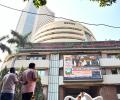
'BSE has facilitated nearly Rs 35 trillion in capital raising across multiple segments.'

'Active funds have the ability to manage downside risk.'

Electric cab-hailing platform BluSmart remained non-operational on Thursday across Delhi-NCR, Bengaluru, and Mumbai, as the market regulator cracked down on its co-founder over alleged misuse of funds at an affiliated company. BluSmart app, that offered more than 8,000 taxis in the three metros, stopped taking bookings on Wednesday evening and remained unoperational on Thursday as well.

'First-time investors, busy professionals, NRIs and those with modest sums looking for curated strategies may find FoFs especially appealing.'

Although most high-frequency traders (HFTs) prefer to set up shop close to stock exchanges to enjoy better latency, a few are willing to sacrifice proximity to save a few bucks. Two HFTs have already established their offices at the GIFT City (Gujarat International Finance Tec-City) IFSC while many more are likely to follow suit.

A higher TER means a larger portion of the return goes to the AMC, leaving less for the investor, unless compensated by higher returns.

The rumour verification process would now be triggered by changes in price or 'material price movements', as the paper defines it. What this means is that companies would need to verify rumours only if the share price moves significantly.
The Securities and Exchange Board of India (Sebi) might relax the disclosure norms around rumour verification to help smooth implementation and ease compliance amid pushback from India Inc, said people in the know. The rule has been notified following amendments to the Listing Obligations and Disclosure Requirements (LODR) by Sebi. However, its implementation has been deferred until February.

The Securities and Exchange Board of India (Sebi) on Wednesday barred financial influencer Mohammad Nasiruddin Ansari, operating with the handle 'Baap of Chart' and known as Md Nasir on social media, from accessing the securities market. Further, the market regulator has asked him to disgorge Rs 17.2 crore for indulging in unregistered investment advisory. 'Baap of Chart' has over 443,000 subscribers on YouTube and 83,000 followers on X (formerly Twitter) and has provided trading recommendations and courses.

Delhi-based electric vehicle (EV) ride-hailing firm Evera Cabs, which grabbed headlines after acquiring 500 cars from the now-defunct cab service BluSmart, is stepping up its presence in the EV cab segment. The company is aiming for revenue of Rs 100 crore in the ongoing financial year (2025-26), up from Rs 18 crore in 2024-25.

Investors should be mindful of the high volatility in cryptos: Bitcoin has fallen more than 80 per cent in past corrections.

The undistributed funds totalling over Rs 25,000 crore lying with the capital markets regulator Sebi's account have come back into focus after the demise of Sahara Group's chief Subrata Roy. Roy passed away in Mumbai on Tuesday night at the age of 75 after battling a prolonged illness. He faced multiple regulatory and legal battles in connection with his group firms that were accused of circumventing regulations with ponzi schemes, allegations his group always denied.

Markets regulator Sebi has ordered the attachment of bank accounts and shares and mutual fund holdings of fugitive businessman Mehul Choksi to recover dues totalling Rs 5.35 crore. The latest decision has been taken after Choksi failed to pay the fine imposed on him in October 2022 by Sebi in a case pertaining to indulging in fraudulent trading in the shares of Gitanjali Gems Ltd. Choksi, who was the chairman and managing director as well as part of the promoter group of Gitanjali Gems, is the maternal uncle of Nirav Modi, both of whom are facing charges of defrauding state-owned Punjab National Bank (PNB) of more than Rs 14,000 crore.

An expert committee appointed by the Supreme Court said it cannot conclude any regulatory failure around Adani Group's stock rallies, and that Sebi has "drawn a blank" in its probe into alleged violations in money flows from offshore entities into the conglomerate. But the six-member panel said there was an evidence of a build-up in short positions on Adani Group stocks ahead of the report of US-based short seller Hindenburg Research, and profiting from squaring off positions after prices crashed post-publication of the damning allegations. "At this stage, taking into account the explanations provided by Sebi, supported by empirical data, prima facie, it would not be possible for the committee to conclude that there has been a regulatory failure around the allegation of price manipulation," the panel said in the report submitted to the Supreme Court.

'Begin with a small investment, observe performance, then scale up gradually.'

There have been multiple instances of the same entity appearing as both a public shareholder as well as under the promoter classification in some listed companies. And this dual-classification happened in the same quarter, according to data compiled by primedatabase.com.

Physics Wallah has filed Draft Red Herring Prospectus (DRHP) with the Securities and Exchange Board of India (Sebi), a precursor to hitting the primary market from where the edtech Unicorn reportedly plans to raise around Rs 4,500 crore through IPO.

Sebi is learnt to have written to several regulators including those in Bermuda, Luxembourg, and Switzerland, seeking detailed information on some FPIs.

Alternative investment funds (AIFs) are yet to fully demat the outstanding units even as the deadline ended on October 31. Industry players say they are working on the transition from physical to electronic with the depositories Central Depository Services (India) Limited (CDSL) and National Securities Depository Limited (NDSL). Some said they are hoping for some relaxation from the market regulator Securities and Exchange Board of India (Sebi), given the teething problems they are facing.

Micro-cap stocks are in the line of fire as market regulator Securities and Exchange Board of India (Sebi) is tightening its noose around investment in small-cap stocks. Given this, analysts suggest investors exit the segment, at least, for the time being. Independent market analyst, Ambareesh Baliga, for instance, said that regulators have gotten worried on the valuation front, though belated, which could prove to be the last straw on the camel's back.

As fintech major Pine Labs gears up for its initial public offering (IPO), its Draft Red Herring Prospectus has highlighted its top executives' pay and stock options, including those of Chief Executive Officer (CEO) Amrish Rau. Rau's net worth is estimated at Rs 850 crore-1,000 crore following the IPO.

Stock exchanges' levy of penalties, ranging from Rs 3 lakh to Rs 12 lakh, on public-sector undertakings (PSUs) for lapses in board composition for the 2024-25 October-December quarter has brought forth issues of governance. Last month, 16 PSUs requested bourses to waive these penalties, arguing that these lapses were neither due to negligence nor within their control, as the appointment of directors is managed by the government.

Anmol Singh Jaggi and Puneet Singh Jaggi, once hailed as rising stars in India's clean energy sector, are now facing serious regulatory action.

The National Stock Exchange (NSE) has received Rs 300 crore from the Securities and Exchange Board of India (Sebi) following relief from the Supreme Court (SC), which is hearing an appeal by the market regulator in the colocation case. The court on March 20 asked Sebi to return Rs 300 crore to the NSE from the Rs 1,107 crore the exchange had deposited as part of the disgorgement in the case. The NSE had given an undertaking that it will return the entire amount to Sebi if the latter wins its appeal before the SC.

The tax department has created many circular traps -- flawed reporting formats, penalties for those who point out the flaws, and faceless assessors with no accountability. The result: Millions of taxpayers face needless harassment and procedural dead ends, highlights Harsh Roongta.

Experts say the robust filing suggests the second half of the year will see large-scale issuances, provided the markets remain supportive.

Front-running is a fraudulent practice where traders exploit advance knowledge of large client orders for personal profit.
The market regulator's newly proposed selection criteria for the over Rs 400-trillion-a-day futures and options (F&O) market could pave the way for the entry of popular stocks such as Life Insurance Corporation (LIC) of India, Jio Financial Services, Zomato, Paytm, DMart, and Adani Energy into the derivatives segment. The Indian derivatives market, which accounts for most of the trading volumes, could see big churn with over two dozen exits from the current list of 182 stocks due to an upward revision in the eligibility thresholds.

The Securities Appellate Tribunal (SAT) on Thursday quashed a Sebi order that barred NDTV founders Prannoy Roy and Radhika Roy from the securities market for two years in an insider trading case. However, the appellate tribunal partly set aside an order against Vikramaditya Chandra, the group's chief executive officer during the relevant period, and remitted the matter back to Sebi to decide the issue. It further said that trades executed by Chandra during PSI-3 (price-sensitive information) are required to be reconsidered, according to the order passed by SAT.

Without changes to the taxation rules, buybacks are expected to remain scarce.

The race to acquire diversified fintech firm Religare Enterprise Limited (REL) intensified as Dabur group promoters, the Burman family, said it was going ahead with the open offer on Monday and claimed that the counter offer made by US-based businessman Digvijay Gaekwad wasn't valid and will not stand scrutiny of market regulator Sebi. The Burman family claimed that the competing offer falls outside the 15-day window stipulated by the Sebi takeover code, following their initial offer on October 4th, 2023.

The Securities and Exchange Board of India's (Sebi's) investigation into the Hindenburg allegations is making slow progress when it comes to obtaining information from overseas regulators, particularly around ultimate beneficial ownerships of certain foreign portfolio investors (FPIs), said people in the know. "Establishing ultimate beneficial ownerships for FPIs is a very complex exercise. "Several jurisdictions allow omnibus structures where the end beneficiaries are not required to be captured or are based in some other geographies.

The Securities and Exchange Board of India (Sebi), the market regulator, has said, in a submission to the Supreme Court, that it is "enquiring" into the allegations made by American short-seller Hindenburg Research against the Adani Group of companies and its impact on the markets. In the same matter, the central government has agreed to form an expert committee to strengthen the regulatory regime in order to ensure that market investors are protected. The Supreme Court had last week suggested an expert committee to look into the allegations and had asked the Centre for its response.

Mutual funds (MFs) have significantly increased their ownership across market segments, but the midcap space stands out with comparatively higher growth. Data reveals that the number of midcap companies with over a fifth of MF ownership has doubled from nine in March 2022 to 18 by March 2025. In contrast, largecap stocks saw only a marginal rise, from three to four such companies during the same period.
Markets regulator Sebi will put in place a framework for the Application Supported by Blocked Amount (ASBA) facility for investors in secondary market trading, similar to the existing system for IPO investors. Sebi's board approved the proposal during its meeting here on Wednesday. Through the proposed facility, which would be optional for investors as well as stock brokers, Sebi aims to bring in "efficiency in the secondary market ecosystem by allowing usage of same blocked amount towards margin and settlement obligations.

The Supreme Court on Friday said it has no reason to "discredit" SEBI, which probed allegations against the Adani group, as there was no material before it to doubt what the market regulator has done and the court does not have to treat what was set out in the Hindenburg report as a "true state of affairs".

The merger of ZEE Entertainment and Sony has reached an advanced stage of completion, and the issues faced by promoters with Sebi should not become a problem for the company, debarred ZEEL MD Punit Goenka has said in a letter to employees, according to sources. Goenka, who along with his father Subhas Chandra, was denied any interim relief against a Sebi order that barred them from holding the position of director or key managerial post in any listed company, in the letter ZEE Entertainment Enterprises Ltd (ZEEL) staff asserted that the merger of Culver Max (earlier known as Sony Pictures Networks India) is at a very important juncture. With the Securities Appellate Tribunal (SAT) restricting him from holding a directorial or key managerial position in a listed company, Goenka told the employees that the ZEEL board has constituted an interim committee of senior executives to ensure smooth operations and day-to-day functioning.
The Securities and Exchange Board of India (Sebi) has plans to give a fillip to disclosure requirements to encourage better information symmetry at listed firms. Under the current regulations, companies need to disclose any event such as acquisition, merger, demerger, restructuring, or sale of any unit which will have an impact on the business. In its consultation paper dated November 12, Sebi has proposed new thresholds for so-called 'material disclosures'.

The Securities and Exchange Board of India (Sebi) has proposed that at least 10 per cent of corporate bond market trades by foreign portfolio investors (FPIs) should be done on the request for quote (RFQ) platform. At present, most trades in the corporate bond market are over-the-counter (OTC), creating a lot of opacity. The markets regulator has been nudging debt market participants such as mutual funds (MFs), alternative investment funds (AIFs) and brokers to use the RFQ platform to boost secondary market liquidity and transparency.
