
India's GDP growth rate will rise to 7 per cent by 2026 compared to 4.6 per cent for China, S&P Global Ratings said on Tuesday. In a report titled 'China Slows India Grows', S&P said it expects Asia-Pacific's growth engine to shift from China to South and Southeast Asia. "We project China's GDP growth to slow to 4.6 per cent in 2024 (2023: 5.4 per cent), edge up to 4.8 per cent in 2025, and return to 4.6 per cent in 2026.

Among the 30 Sensex companies, Mahindra & Mahindra, Power Grid, Sun Pharma, Nestle, UltraTech Cement, NTPC, ITC, ICICI Bank, Titan, Bajaj Finserv, Bharti Airtel, and HDFC Bank were among the biggest gainers. IndusInd Bank, Adani Ports, Tata Steel, Reliance Industries, Axis Bank and Bajaj Finance were among the laggards.

India's manufacturing sector growth fell to a 12-month low in December, as new business orders and production expanded at softer rates, a monthly survey said on Thursday. The seasonally adjusted HSBC India Manufacturing Purchasing Managers' Index was at 56.4 in December, down from 56.5 in November, indicating a weaker improvement in operating conditions.

India's services sector growth touched a four-month high in December, supported by new business inflows on strong demand conditions and easing inflationary pressures, a monthly survey said on Monday. The seasonally adjusted HSBC India Services Business Activity Index, rose from 58.4 in November to 59.3 in December, highlighting the strongest rate of expansion in four months.

'Geopolitical stability could remove the crude oil risk premium.'

Trading sentiment in the equity market this week will be guided by global trends, foreign fund movement, macroeconomic data announcements and RBI's interest rate decision, analysts said. The monthly auto sales data announcement would also be tracked by investors this week.

Macroeconomic data announcements, trading activity of foreign investors and global trends will guide equity market movement this week, which would also mark the beginning of the new calendar year and month, analysts said.

'Investors with foreign currency-denominated goals, such as foreign education or foreign travel, should go for US equity funds.'

S&P Global Ratings on Monday raised India's growth forecast for the current financial year to 6.4 per cent, from 6 per cent, saying that robust domestic momentum has offset headwinds from high food inflation and weak exports. The US-based rating agency, however, has cut growth estimates for the next fiscal (2024-25) to 6.4 per cent, as it expects growth to slow in the second half (October-March) of the current fiscal, on higher base impact and subdued global growth.

The last batch of quarterly earnings, global trends and trading activity of foreign investors will guide the equity market movement in a holiday-shortened week ahead, analysts said. Volatility may continue amid investors' cautious approach in the election season. Markets will remain closed on Monday due to the fifth phase of the Lok Sabha elections in Mumbai.
India's manufacturing sector growth recovered from September's eight-month low to 57.5 in October fuelled by faster increases in total new orders and international sales, a monthly survey said on Monday. The seasonally adjusted HSBC India Manufacturing Purchasing Managers' Index (PMI) rose from September's eight-month low of 56.5 to 57.5 in October, indicating a substantial and accelerated improvement in operating conditions.

The S&P BSE Midcap and the S&P BSE Smallcap indices have managed to stay afloat in a volatile January that saw the frontline indices hit their respective 52-week high levels and then slip. While the S&P BSE Sensex has lost over 2 per cent thus far in January, the S&P BSE Midcap and the S&P BSE Smallcap indices have gained nearly 2.5 per cent and 4 per cent, respectively during this period.

Fund managers of large-cap and equity-linked saving schemes (ELSS) have demonstrated a marked improvement in their performance over the past year, according to the latest SPIVA (S&P Indices Versus Active) report released by S&P Dow Jones Indices. In the one-year period ending June 2023, 17 per cent of active large-cap schemes outperformed the S&P BSE 100, compared to just 9 per cent at the end of June 2022. In the case of ELSS, there was a sharp improvement in performance, with 66 per cent of active schemes delivering better returns than the benchmark S&P BSE 200.

The advance/decline ratio (ADR) - a gauge of market breadth - has remained negative (below 1) for a second consecutive month. In other words, the number of stocks declining is outpacing those rising, as a brutal selloff by overseas investors and lofty valuations weigh on sentiment. According to BSE data, the ADR for October stands at 0.98 for the second month in a row.

India's economic growth prospects should remain strong over the medium term, with GDP expanding 6-7.1 per cent annually in fiscal years 2024-2026, S&P Global Ratings said on Thursday. In a report titled 'Global Banks Country-By-Country Outlook 2024', S&P said the banking sector's weak loans will decline to 3-3.5 per cent of gross advances by March 31, 2025, on the back of structural improvement, including healthy corporate balance sheets, tighter underwriting standards and improved risk-management practices. Interest rates in India are unlikely to rise materially, and this should limit the risk for the banking industry, it added.

Benchmark equity indices Sensex and Nifty declined nearly 1 per cent on Wednesday, falling for the fourth day running amid profit-taking by cautious investors ahead of the results of the Lok Sabha polls. The 30-share BSE Sensex declined 667.55 points or 0.89 per cent to settle at 74,502.90. It went below the 75,000 mark to hit the day's low of 74,454.55, plunging 715.9 points or 0.95 per cent.
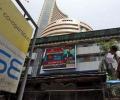
Leading stock exchange BSE on Tuesday postponed the removal of Jio Financial Services Ltd, the demerged non-banking financial services unit of Mukesh Ambani-led Reliance group, from all the S&P BSE Indices to August 29. Earlier, the stock was scheduled to be removed from the indices on August 24. Jio Financial Services Ltd (JFSL) got listed on the bourses on Monday and hit the lower circuit for the second day in a row on Tuesday.

'The US is strongly placed to expand its crude supplies to India.'

Investors should use a mix of active and passive funds.

The seasonally adjusted S&P Global India Manufacturing Purchasing Managers' Index (PMI) slipped from 57.5 in September to 55.5 in October, the slowest rate of expansion since February. The October PMI data pointed to an improvement in overall operating conditions for the 28th straight month.

S&P Global Ratings on Monday retained India's GDP growth forecast at 6 per cent saying it will be the fastest growing economy among Asia Pacific nations. The GDP growth forecast for the current and the next fiscal has been kept unchanged from the forecast made in March partly on account of domestic resilience. "We see the fastest growth at about 6 per cent in India, Vietnam, and the Philippines, S&P Global Ratings said in its quarterly economic update for Asia-Pacific.

According to data from BSE, the 4,357 companies available for trade had a combined mcap of around Rs 416 trillion on Tuesday against India's GDP at current prices of Rs 296.6 trillion in FY24.

From the 30 Sensex firms, Tata Steel, JSW Steel, Power Grid, HDFC Bank, Tata Motors and Larsen & Toubro were the biggest gainers. Hindustan Unilever, Infosys, Bajaj Finance, Axis Bank, Kotak Mahindra Bank and UltraTech Cement were among the laggards.

Small and midcaps are leading the charge in the latest market rebound. Since November 21, when the benchmark S&P BSE Sensex and the National Stock Exchange Nifty hit their recent lows and slipped into correction territory, the Nifty Smallcap 100 index has risen by 8 per cent, while the Nifty Midcap 100 has gained 5.7 per cent. Meanwhile, the Nifty 50 index has risen by 4.7 per cent during this period.

India's manufacturing sector growth fell to an eight-month low in September amid softer increase in factory production, sales and new export orders, a monthly survey said on Tuesday. The seasonally adjusted HSBC India Manufacturing Purchasing Managers' Index (PMI) fell from 57.5 in August to 56.5 in September, registering the weakest pace of growth since January.
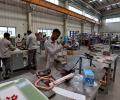
India's manufacturing sector growth fell to a joint 11-month low of 56.5 in November, restricted by competitive conditions and inflationary pressures amid a softer increase in factory orders, a monthly survey said on Monday. The seasonally adjusted HSBC India Manufacturing Purchasing Managers' Index (PMI) fell from 57.5 in October to 56.5 in November, signalling a softer improvement in the health of the sector. However, the pace of growth remained above its long-run average.

Plug-in hybrids have two engines and the electric part has a much larger battery than in the regular hybrids. Car companies, led by the Japanese, are pushing the Indian government to look at hybrids in the interim if it wants to reduce carbon emission.

From the 30 Sensex firms, Mahindra & Mahindra, JSW Steel, Maruti, Tata Steel, Larsen & Toubro, ICICI Bank, Power Grid, Nestle, Bharti Airtel and Adani Ports were the biggest gainers. Tata Consultancy Services emerged as the only laggard.

The index could be vulnerable to a bigger fall given the present market dynamics.

After a strong run in the midcap and smallcap indices, which surged 46 per cent and 43 per cent, respectively, on the National Stock Exchange (NSE) during Samvat 2080, analysts suggest that the rally in these segments may pause to catch its breath in Samvat 2081.

Among the new entries, the largest by market capitalisation are LIC, Avenue Supermarts (DMart), Adani Green Energy, Zomato and Jio Financial Services.
India's services sector activity eased in August but growth rates for new orders remain elevated, as services firms indicated the sharpest upturn in new export business which acted as a catalyst for firms to expand their workforces as well as output, a monthly survey said on Tuesday. Despite falling from 62.3 in July to 60.1 in August, the seasonally adjusted S&P Global India Services PMI Business Activity Index indicated one of the strongest increases in output seen since mid-2010. For the 25th straight month, the headline figure was above the neutral 50 threshold.

S&P Global Ratings on Thursday affirmed India's sovereign rating at 'BBB-' with a stable outlook and said sound economic fundamentals will underpin growth over the next 2-3 years. The stable outlook on the long-term rating reflects S&P's view that India's strong economy and healthy revenue growth will support its weak fiscal settings. "S&P Global Ratings affirmed its 'BBB-' long-term and 'A-3' short-term unsolicited foreign and local currency sovereign credit ratings on India.

Manufacturing activities in India gained momentum in August as new orders and output increased at the quickest rates in nearly three years, according to a survey released on Friday. The seasonally adjusted S&P Global India Manufacturing Purchasing Managers' Index (PMI) rose to 58.6 in August from 57.7 in July. Pollyanna De Lima, Economics Associate Director at S&P Global Market Intelligence, said the PMI results for India painted a vibrant picture of the nation's manufacturing landscape in August.

Passive funds tracking the National Stock Exchange Nifty Next 50 Index have seen their assets under management (AUM) more than double in the past year. The index's growing popularity can be attributed to its robust 50 per cent return over the same period. Currently, the AUM of funds tracking the Nifty Next 50 index stands at nearly Rs 30,000 crore.

Using the debt-to-GDP ratio as a fiscal anchor aligns with efforts to promote fiscal transparency through proper disclosure of off-budget borrowings.

'As we navigate uncertain waters, a conservative approach to largecap investing could provide a strategic advantage.'

Manufacturing activities in India fell to a five-month low in September as new orders rose at a softer pace, which tempered production growth, a monthly survey said on Tuesday. The seasonally adjusted S&P Global India Manufacturing Purchasing Managers' Index (PMI) fell to 57.5 in September, down from 58.6 in August -- the lowest in five months. The September PMI data pointed to an improvement in overall operating conditions for the 27th straight month.

India can become a $6.7 trillion economy by 2031, from $3.4 trillion currently, if the country clocks an average growth of 6.7 per cent for 7 years, an S&P Global report said on Thursday. India had clocked a 7.2 per cent GDP growth in 2022-23 fiscal. But a global slowdown and lagged effect of a policy rate hike by RBI could slow down growth to 6 per cent in the current fiscal, S&P Global said in a report titled 'Look Forward: India's Money'.
India's services sector growth eased to a three-month low in June but service providers continued to signal positive demand trends, which resulted in a stronger increase in new business volumes and further job creation, a monthly survey said on Wednesday. The seasonally adjusted S&P Global India Services PMI Business Activity Index fell from 61.2 in May to 58.5 in June. Despite falling from May, the latest figure was consistent with a sharp pace of growth.
