
The private consortium would invest more than Rs 1,200 crore over the next five years to launch a constellation of 12 state-of-the-art Earth Observation satellites equipped with panchromatic, multispectral, hyperspectral, and microwave SAR (synthetic aperture radar) sensors.
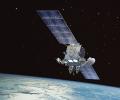
Pixxel has raised $95 million in funding and with the company's commercial Firefly satellites up in orbit selling data globally 'we know and seen what it takes to make this business work.'

The camera was switched on at 10:05 am through a series of commands issued from the spacecraft control centre of ISRO Telemetry, Tracking and Command Network here.
The spacecraft built by scientists of the Indian Space Research Organisation will be equipped with two advanced panchromatic cameras, with a spatial resolution of 2.5 metres and a swath of 30 km each.

Military use apart, the new satellite would be useful for urban and rural applications, coastal land use and regulation, utility management and various related applications.

The ISRO is strengthening 'eye in the sky', which helped the Indian army carry out surgical strikes last year, with the launch.

This is ISRO's new record of launching 20 satellites, including those from the US, Germany, Canada and Indonesia.

In over two decades that it has been gleaning into the cosmos, NASA's Hubble telescope has revealed properties of space and time that for most of human history were only probed in the imaginations of scientists and philosophers alike.

The successful orbiting of the satellites by the Polar Satellite Launch Vehicle PSLV C-40 comes four months after the Indian space Research Organisation's mission to launch backup navigation spacecraft IRNSS-1H onboard PSLV-39 ended in a rare failure.
