
Among Sensex stocks, Tata Motors rose the most by 2.79 per cent. NTPC, Reliance Industries, Infosys, TCS, HDFC twins, Tata Motors, ITC, Power Grid and Bajaj Finserv were among the major gainers. Tata Steel fell the most by 1.22 per cent. L&T, Sun Pharmaceuticals, IndusInd Bank and Ultratech Cement were among the losers.

An improvement in political relations, anchored in a restoration of peace and tranquillity at the border, could open up opportunities for expanded economic and commercial relations between them, suggests former foreign secretary Ambassador Shyam Saran.

Benchmark BSE Sensex rose by 160 points on Thursday in choppy trade following gains in select banking and auto counters amid mixed global cues. The 30-share index gained 160 points to settle at 62,570.68 as 13 of its components advanced while 17 declined. The barometer opened lower but later gained momentum to touch a high of 62,633.56 in the day's trade.
Benchmark Sensex rallied 455 points and Nifty rose more than 133 points to close above the key 18,000-mark for the first time since April on Tuesday as foreign institutional investors continued to be bullish on the domestic market. Continuing its rally for the fourth straight session, the 30-share Sensex rose 455.95 points or 0.76 per cent to close at 60,571.08 points. The broader Nifty climbed 133.70 points or 0.75 per cent to settle at 18,070.05 points. Previously, the Nifty had closed above the 18,000-mark on April 4 this year.

Benchmark BSE Sensex rose by about 322 points to close above the 60,000 level on Monday tracking gains in banking, IT and energy stocks amid positive global equities. The 30-share barometer closed higher by 321.99 pts or 0.54 per cent at a three-week high of 60,115.13, as 21 of the index constituents closed in the green. After a strong opening, the index touched a day's high of 60,284.55 and a low of 59,912.29.

From The New York Times to BBC and The Guardian to The Washington Post, the historic event in India's space programme on Wednesday made headlines across the globe.

Among Sensex shares, Bajaj Finserv fell the most by 4.08 per cent. Bajaj Finance declined by 3.01 per cent, Tata Steel by 2.2 per cent, Wipro by 2.09 per cent, Tata Motors by 1.96 per cent, IndusInd Bank by 1.9 per cent, SBI by 1.75 per cent, Tech Mahindra by 1.66 per cent and HCL Tech by 1.2 per cent. TCS, Infosys, Power Grid, Maruti, Reliance, HDFC twins, L&T, M&M, NTPC and Ultratech Cement were also among the losers.

ITC, Sun Pharma, Maruti, M&M, Tata Motors, HCL Tech, Wipro, Infosys, HUL, Bharti Airtel and Reliance were among the major losers. Kotak Bank rose the most by 1.59 per cent, followed by IndusInd Bank, Bajaj Finance and Bajaj Finserv. L&T, SBI, TCS and HDFC Bank also closed higher.

Benchmark Sensex trimmed early gains to close marginally higher while Nifty settled flat in choppy trade on Tuesday as gains in auto shares were offset by selling pressure in banking and energy shares. The 30-share BSE barometer closed marginally up by 37.08 points or 0.06 per cent to 60,978.75 with 15 of its stocks ending in green and the rest in red. The index opened higher and gained over 300 points to a high of 61,266.06 in early trade.
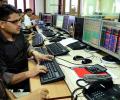
Equity benchmarks Sensex and Nifty on Friday spurted by nearly 2 per cent, propelled by heavy buying in IT, metal and financial stocks amid a rally in global markets after lower-than-expected US inflation data. A strong rupee against the US dollar and unabated foreign capital inflows further bolstered sentiment, traders said. Easing US inflation triggered speculation that the US Federal Reserve might slow down the pace of interest rate hikes.

Nearly 80% of the Japanese public are now opposed to holding the Summer Games as scheduled this year, recent polls show.
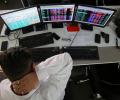
Benchmark Sensex declined 224 points on Wednesday, snapping its four-session winning streak, mainly due to sell-off in IT and pharma counters amid rising concerns over possible aggressive interest rate hikes to tame high inflation. The 30-share index rebounded more than 1,200 points from the early lows before settling at 60,346.97 points, a total loss of 224.11 points or 0.37 per cent compared to Tuesday's closing level. The broader NSE Nifty closed lower 66.30 points or 0.37 per cent at 18,003.75 points.

India is sceptical that Tesla might import into the country cars made in China. Tesla executives were in India last month and appear to have proposed a factory in the country. But do not be surprised if that does not happen in a hurry.

IndusInd Bank was the top gainer in the Sensex pack, spurting over 5 per cent, followed by Bajaj Finserv, HCL Tech, Bajaj Finance, Kotak Bank and Axis Bank. NSE Nifty jumped 203.15 points to 17,780.00.
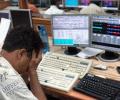
Infosys fell the most among Sensex stocks, declining by 2.85 per cent. Among other IT stocks, TCS fell by 1.87 per cent, Wipro by 1.52 per cent, and HCL Tech by 1.70 per cent. NSE Nifty plunged by 174.65 points to close at 17,938.40.

Nikkei is one of the largest media houses in Japan.

Bajaj Finance was the top gainer in the Sensex pack, rising around 5 per cent, followed by IndusInd Bank, Tata Steel, ITC, Bajaj Finserv, Tech Mahindra and Infosys. On the other hand, Maruti, Bajaj Auto, Nestle India, PowerGrid and Axis Bank were among the laggards.

Among major Sensex movers, Reliance Industries soared by 3.29 per cent as energy prices rose due to the war in Ukraine. Tata Steel emerged as the lead gainer among Sensex scrips, jumping by 6.61 per cent. Power Grid, Titan, NTPC, ICICI Bank, L&T, Infosys and Sun Pharma were among the gainers.

'Advancing friendship with Japan. Prime Ministers @narendramodi and @kishida230 held productive talks in New Delhi. Both leaders discussed ways to boost economic and cultural linkages between the two countries,' Modi's office tweeted.
Kotak Bank rose the most among Sensex scrips, spurting 2.92 per cent amid reports that LIC will up its stake in the private lender to 10 per cent. Gains in HCL Tech, TCS, Infosys, HDFC Bank, Bajaj Finance and Titan helped Sensex close in the green. NSE Nifty edged higher by 27.50 points to end at 17,053.95.

ONGC was the top loser in the Sensex pack, shedding around 3 per cent, followed by Sun Pharma, PowerGrid, Axis Bank, HDFC Bank, Bharti Airtel and Kotak Bank. NSE Nifty declined 124.10 points to 14,906.05.

IOC chief said he believed more than 80 per cent of residents of the Olympic Village would be vaccinated or booked for vaccination ahead of the Games

'We continue to believe that the global economy will narrowly avoid a recession, despite expecting the US, Canada, and most of Europe to fall into recession at some point over the next year or so.'

The faster-than-expected rise in interest rates by the US Federal Reserve (US Fed) shook global financial markets in early 2022. And now the ongoing war between Russia and Ukraine has lifted commodity prices, with Brent crude oil hitting a 14-year high of $139 a barrel in intraday trade. All these developments have sent the equity markets across the world into a tailspin.
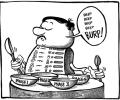
The headline seasonally adjusted Nikkei India Composite PMI Output Index, that maps both the manufacturing and services sectors, rose from 53.3 in June to 54.1 in July.
On the Sensex chart, NTPC, Bajaj Auto, Tech Mahindra, ONGC and Maruti were among the major gainers.

Major global indices - the Nasdaq, Bovespa, Seoul Composite, S&P 500, Dow Jones, S&P BSE Sensex, NYSE, DAX, Nikkei and, CAC 40 - have all gained 37 per cent to 75 per cent since their respective March 2020 low.

Analysts suggest investors remain in a wait-and-watch mode and not jump in to buy stocks across-the-board.
A reading below 50 means contraction in the sector.

IndusInd Bank was the top gainer in the Sensex pack, rising around 2 per cent, followed by Axis Bank, HDFC, ICICI Bank, HDFC Bank, Kotak Bank and SBI. On the other hand, ONGC, Tech Mahindra, NTPC, Sun Pharma and TCS were among the laggards.
Stock market barometers Sensex and Nifty ended marginally higher on Monday as rise in wholesale inflation capped early gains despite a positive trend in global markets. The 30-share index settled 32.02 points or 0.05 per cent higher at 60,718.71 with half of its constituents ending in green. The broad based Nifty edged up 6.70 points or 0.04 per cent to close at 18,109.45.

The Corporate Survey showed 37 per cent of firms were in favour of cancellation, while 32 per cent want a postponement.
Intense volatility remained amid a global selloff led by concerns over the impact China's coronavirus on world economies, analysts said. Market participants are also jittery ahead of January derivatives expiry this week, they added.

The government's top spokesman Katsunobu Kato told reporters on Monday he was unaware of any decision on the issue.
However, predictions that economic conditions will normalise after the elections underpinned optimism regarding the outlook and supported a stronger upturn in employment.

TCS was the top gainer in the Sensex pack, rising around 2 per cent, followed by ONGC, SBI, L&T, Infosys, HCL Tech, ICICI Bank and Axis Bank. The broader NSE Nifty surged hit a record high of 14,109.40.

The impact of Shinzo Abe's towering personality is such that even in death, Abe remains a polarising figure, asserts Dr Rajaram Panda.

The NCEAR has indicated some improvement in the fourth quarter of the current financial year.
The seasonally adjusted Nikkei India Services Business Activity Index fell to 50.2 in May, from 51.0 in April, pointing to the slowest growth rate in the current 12-month stretch of expansion.
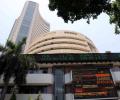
Markets across the world are increasingly turning volatile on concerns over the global economic impact of the coronavirus after China announced sharp increases in the number of people affected in the outbreak, analysts said.
