
Manipal Health Enterprises is set to launch India's largest healthcare initial public offering (IPO) on July 29, aiming to raise Rs 9,275.22 crore to fund expansion and debt reduction, with the issue closing on July 31.

Newly listed companies Vedanta Aluminium Metal, SBI Funds Management and Manipal Health Enterprises have entered the Rs 1 trillion mcap list since March 2026.

Tempsens Instruments India has emerged as the strongest mainboard IPO debutant of calendar year 2026 so far, delivering a 95.55 per cent gain on its listing day, surpassing all previous top performers and contributing to August being the strongest month for listing gains this year.

Next year Medica and Manipal will merge, making the amalgamated entity the largest corporate hospital chain in the country, overtaking Apollo Hospitals Enterprises.
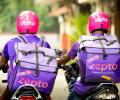
More than a dozen companies, including quick commerce firm Zepto, logistics platform Shiprocket, and housing finance company Truhome Finance, are preparing to launch their initial public offerings (IPOs) next month, collectively aiming to raise over Rs 25,000 crore.

The Indian IPO market is experiencing a significant surge in preliminary filings, with 38 companies submitting papers to SEBI in March 2026, driven by a combination of improved issuer confidence, strategic regulatory compliance, and private equity investors seeking exits amidst volatile market conditions.
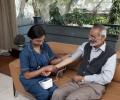
Rough estimates show that at a rate of Rs 1 crore per hospital bed, the investment in India alone would be around Rs 2,000 crore

Manipal Group chairman Ranjan Pai is in early discussions to invest in Byju's-owned Aakash Educational Services Limited (AESL). According to sources in the know, Byju's founder and chief executive officer Byju Raveendran, who owns a 30 per cent stake in Aakash, is expected to partially offload his holding to Pai for $80-90 million (about Rs 650-740 crore). Raveendran may use the money to repay a large part of the Rs 800 crore loan that Byju's raised from US-based investment firm Davidson Kempner Capital Management in May, after facing a 'technical default', the sources said.

Among other major companies, Cox & Kings made a total investment of $39.95 million in four different WOS situated in Hong Kong, Singapore and the UK.
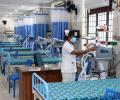
'Every hospital now tracks length of stay closely.' 'More efficiency is brought into the system now.'

Fortis Healthcare has already received binding offers from four entities - KKR-backed Radiant Life Care, IHH Healthcare, Manipal/TPG consortium, and Munjal and Burman family offices.

'Considering Pai is putting his own personal money in Byju's, stakeholders in the company can look forward to more governance and transparency.'

Private equity firms invested about USD 3.7 billion across 133 deals during the first quarter of 2018 as compared to USD 7.3 billion by way of 200 transactions a year ago.
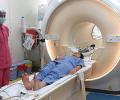
According to a recent CareEdge Ratings report, Bangladesh accounts for around 50-60 per cent of India's total medical tourism inflow

Private Equity investment in Q1, 2015 witnessed a year- on-year jump of 30 per cent to $2.6 billion.

Their offer values Fortis at over Rs 9,000 crore, or around Rs 172 per share.

Two young men jostle in a rickshaw as it clatters along a narrow, bustling lane of North Kolkata, each with a leg dangling over the side of the vehicle, a bulging sack of cosmetics nestled between them. The protagonists here are the founders of Emami - Radhe Shyam Agarwal and Radhe Shyam Goenka - childhood friends who gave up cushy corporate jobs to build a fast-moving consumer goods (FMCG) company. From a 200-square-foot rented space on Muktaram Babu Street in North Kolkata, brand Emami stepped into the competitive world of FMCG 50 years back, armed with just three products: Vanishing cream, talcum powder, and cold cream.
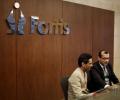
Bhavdeep Singh, the CEO of Fortis Healthcare said that they haven't been able to focus on the business due to an internal issue, especially with regard to the promoters

Tele/video-consults have been effective for patients requiring post-hospitalisation follow-up, especially if they are from outside the city; patients with chronic diseases that need periodic monitoring; and pregnant women who require routine checkup with minimum exposure.
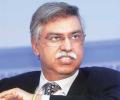
According to Munjal, there is an opportunity for somebody who comes from a not for profit background in health care to do something.

Employees asked to work from home... cancelled travel plans... curtailed meetings... Caution and precaution dominate Corporate India's response to Covid-19.

Vat Vrikshya -- banyan tree in Sanskrit -- helps tribal women, with absolutely zero formal education, set up businesses.

Mohandas Pai took part in an hour-long chat on rediff.com
