
The Ministry of Heavy Industries (MHI) anticipates disbursing approximately 4,700 crore in incentives under the automotive PLI scheme in FY27, more than double the previous two years, while also exploring financing mechanisms for electric buses and trucks and promoting domestic manufacturing of critical EV components.

Electric commercial vehicle manufacturers in India are struggling to meet localisation requirements under the PM eDRIVE scheme, set to begin on Tuesday. The Society of Indian Automobile Manufacturers (Siam) has requested a seven-month extension until April 1, 2027, citing disruptions in the supply of rare earth magnets due to China's export restrictions and geopolitical tensions. The government is yet to decide on the request, which aims to prevent production disruptions and allow time for local supply chain development.
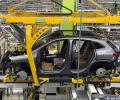
Automobile manufacturers are increasingly vocal about the mounting paperwork and delays associated with India's Production-Linked Incentive (PLI) scheme for the automotive sector, arguing that compliance requirements are becoming as challenging as meeting technical eligibility conditions. They are pushing for a simpler, faster, and more predictable certification and compliance framework.

The Central government has approved an additional Rs 1,000 crore for electric two-wheelers (e2w) under the PM Electric Drive Revolution in Innovative Vehicle Enhancement (PM E-DRIVE) scheme, extending incentives for the segment until March 2028.
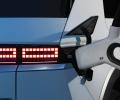
Under FAME-II, automakers provided subsidies to electric vehicle (EV) customers at the time of purchase, with the understanding that the government would reimburse the firms later.

India's home-grown EV startups say the government's auto PLI scheme is helping big players while shutting out innovators building electric two- and three-wheelers from scratch.

Three additional vehicle makers and five more auto component makers will begin availing financial incentives under the production-linked incentive (PLI) scheme for the automobile sector from 2026-27 (FY27) onwards, Hanif Qureshi, additional secretary at the Ministry of Heavy Industries (MHI), said on Wednesday.

Major foreign mining and refining companies have assured the Indian government that they will have sufficient stocks of rare-earth oxides to supply to the winning bidders under the country's production-linked incentive (PLI) scheme for indigenous manufacturing of rare-earth permanent magnets (REPMs), Business Standard has learnt.
The government plans to establish a fully indigenous manufacturing ecosystem with an annual production capacity of up to 6,000 tonnes. The scheme is expected to run for seven years, according to official documents.
'The government is actively engaging with EU to ensure that concerns of Indian companies and hard-to-abate sectors are adequately addressed under CBAM'

Siam argues that a 2040 ban could destabilise ongoing and future investments and threaten millions of jobs in the automotive value chain.

The Ministry of Heavy Industries (MHI) has debarred Hero Electric and Benling India, two defaulters under its flagship Faster Adoption and Manufacturing of Electric Vehicles in India Phase-II (FAME-II) scheme, from participating in any of its incentive programmes in future. This action follows the ministry's findings that the phased manufacturing programme (PMP) guidelines were violated by these two companies, senior officials told

The Rs 500-crore Electric Mobility Promotion Scheme (EMPS) 2024, introduced by the Centre to provide incentives to the electric mobility industry, will conclude on July 31 with barely 3.6 per cent of the targeted vehicle sales achieved so far. This is in stark contrast to the earlier flagship Faster Adoption and Manufacturing of Electric Vehicles (FAME) scheme, which exceeded its sales targets. According to data from the Ministry of Heavy Industry (MHI), only 13,499 of the 372,215 targeted vehicles have been sold under the EMPS scheme.
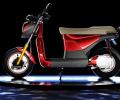
The government has taken a slew of steps to boost the sales of electric two-wheelers and three-wheelers under its Electric Mobility Promotion Scheme (EMPS) 2024, which includes allowing manufacturers to upload claims twice a month and gives them a 120-day window to submit it. The Rs 500-crore scheme -- which had replaced the flagship Faster Adoption and Manufacturing of Electric Vehicles (FAME) scheme-- comes to an end on July 31st.
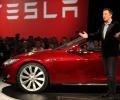
In its first official engagement with the Indian government, Elon Musk-led Tesla and other global automotive (auto) manufacturers sought clarification on the new electric vehicle (EV) policy, specifically regarding investment guidelines and the timeline for the domestic value addition (DVA) requirement. Officials who attended the meeting told Business Standard that the original equipment manufacturers (OEMs) tried to understand whether the complete investment would be made within three or five years and the duration they would have to achieve the 50 per cent DVA. "The consultation meeting was convened to address queries from auto OEMs.
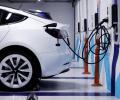
India's electric vehicle (EV) industry hit a new milestone in 2024, with sales surging 26.5 per cent year-on-year to 1.94 million units as of December 29, according to Vahan data from the Ministry of Road Transport and Highways (MoRTH).

In the e2W category, which accounts for more than 60 per cent of total EV sales, volumes fell 15 per cent to 118,944 units in November, compared to 139,787 units in the previous month

'The aim is also to probe how the ministry and testing agencies made negligence in examining these OEMs, so that such negligence is avoided in the future.'
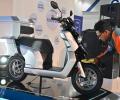
Based on discussions with stakeholders, the ministry is proposing to allocate Rs 26,400 crore for FAME-III subsidy alone with electric two wheelers getting around Rs 8,158 crore, electric buses Rs 9,600 crore and electric three-wheelers Rs 4,100 crore, according to sources in the know. Along with some other components like setting up an innovation fund and money for testing , the total allocation could cross Rs 33,000 crore, estimates suggest.

As the government plans no further extension of the scheme beyond FY24, the task is to achieve the unfinished target of subsidising 914,707 EVs.
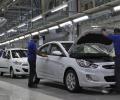
The government has decided to extend the Rs 25,938-crore production-linked incentive scheme for the automotive sector by one year, Union Heavy Industries Minister Mahendra Nath Pandey said on Tuesday. Post extension, the five-year scheme, originally in place from 2022-23 to 2026-27, will be active until 2027-28. At present, incentives are applicable under the scheme for determined sales of Advanced Automotive Technology (AAT) products (vehicles and components) manufactured in India from 1 April 2022 onwards for a period of five consecutive years.
Seven electric two-wheeler companies have suffered a cumulative loss of over Rs 9,000 crore on account of unpaid dues and loss of market after their subsidies were stopped last year, the Society of Manufacturers of Electric Vehicles (SMEV) said on Wednesday. These companies have also been directed by the govt to refund the subsidies availed by them. The audit by SMEV's chartered accountants indicates the total, cumulative damages to affected companies could account for over Rs 9,000 crore on a conservative basis, it noted.

Japanese firm Mitsubishi Heavy Industries on Friday said it will set up a manufacturing plant in Mysore to manufacture small size diesel engines, in joint venture with city-based VST Tillers Tractors Ltd.
Jaiprakash Power Ventures Ltd (JPVL), promoted by the $7-billion Jaypee group, has signed a Rs 4,000-crore agreement with Larsen & Toubro Ltd, the engineering and construction major, for supply of equipment for its Nigrie Super Thermal Power Project in Madhya Pradesh.

And the way to a cure begins with conversation.

The spacecraft is expected to reach Mars orbit in about 200 days from now and then begin its mission to study the Red Planet's atmosphere.

Earning numbers of blue-chips, including ITC and SBI, due tomorrow.
