
ISRO chief's comments came after NASA said that it had found the remains of the Vikram lander by its Lunar Reconnaissance Orbiter and credited the discovery to Chennai-based amateur astronomer and engineer Shanmuga Subramanium.
A joint collaboration between India's Chandrayaan-1 and National Aeronautics and Space Administration's Lunar Reconnaissance Orbiter, which are orbiting the moon, could turn up evidence for valuable lunar water. Some scientists suspect water ice, which would be a precious resource for future explorers, may be trapped in permanently shadowed craters at the moon's poles. Water ice can be distinguished from other materials by the way its radar echoes vary.

The Vikram lander was 100 kilometers away from LRO, near Manzinus crater in the Moon's south pole region, when LRO transmitted laser pulses toward it on December 12 last year.

The precise location of the spacecraft in the lunar highlands has yet to be determined.

On October 3, Subramanian, a Chennai-based mechanical engineer, had tagged the Twitter handles of NASA, LRO and ISRO in a tweet, asking, "Is this Vikram lander? (1 km from the landing spot) Lander might have been buried in Lunar sand?"

It is composed of a series of shots taken October 12 by the Lunar Reconnaissance Orbiter, as it passed about 83 miles above the lunar crater Compton on the far side of the moon, NASA said.
Of the 109 lunar missions during the period, 61 were successful and 48 had failed, it stated.


NASA posted images clicked by its Lunar Reconnaissance Orbiter camera, showing the site's changes on the Moon and the impact point before and after the spacecraft had made a hard-landing on the lunar surface.
The name of Lord Venkateswara, the presiding deity of the 2,000-year-old hill shrine at Tirumala, is all set to "Reach the Moon" onboard the Lunar Reconnaissance Orbiter (LRO) of the US space agency NASA, scheduled for launch later this year, according to a devotee.

Dark craters near Moon's south pole may be the coldest place in the entire solar system, frostier than planet Pluto. The crater floors which are 239,000 miles down, have 'daytime' temperatures that never rise above minus 400 degrees Fahrenheit, according to preliminary results from NASA's Lunar Reconnaissance Orbiter.

"We have been able to detect NASA's Lunar Reconnaissance Orbiter (LRO) and the Indian Space Research Organisation's Chandrayaan-1 spacecraft in lunar orbit with ground-based radar," said Marina Brozovic, a radar scientist at JPL and principal investigator for the test project.

This rare event won't happen again until 2034.

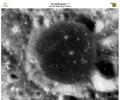
NASA's Lunar Reconnaissance Orbiter spacecraft has snapped a series of images during its flyby on September 17 of Vikram's attempted landing sight near the Moon's uncharted south pole.
'The Lunar Reconnaissance Orbiter imaged the area of the targeted Chandrayaan-2 Vikram landing site on October 14 but did not observe any evidence of the lander'

Subramanian, 33, who was on Tuesday the toast of the astronomy world, managed what ISRO and NASA couldn't through his close examination of before and after images of the scheduled landing.
