
Reliance Industries Ltd (RIL) has publicly welcomed competition from Elon Musk's Starlink in the satellite communications sector, asserting that all players, including Jio, must abide by Indian laws and policies.

Eutelsat OneWeb, a satellite communications company, is awaiting approvals from the Indian central government to launch its services, as confirmed by Sunil Mittal, chairman of Bharti Enterprises, the largest shareholder in the Eutelsat group.

'... but runs with the rigour and discipline of a large enterprise.'

Elon Musk, CEO of SpaceX, stated that Starlink's services in India must be affordable for widespread adoption and that competition would benefit consumers, despite potentially reducing Reliance Jio's profits. He criticised Reliance Jio as a 'de facto monopoly' in India, alleging that certain business conglomerates were blocking Starlink's entry.

Indian benchmark stock indices, Sensex and Nifty, rallied significantly, with Sensex jumping over 1,500 points and Nifty reaching a nearly three-week high, driven by strong buying in banking, IT, and Reliance Industries stocks, alongside easing crude oil prices.

Digital services major Jio Platforms is anticipated to list on the stock exchange by the end of October, with an estimated enterprise valuation of USD 143-146 billion, making it India's largest public offer at around USD 3.8 billion.

Indian telecom industry poised for record growth.

Jio Platforms' initial public offering has shattered global records by receiving over one crore applications, underscoring immense investor confidence in the company's ambitious plans for technology, AI, and cloud services, with the IPO subscribed almost seven times overall.

Jio Platforms' initial public offering has garnered an overwhelming institutional demand of approximately Rs 2.5 lakh crore, significantly exceeding its Rs 8,110-crore anchor book, with global and domestic investors vying for a stake in the Reliance Industries subsidiary.

Jio Platforms Ltd's Rs 30,213-crore initial public offering was subscribed 3.01 times, attracting approximately Rs 66,500 crore in public bids, with qualified institutional buyers oversubscribing their portion by 9.02 times, while retail investor demand remained under-subscribed at 0.68 times.

A Crisil report indicates that India is the world's fastest-growing polymer compound market, contributing 13% to the global industry. Driven by increased manufacturing in automotive, electronics, and infrastructure, the domestic sector is projected to reach USD 16.5 billion by FY2031, with significant demand from various pipeline and cable segments.
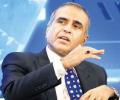
'The Rs 35,000 crore of capex every year, I don't get to sign 35 paise out of this.'
Akash Ambani is leading Jio Platforms' initial public offering (IPO), set to be India's largest, with a strategy that includes appealing to regional investors and drawing parallels to his grandfather Dhirubhai Ambani's historic public listing of Reliance Industries.

Jio Platforms Ltd, the digital and telecom arm of Reliance Industries, is poised to launch India's largest-ever initial public offering (IPO) at Rs 30,213 crore, surpassing Hyundai Motor India's Rs 27,870-crore offering.
Jio Platforms Ltd's Rs 30,213-crore initial public offering (IPO) has garnered bids worth Rs 3.73 lakh crore, achieving a subscription rate of 5.57 times the shares on offer, driven by robust institutional and anchor investor demand.
Lower CVD on accessories, parts and components will help in keeping the cost of handsets low.

Bharti Airtel Chairman Sunil Bharti Mittal stated that his satcom venture, Eutelsat OneWeb, is 'significantly ahead' of Elon Musk's Starlink in the Indian satcom queue, having applied for a licence five years ago, and expressed a desire to receive regulatory approval before Starlink.

Elon Musk questioned if Mukesh Ambani is India's "real boss" amidst Starlink's licensing issues, drawing a cryptic response from Rahul Gandhi. The Indian government clarified that security assessments are pending for all satcom licensees, not just Starlink, and the delay is due to the Ministry of Home Affairs.
The telecom industry has condoled the death of former Communication and IT Minister and BJP leader Pramod Mahajan, while describing him as one of the dynamic and charismatic leaders.

Investors are set to monitor quarterly earnings, crude oil prices, the Jio Platforms initial public offering, and foreign investor activity in the upcoming holiday-shortened week, according to market analysts.

India's government has implemented stringent new regulations under the Telecommunications Act 2023, mandating that all communication infrastructure providers, including those utilising cloud-based networks, must store telecommunication data exclusively within the country, a move expected to significantly impact domestic data centre demand.
Isha Ambani, a director on the board of Jio Platforms, revealed that a failed attempt to upload a college assignment in 2009-10 due to poor internet connectivity in Mumbai sparked the idea and subsequent conversations that led to the creation of Jio.

Airtel Business CEO Sharat Sinha stated that evolving architecture and methodologies for safely deploying Artificial Intelligence, coupled with adequate guardrails, are essential to unlock productivity gains. He welcomed the government's upcoming consultation paper on AI regulation, focusing on safety, deepfakes, and a human-first approach. Sinha also highlighted AI's role in driving demand for digital infrastructure and Airtel's growth in cybersecurity and fraud prevention.
Reliance Jio's reintroduction of Jio Prime membership with a price lock until September 2027 and the retention of its entry-level daily unlimited data plan at ~299 rupees are seen by industry analysts as strong indicators of imminent tariff hikes across the Indian telecom sector.

Close to half the telecom equipment revenue came from carrier equipment manufacturers, which saw a 12.12 per cent dip in earnings to Rs 58,294 crore during the year, according to the survey 'V&D 100' by Voice&Data journal.
A dozen companies, including major players like Jio Platforms and Zetwerk Manufacturing Business, are poised to launch Initial Public Offerings (IPOs) in October, continuing India's strong fundraising momentum in the primary market. These offerings span diverse sectors, reflecting sustained investor interest in businesses with robust growth prospects.

Instant messaging platform Telegram has been restored in India after a week-long government ban, imposed due to its alleged role in circulating leaked NEET examination papers, expired. The Delhi High Court had upheld the ban as lawful and necessary.

The portfolio could be split between listed and unlisted investments, or structured along sectoral lines.
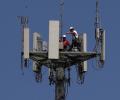
The Department of Telecommunications (DoT) has introduced a new authorisation regime, replacing multiple licences with a single permission for principal telecom services, aiming to simplify compliance and accommodate evolving technologies. This move is expected to ease business operations, enhance fraud prevention with AI, and expand connectivity, especially through satellite networks.

Telegram CEO Pavel Durov has accused Reliance Group, which has a partial Meta stake, of lobbying for a ban on Telegram in India and sabotaging its access for users outside India through BGP hijacking. A senior telecom industry source dismissed these claims as 'fake news,' stating Durov confused Reliance Communications with Reliance Industries Ltd. The allegations come as the Indian government has ordered Google and Apple to delist Telegram temporarily and disable its message-editing feature in India due to concerns over paper leaks in the NEET-UG examination.

Bharti Airtel's homegrown cloud platform, Airtel Cloud, has acquired approximately 40 customers within a year of its launch, with a significant portion coming from the manufacturing sector. The platform, designed for Indian companies, offers sovereign, telco-grade cloud infrastructure, connectivity, and GenAI-based provisioning, addressing the growing demand for secure, India-hosted data solutions, particularly for sensitive workloads and regulated sectors.

TIA said it is very concerned over the discriminatory policy proposals that India is contemplating.

UPI transactions saw a 27% volume increase and 20% value increase in the first half of the current fiscal year. Despite a slight moderation in September, the digital payment system is set to implement a 0.4% merchant discount rate on transactions over Rs 2,000, aiming for a sustainable revenue model. Small merchants and person-to-person payments remain exempt, and UPI's global presence continues to expand.

The Indian government has introduced a 0.4 per cent Merchant Discount Rate (MDR) on UPI payments exceeding Rs 2,000 made to merchants, effective from October 15, with a comprehensive framework set to take full effect by October 15, 2026. This policy aims to regulate transaction fees while protecting small merchants and person-to-person transactions.

The National Payments Corporation of India (NPCI) stated that the Merchant Discount Rate (MDR) "is distributed only amongst the UPI ecosystem, to further invest into infrastructure resilience, innovation, cybersecurity (protecting the UPI infrastructure with banks and non-banks) and customer service."

The government is introducing a 0.4% Merchant Discount Rate (MDR) on UPI person-to-merchant payments above Rs 2,000, effective October 15. This move ends the zero-MDR regime, aiming to fund UPI infrastructure and sustainability, as the previous government subsidy was insufficient to cover operational costs. Payments between individuals and most everyday merchant transactions will remain free.

The Indian government has introduced a 0.4% Merchant Discount Rate (MDR) on UPI person-to-merchant (P2M) transactions exceeding Rs 2,000, effective October 15. This move ends nearly six years of fully free UPI payments, though person-to-person (P2P) transfers and small P2M payments remain free. The charges aim to bolster investment in UPI infrastructure, with specific exemptions and caps for essential sectors.

'The large number of tariff lines in the 90-99 per cent band highlights how deeply embedded Chinese sourcing has become in India's electronics imports.'

Flash floods in Tibet's Gyirong County, near the China-Nepal border, have resulted in five deaths and 558 missing individuals, including 260 foreign nationals. The disaster also caused significant casualties in Nepal and disrupted infrastructure. Rescue operations are underway, and concerns are rising over a newly formed barrier lake that poses a risk of further flooding.

The search for N Chandrasekaran's successor as Tata Sons Chairman has reportedly narrowed to Tata Steel CEO T V Narendran, Tata Sons Executive Director Saurabh Agrawal, and NSE MD & CEO Ashish Chauhan, with Chauhan emerging as a potential 'dark horse' candidate.
