
The finance ministry on Wednesday allowed all private sector banks to participate in government-related business, like collection of taxes. pension payments and small savings schemes. At the moment, only few large private sector are allowed to conduct government-related business.

As many as 6,801 cases of fraud were reported by scheduled commercial banks and select financial institutions involving an amount of Rs 71,542.93 crore in the last fiscal.

The United Forum of Bank Unions (UFBU), an umbrella body of nine unions, has given a call for a two-day strike from December 16 to protest against the proposed privatisation of two state-owned lenders. In the Union Budget presented in February, Finance Minister Nirmala Sitharaman had announced the privatisation of two public sector banks (PSBs) as part of its disinvestment plan. The government has already privatised IDBI Bank by selling its majority stake in the lender to LIC in 2019 and merged 14 public sector banks in the past four years.
ITC has been one of the best performing large-cap stock at the bourses thus far in calendar year 2022 (CY22), rallying nearly 52 per cent during this period and outperforming the sector benchmark - the S&P BSE FMCG index - by a wide margin that moved up around 17 per cent during this period. However, the counter has lost over 5 per cent from its recent high of Rs 346.25 hit on September 23, 2022 and has underperformed the S&P BSE Sensex, which has lost nearly 2 per cent since then. So, is the rally in the stock coming to an end, and is this a good time to book profit?

The Centre is likely to privatise profit-making enterprises, reversing its previous position of first closing or merging loss-making state-run units. The NITI Aayog, which is in the process of selecting public sector units for privatisation, is likely to put out its first list, focusing on companies in non-strategic sectors, along with those that have got Cabinet approval for stake sale, or are in final stage of due diligence. "The shortlisted firms will be put out in three-four tranches, with the first list comprising non-strategic ones, followed by strategic sectors with a focus on privatisation and not divestment," said a senior government official privy to the plan. He said the first report was expected in early April. The think tank approach is in sync with the government's new strategies on privatisation and asset monetisation.

Grasim Industries Ltd said Industrial Development Bank of India withdrew its nominee V Venkateswarlu from the companys board.

The share of public sector undertakings (PSUs) in the total market capitalisation of listed companies--at an all-time low of 10 per cent currently --- may get a leg-up from the government's divestment push. Recently the government announced the successful sale of national carrier Air India to Tata Sons, India's first privatisation of a PSU since 2002-03. The transaction is expected to be completed by December.
The Mumbai-based public sector bank had declared on March 26 about its intention to cut PLR by 50 bps, from 13.25 per cent to 12.75 per cent from April 1. The revised date for implementing revision in key lending rate would be decided later, Agarwal said, adding the bank would monitor the market trend and the steps that the government took to arrest the spiralling prices.

The recent currency volatility - rupee's depreciation against international currencies - may have given heartburns to automakers that rely on imports or pay royalty to parent companies abroad. But for Maruti Suzuki India, favourable movement of the yen - the currency that matters the most - against the Indian rupee, has given it reasons to cheer. The yen's sharp fall against the rupee and the rupee's depreciation against the US dollar, which in turn will bump up export realisations, are set to give a margin boost to the maker of Baleno and Brezza, said analysts. The softening of commodity prices and slew of new SUV launches in the coming months will also aid margins, they said.

Coming Wednesday, Finance Minister (FM) Nirmala Sitharaman will present the 2023 Union Budget - the last full Budget ahead of the 2024 Lok Sabha elections. While India exited 2022 as a relatively bright spot in the global economy, the FM will endeavour to present a Budget that insulates India's economy against global headwinds and recession in advanced economies, while sticking to the path of fiscal consolidation. In this, she is being helped by her core team of trusted advisors.

The depreciation in rupee may pose a problem for students who have taken loans from Indian lenders.
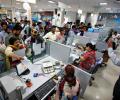
If the banks throw caution to the winds for building loan books, the hydra-headed bad loans may resurface and spoil the party, warns Tamal Bandyopadhyay.

Notwithstanding the inflation pinch, analysts believe the Indian retail sector is on the 'cusp of accelerated earnings growth' as consumer sentiment and discretionary purchases bounce back from the Covid-19 pandemic. "The shift in consumer preference from the unorganised sector to the organised, coupled with uptick in domestic demand as people resume work from office, will cheer the Indian retail sector," says Nishit Master, portfolio manager, Axis Securities. Shopping malls are witnessing increased footfall in lower tier towns and standalone stores as consumption picks up and mobility improves.

Microsoft has become the first global Big Tech company to join the Open Network for Digital Commerce (ONDC), an Indian government initiative for developing a first-of-its-kind open network for digital commerce. The world's second-largest technology firm intends to introduce social e-commerce via its app in the Indian market later this year. ONDC is expected to open to the public in Bengaluru over the next fortnight as it enters into the next phase of the pilot for further fine-tuning before rollouts in other cities, according to a source in the know.

The sharp correction in equity markets has taken a toll on mid-and-small cap stocks that have underperformed their large-cap peers. Thus far in calendar year 2022 (CY22), the mid-and-small cap indexes on the BSE have slipped over 8 per cent and 7 per cent respectively, as compared to a fall of around 6 per cent in the S&P BSE Sensex. While investors dumped mid-and small-cap stocks as the markets remained choppy over the past few weeks, analysts still expect these two segments to see good investor interest from a medium-to-long term perspective.

Quarterly earnings and global cues will be the major sentiment driver for the equity market this week, according to analysts. Of late, Benchmark indices have been on a record-breaking run. "Quarterly results will dictate market sentiment and will be the talk of this week as they pick up the pace. "D-Street will be all ears to any management insights to forecast the future earnings trajectory.
However, the likely impact of strike may not be much excluding few areas, said SBI.

The government on Monday budgeted Rs 1.75 lakh crore from stake sale in public sector companies and financial institutions, including 2 PSU banks and one general insurance company, in the next fiscal year beginning April 1. The amount is lower than the record Rs 2.10 lakh crore which was budgeted to be raised from CPSE disinvestment in the current fiscal year. However, the COVID-19 pandemic impacted the government's CPSE stake sale programme, and the target has been lowered to Rs 32,000 crore in the Revised Estimates.
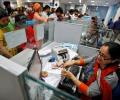
RBI said the improvement in asset quality was driven by state-run lenders which saw a drop both in both GNPA and in the net NPA ratios.

The banking regulator is seeking an early exit mechanism for private banks under Prompt Corrective Action.

Failure to sell Air India, IDBI may have prompted a change in strategy.

Employees of public sector banks (PSBs) on Thursday went on two-day strike against the move to privatise public sector banks impacting normal banking operation across the country. Many branches across different parts of the country were shut as the United Forum of Bank Union (UFBU), an umbrella body of nine bank unions including All India Bank Officers' Confederation (AIBOC), All India Bank Employees Association (AIBEA) and National Organisation of Bank Workers (NOBW) had given two day strike call. As a result, services such as deposits and withdrawal at branches, cheque clearance and loan approvals might be affected due to the strike. But ATMs are expected to function as usual.

"The Reserve Bank of India... has levied an aggregate penalty of Rs 10 million (Rs 1 crore) on the bank for non-compliance of regulatory directions observed during assessment of implementation of SWIFT-related operational controls," Yes Bank said in a regulatory filing.
The target of mopping up Rs 1.75 lakh crore from divestments of some of the public sector companies, including LIC and BPCL during the current fiscal, is on track and groundwork is being prepared for the goal, Chief Economic Advisor Krishnamurthy Subramanian said on Monday. On the COVID-19 pandemic, Subramanian said the impact of the second wave is lesser than that of the first one. In an interactive session, organised by Federation of Telangana Chambers of Commerce and Industry, the CEA said robust GST collections, over Rs one lakh crore per month for eight months in a row shows that consumption is picking up indicating positive signal for growth.
With huge liquidity in the money market, partly contributed by capital flows, the interest rates are expected to soften in the short term, according to Industrial Development Bank of India chairman V P Shetty.

The institutional portion was subscribed 143 times, the wealthy investor portion by 360 times and the retail investor portion by 24.5 times.

A lot of mid and small-caps are in the bubble zone and command high valuation and have corrected sharply.

Services such as deposits and withdrawal at branches, cheque clearance and loan approvals would be affected due to the strike.
United Forum of Bank Unions (UFBU), an umbrella body of nine unions, has given a call for a two-day strike from March 15 to protest against the proposed privatisation of two state-owned lenders. In the Union Budget presented last month, Finance Minister Nirmala Sitharaman had announced the privatisation of two public sector banks (PSBs) as part of its disinvestment plan. The government has already privatised IDBI Bank by selling its majority stake in the lender to LIC in 2019 and merged 14 public sector banks in the last four years.

Private equity (PE) is set to play a bigger role in banks. Of 21 recommendations accepted by the Reserve Bank of India (RBI) out of 31 made by its Internal Working Group (IWG), its stance on non-promoter holdings in private banks is seen with excitement, though it doesn't refer to PEs explicitly. On non-promoter holdings in these banks, the RBI said this will be capped at 10 per cent of the paid-up voting equity share capital in the case "of natural persons and non-financial institutions and entities"; and "at 15 per cent for all categories of financial institutions, entities, supranational institutions, public sector undertaking, or the government." While this is a modification of the IWG's stance for the non-promoter holding in banks at up to 15 per cent, it does open up a huge window for PEs, all the same. This is because, while the RBI has remained silent on the eligibility of industrial houses for bank licences, fresh high-quality capital in large amounts can only come from PEs.
Banking operations across the country may be impacted on Thursday as some bank unions would be joining the one-day nationwide strike called by central trade unions. Ten central trade unions, except Bharatiya Mazdoor Sangh, will observe the nationwide general strike to protest against various policies of the central government. Many lenders, including IDBI Bank and Bank of Maharashtra, in regulatory filings on Wednesday said their normal working could be affected at the branches and offices.

That's the only way to convince those who have money to return to the bank fold, ditching other asset classes, says Tamal Bandyopadhyay.

After 'mutual funds sahi hai', it could be the turn of something like 'stock market sahi hai'. Ahead of what will be India's biggest initial public offering, expected later this year, the government and the insurance major are planning a high-decibel awareness campaign for retail investors to ensure their participation in large numbers. "It may be along the lines of the highly successful campaign on mutual funds," an official privy to the developments said. The campaign will mainly target investors in tier II and tier III cities, and will be organised through the vast network of LIC agents to make the policyholders aware about investing in stock markets.

Jaypee Infratech's financial creditors on Monday deferred the voting process on Suraksha group's offer to acquire the realty firm and will decide later this week whether bids of Suraksha group as well as NBCC should be considered again. Days after NBCC strongly objected to the Committee of Creditors (CoC) rejecting its offer and also questioned the jurisdiction of Interim Resolution Professional (IRP) Anuj Jain, the creditors held a meeting to discuss NBCC's addendum to its existing offer. The CoC, at its meeting on Monday, decided to conduct voting on May 27-28 on whether both contenders -- Suraksha group and NBCC -- should be allowed to submit their resolution plans for Jaypee Infratech Ltd (JIL), which went into insolvency proceedings in 2017.

Personal loans have about 80 per cent share in exposures restructured under regulatory package 2.0 by eight banks who have declared results for the second quarter. The remaining 20 per cent are loans to individuals used for business and credit to MSMEs. The total recast exposure of these banks under One Time Restructuring (OTR 2.0) was Rs 27,708 crore.

It may be a 'no-go' for banking licences to large industrial houses.

'The correction could take two to three months and traders need to be careful.' 'For investors, this could be a good time to nibble in.'
