
Indian bank credit expanded by 16.08 per cent year-on-year in FY26, marking its fastest pace since FY24, while deposits grew by 13.47 per cent, according to RBI data. Experts caution that year-end figures may be inflated due to reporting date changes, but acknowledge strong momentum in corporate, MSME, and retail segments.

The government has sharply reduced excise duty on petrol to 3 and diesel to zero, offering major relief to consumers. Here's how the price cut will impact fuel rates and inflation.

India's net oil import bill could rise by $56 billion to $64 billion annually assuming global crude averages $110 to $115 per barrel in FY27.

If the conflict continues for a prolonged period, State-run oil companies may have to review retail fuel prices accordingly.

India's peak power demand is projected to hit 270 GW this summer, surpassing last year's record of 250 GW.

Analysts predict India will face oil price volatility and macroeconomic effects due to the escalating Iran crisis, though the country's oil supply chain is not yet structurally insecure.

Retail inflation rose to a three-month high of 1.33 per cent in December 2025 mainly due to higher prices of kitchen essentials, including vegetables and protein-rich items.

India's economy experienced a growth of 7.8 per cent during the October-December quarter of 2025-26, according to the new series of national accounts with 2022-23 as the base year.

Even as the benchmark and broader indices were down sharply on Monday due to escalating tensions in West Asia, the Nifty Defence index ended the session in the green.

India's eight key infrastructure sectors registered a four-month high growth rate of 3.7 per cent in December last year, driven by a jump in the output of fertiliser and cement, according to official data released on Tuesday.
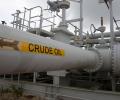
India will restrict crude oil purchases from Russia as part of an agreement reached with the US in exchange for lower trade tariffs, sources said, adding imports will continue for now by refiners such as Nayara Energy, which have no other alternative source. US President Donald Trump announced overnight that the United States will cut the reciprocal tariff on imports of Indian goods to 18 per cent from 25 per cent under a broader bilateral understanding.

The US Food and Drug Administration (USFDA) recorded a significant decline in serious regulatory findings at Indian drug manufacturing facilities between January and December 2025. Data reveals that 'official action indicated' (OAI) cases - the most severe classification - nearly halved over the past year.

There is a minimum requirement of Rs 2.5 trillion capital expenditure every year and it is understood at the highest levels of the government.

Gold imports climbed 349.22 per cent to $12.07 billion in January, while silver imports rose 127 per cent to $2 billion.

India's eight key infrastructure sectors grew at a slower pace of 1.8 per cent in November against 5.8 per cent in the same month last year, amid a dip in production of crude oil, natural gas, refinery products, and electricity, according to official data released on Monday.

The imposition of safeguard duty, an uptick in exports, and an increase in input cost are driving steel prices higher. The latest round of price increase took place on Friday, with some steel mills increasing hot-rolled coil (HRC) prices by ~500-750 a tonne, according to price reporting and market intelligence firm BigMint. HRC is a benchmark for flat steel.

Growth of eight key infrastructure sectors remained flat in October as expansion in output of petroleum refinery products, fertiliser and steel was offset by a contraction in coal and electricity production, according to official data released on Thursday.

Banks are depending more heavily on the market for certificates of deposit (CDs), whose worth climbed to a record Rs 5.75 trillion in the fortnight to January 15, owing to deposit tightness in the system.

Inflows into mutual fund (MF) schemes via systematic investment plans (SIPs) have topped Rs 3 trillion for the first time in a calendar year, as investors increasingly rely on the staggered investment route amid market volatility.

Domestic rating agency Icra on Wednesday said India's real GDP growth for the September quarter is likely to decline to 6.5 per cent due to heavy rains and weaker corporate performance. The agency, however, maintained its FY25 growth estimate at 7 per cent on expectations of a pick up in economic activity in the second half of the fiscal.

High US tariffs are expected to affect close to 8 per cent of India's overall auto component production, ratings firm Icra said on Wednesday. Indian auto component exporters are at a relative disadvantage compared to most other Asian exporting nations, highlighting the importance of concluding an India-US bilateral trade agreement, it added.

Network scale seen as central to tapping smaller markets.

The Indian economy is likely to grow at 7.4 per cent in 2025-26, up from 6.5 per cent in the previous fiscal, mainly on account of better performance of manufacturing and services sectors, as per the government data released on Wednesday.

India's eight key infrastructure sectors' growth jumped to a 13-month high of 6.3 per cent in August 2025 on account of expansion in coal, steel, and cement production, according to official data released on Monday. The core sectors' output growth was 3.7 per cent in the previous month of July.

India's net oil import bill could widen to $101-104 billion in current fiscal from $96.1 billion in 2023-24 and any escalation in the Iran-Israel conflict could impart an upward pressure on the value of imports, ICRA said on Tuesday. The domestic rating agency said based on its analysis, lower value of Russian oil imports is estimated to have led to savings of $7.9 billion in 11 months (April-February) of 2023-24, up from $5.1 billion in 2022-23.

Indian automakers are reviving legacy nameplates to leverage brand recall and stand out in a crowded market, as classic badges like Sierra, Safari, Baleno and Scorpio return to attract buyers.
India, the world's fourth largest economy, is set to maintain the 'goldilocks' phase with tailwinds of good growth, low inflation and robust banking performance as well as reform initiatives poised to sustain the economic pace witnessed during 2025.

Domestic rating agency Icra on Monday revised its FY24 GDP growth forecast to 6.5 per cent from 6.2 per cent earlier. However, the revised forecast is still much lower than the Reserve Bank of India's (RBI's) 7 per cent real Gross Domestic Product (GDP) growth estimate for the ongoing fiscal. Earlier this month, the RBI had revised upwards its GDP estimate to 7 per cent from 6.5 per cent, calling the revised number a "conservative" one.
With deposit growth remaining sluggish and the credit - deposit ratio of commercial banks crossing 80 per cent, banks have ramped up their borrowing in the certificate of deposit (CD) market. In the fortnight ended November 14, CD issuances climbed to nearly Rs 55,000 crore - double the borrowings of the preceding two fortnights and the highest since the September 19 fortnight.

Domestic air passenger traffic grew 5.1 per cent year-on-year to an estimated 138.9 million in May and was significantly higher by around 14 per cent than pre-Covid levels, credit ratings agency Icra said on Thursday. Icra also said the outlook on the Indian aviation industry is stable amid the continued recovery in domestic and international air passenger traffic with a relatively stable cost environment and expectations of the trend continuing in FY2025.

India's exports contracted 11.8 per cent to $34.38 billion in October, showed government data released on Monday. Imports jumped 16.63 per cent to $76.06 billion.

Retail inflation slipped to 1.54 per cent in September from 2.07 per cent in the preceding month mainly due to subdued prices of food items, including vegetables and pulses, according to government data released on Monday. The consumer price index (CPI) based inflation was 5.49 per cent in September 2024.

India's decision to import LPG from the US helps it to diversify sources as it reduces almost full reliance on West Asian countries for supply of the country's primary cooking fuel.
India's merchandise trade deficit widened to a record $41.68 billion in October, as gold imports trebled and outbound shipments registered their sharpest contraction in 14 months, according to data released by the commerce department.
The Indian economy recorded a six-quarter high growth of 8.2 per cent in July-September, as factories churned out more products in anticipation of a consumption boost from the GST rate cut, according to government data.
Saudi Arabia's steep cut in LPG benchmark prices has pushed India's household LPG underrecoveries to their lowest level in over two years, slashing oil companies' losses from Rs 200-250 per cylinder last year to about Rs 20-40 now.

Indian airline industry is expecting to prune its net losses to Rs 3,000-5,000 crore in this fiscal from an estimated Rs 17,000-17,500 crore in FY2023 on the back of improved yields and stable cost environment, credit ratings agency ICRA said on Tuesday. At the same time, ICRA also estimated that domestic air passenger traffic will expand by 8-13 per cent each in FY2024 and FY2025. The rating agency has also maintained its stable outlook on the industry in view of healthy passenger traffic growth, improved yields and a stable cost environment.
Domestic air passenger traffic touched 1.25 crore in January this year, an increase of 96 per cent compared to the year-ago period, according to rating agency Icra. However, it said the traffic remained around 2 per cent lower compared to the pre-Covid levels -- January 2020. The traffic stood at 64 lakh in January last year. Icra is maintaining a negative outlook on the Indian aviation industry, reflecting the view that the financial performance of Indian airlines is likely to remain under pressure in the near term, even though the recovery in domestic passenger traffic has been healthy.
The Indian steel industry is faced with a paradox: Rising demand and falling prices. Demand continues to surge as user industries gather pace, with the World Steel Association projecting around 9 per cent annual growth for India over 2025 and 2026, the year domestic demand is projected to be almost 75 million tonnes (mt) higher than in 2020.

India, the world's third largest oil importing and consuming nation, is likely to save as much as Rs 1.8 lakh crore on import of crude oil and LNG if the trend of softening international energy rates continues, Icra said Wednesday. India, which meets over 85 per cent of its crude oil needs through imports, spent $242.4 billion on buying crude from overseas in the fiscal year ended March 31, 2025.
