
Hiring demand strongest in ecommerce, tech startups, healthcare, and energy sectors, with Bengaluru, Hyderabad, and Pune leading.
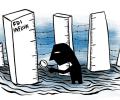
Net foreign direct investment (FDI) remained negative in November 2025 for the third consecutive month, mainly due to high repatriation, the Reserve Bank of India (RBI) said in its January bulletin.

Weakness in the information technology (IT) sector hiring has weighed on Info Edge (India) over the past year, leading to a 13 per cent correction in the stock during this period. While the company's 2025-26 (FY26) third-quarter (October-December/Q3) performance showed a marginal improvement, brokerages believe the IT hiring outlook remains weak due to macroeconomic uncertainty in the US.

New business premium of life insurance companies grew 18 per cent year-on-year (Y-o-Y) to Rs 35,417 crore in February, driven by robust growth at the state-owned Life Insurance Corporation of India (LIC) due to a favourable base.

Tech Mahindra, HCL Tech, State Bank of India, UltraTech Cement and HDFC Bank were also among the gainers. In contrast, Eternal, Asian Paints, Bharat Electronics, Sun Pharma and Maruti were among the laggards.

'The West Asia or the Gulf crisis has shown that what we develop as national infrastructure when things are not as bad as they could be, we forget to plan for adversities.'

The Lokpal, India's anti-corruption ombudsman, has been allocated Rs 30 crore in the Union Budget 2026-27. The Central Vigilance Commission (CVC) has been allocated Rs 54.56 crore.

Driven by GST reforms, robust festive demand, and softening raw material prices, the FMCG industry expects volume-based growth, supported by a mid-single digit revenue rise and improved operating margins in the December quarter.

Top real estate developers reported healthy presales growth in the second quarter of FY26, aided by a steady pipeline of new project launches. While overall housing momentum across major Indian cities moderated during the quarter, listed players remained relatively insulated.
Stocks of fast-moving consumer goods companies have taken it on the chin in calendar year 2026 (CY26) with the Nifty FMCG index falling over 6 per cent compared to the Nifty 50 dipping 0.8 per cent. Nifty FMCG is one of the worst-performing sectors on the NSE in CY26.

India's diagnostics sector is accelerating capacity addition and geographic expansion, as large chains and regional players invest in new laboratories, integrated centres and dense sample collection networks to tap rising demand for preventive, advanced and precision testing.

Three additional vehicle makers and five more auto component makers will begin availing financial incentives under the production-linked incentive (PLI) scheme for the automobile sector from 2026-27 (FY27) onwards, Hanif Qureshi, additional secretary at the Ministry of Heavy Industries (MHI), said on Wednesday.

Tier-II, Tier-III, and rural regions accounted for 62 per cent of all new health insurance policies sold by insurers so far in 2025-26 (FY26), according to a Policybazaar report. These regions are also witnessing a rise in the sum assured opted by customers.

The projections in the cement industry are mixed. Prices and demand remained muted in the third quarter (October & November) and short term uptick doesn't seem likely. However, the second quarter of the financial year 2026 (Q2FY26) was good year-on-year (Y-o-Y) for many cement majors aided by base effect, and some analysts expect acceleration in earnings and volume in the next financial year, again aided by base effect.

Benchmark equity indices Sensex and Nifty extended their gains for the third straight session on Wednesday, driven by last-hour buying in bank, metal, and FMCG shares.

Vedanta, a conglomerate in mining and metals, has seen a surge in its share price on the back of multiple triggers. Its demerger appears to be on track, a strong non-ferrous commodity cycle is boosting margins, and silver bulls are interested in Hindustan Zinc, its subsidiary.
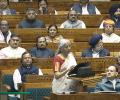
The fiscal deficit for FY25 has been pegged at 4.8 per cent of GDP and at 4.4 per cent for FY26, Finance Minister Nirmala Sitharaman said on Saturday. Presenting the Budget 2025-26, she said net market borrowings are estimated at Rs 11.54 lakh crore for next fiscal year.

The Securities and Exchange Board of India (Sebi) has granted a no-objection certificate (NOC) to the National Stock Exchange of India (NSE), paving the way for the country's biggest exchange - currently valued at 5 trillion in the unlisted market - to file draft documents for its long-awaited initial public offering (IPO).

Developers are entering one of the busiest construction cycles, with the top four firms planning launches worth Rs 1.13 trillion over the near to medium term, even as execution faces pressure from approval delays, labour shortages, rising costs, and contractor capacity limits across the industry.

The ministries of Road Transport & Highways and Railways have exceeded the national average capital expenditure (capex) by spending 63 per cent and 57 per cent of Budget estimates (BE), respectively, in the first half of 2025-26 (FY26). The total capital expenditure for April-September of FY26 stood at 52 per cent of the BE, according to the latest data by the Controller General of Accounts (CGA).

IT services firm HCLTech on Monday reported a 11.2 per cent decline in consolidated net profit to Rs 4,076 crore in the October-December quarter of FY26.

A Jefferies report warns that the IT services sector is set for a structural shift due to AI, requiring talent and operating model overhauls and increasing cyclicality.

Building on last year's clearance of 172K cases, I-T department is pushing for faster appeal disposals, penalty reforms and system-driven processes to curb litigation and boost tax certainty.

'The problem is not just slower growth, but also the quality of growth.'

Dabur's business update for Q3FY26 indicated mid-single digit consolidated revenue growth. The guidance is that growth in operating and net profits will beat revenue growth. In the domestic business, home and personal care (HPC) revenue grew in double digits, while healthcare is likely to post a sequential growth in low-single digits.

India's privatisation push, once projected as a cornerstone of economic reform, has suffered another setback, with the Centre set to call off the IDBI Bank stake sale, highlighting the political and structural constraints shaping the country's disinvestment policy, experts say.

India's merchandise exports experienced a slight decrease in February, while imports surged due to increased gold and silver purchases, leading to a widened trade deficit. The West Asia crisis is expected to further impact trade in the coming months.

The country's largest listed auto parts company by market capitalisation, Samvardhana Motherson International, reported a better than expected operating performance in the second quarter (July-September) of 2025-26 (Q2FY26). Though the global passenger vehicle (PV) market is facing multiple headwinds, the company is outperforming on the back of higher content per vehicle and market share gains.

Indian tech sector's revenues are set to grow 5.1 per cent to $282.6 billion in FY25, and likely to climb up further to $300 billion in FY26, lobby grouping Nasscom said on Monday. The revenue growth is on the "right trajectory", the body's president Rajesh Nambiar told reporters here, pointing out to revenue growth of 4 per cent in FY24, 5.1 per cent in FY25 and the over 6.1 per cent needed to cross its expectation of crossing $300 billion in FY26.

Leading hospital chain Apollo Hospitals Enterprises Ltd (Ahel) has posted a consolidated net profit of Rs 477 crore during the second quarter this financial year, up 26 per cent from Rs 379 crore during the same period last financial year.

Indian Oil Corporation's (IOC's) Q2FY26 operating profit of 14,600 crore beat Street estimates and was up 16 per cent on a sequential basis. It surged 287 per cent over the year-ago quarter on account of an improved refining performance.

The forthcoming Budget could think of maintaining public capital expenditure at 3 per cent so that domestic resources are available for private investments, points out N R Bhanumurthy.

Highlights of the Economic Survey 2025-26

Foreign portfolio investors (FPIs) infused Rs 22,615 crore into Indian equities in February, marking the highest monthly inflow in 17 months, driven by factors such as the interim India-US trade deal, correction in domestic market valuations, and strong corporate earnings.

The army has been behind the other two forces in capex since FY21.

Since their inception, they have cumulatively distributed over Rs 26,700 crore to unitholders.

Growth accelerated for Zomato operator Eternal in the second quarter of financial year 2026 (Q2FY26). Zomato's business to commerce (B2C) operations delivered a strong 57 per cent year-on-year (Y-o-Y) rise in net order value (NOV) to Rs 23,164 crore while consolidated revenue soared 183 per cent Y-o-Y (90 per cent Q-o-Q) to Rs 13,590 crore during the period, with like-for-like (LFL) growth of 65 per cent, and acceleration in the quick commerce (QC) segment, which recorded NOV growth of 137 per cent Y-o-Y (27 per cent Q-o-Q).

The July-September quarter (Q2) business update on revenue by FSN E-Commerce Ventures (Nykaa) was well received by most investors and the share price surged over 6 per cent, driven by one block deal. Even after Wednesday's minor dip, it was still higher at Rs 257.50 as compared to Monday's close of Rs 255.55.
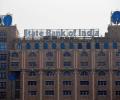
State Bank of India on Saturday reported an all-time high profit of Rs 21,028 crore in December quarter FY26 on a standalone basis.

The Union Cabinet on Wednesday approved a relief package for debt-laden Vodafone Idea, freezing the AGR (Adjusted Gross Revenue) dues at Rs 87,695 crore and rescheduling the payment from FY32 to FY41, according to sources.
