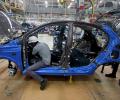
Automobile industry in India is going through a long-term structural slowdown as the compound annual growth rate (CAGR) across all major vehicle segments has witnessed a decline over the last three decades, as per industry body SIAM. The auto industry has been facing headwinds even before the COVID-19 pandemic derailed the entire sector last year, a research conducted by the Society of Indian Automobile Manufacturers (SIAM) has revealed. The study clearly shows that the pandemic is not the only reason for the auto sector slowdown, which is facing deeper structural issues that need attention, the industry body noted.

The government's regional connectivity scheme UDAN has witnessed a slow progress of implementation, as not even 50 per cent of the route have been operationalised and the second wave of the pandemic, which started from mid of March 2021, may impact it further going forward, according to a report. Rating agency ICRA in its report on Tuesday said that there is likely to be a further delay of two years in achieving the target of operationalising as many as 100 unserved and underserved airports and starting at least 1,000 RCS routes by 2024. Aimed at enhancing regional connectivity through fiscal support and infrastructure development, the maiden flight under the Ude Desh Ka Aam Nagrik (UDAN) scheme was flagged off by Prime Minister Narendra Modi from Shimla for Delhi on April 27, 2017.

Russia is among the top buyers of Indian tea, accounting for about 18 per cent of the industry's total exports.

As per Western Union's study on overseas education, 22 per cent students prefer new and unconventional study destinations such as Ireland, Turkey and Spain.

Equity markets braved all odds this fiscal and rewarded investors with high returns as the benchmark Sensex surged more than 66 per cent despite COVID-led disruptions and concerns over its impact on the economy. Market analysts termed FY 2020-21 as a roller coaster ride for not only Indian markets but also for equity indices globally due to the pandemic. In an unprecedented come back, the 30-share BSE Sensex has jumped 19,540.01 points or 66.30 per cent so far this fiscal. This extraordinary rally holds significance as markets faced volatile trends this fiscal.

Anil Rego, CEO, Right Horizons, answers your personal income tax queries.

They pointed out that Finance Minister Nirmala Sitharaman relies a lot on divestments, where the government under-performed in FY2019-20, to achieve the 3.8 per cent fiscal deficit target.

Alliance Air, which is the largest regional airline, is currently operating 77 daily flights compared to 126 last year.

The growth in the contact-intensive portion of the economy trailed our expectation, highlighting how imperative it is for confidence to improve, either through accelerated vaccinations or otherwise, to drive a sustainable recovery in these sectors, asserts Aditi Nayar.

Amit Shah's net worth grew 32 per cent to Rs 37.91 crore, mainly due to 80 per cent appreciation in the market value of his securities.

Bank of America (BofA) Securities expects India to be the third-largest economy in the world by 2031. The economic rise could become a reality by 2028, but the Covid pandemic delayed the pace, BofA Securities economists Indranil Sen Gupta and Aastha Gudwani wrote in a report.
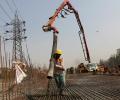
The key demand drivers -- such as low home loan rates and income tax sops, particularly for affordable housing -- that supported the recovery in H2 FY2021, remain in place and will spur recovery again, feel experts.

According to a new report by international management consulting firm Arthur D Little, the worst of COVID-19's impact will be felt by India's most vulnerable in terms of job loss, poverty increase and reduced per-capita income, which in turn will result in a steep decline in the Gross Domestic Product (GDP). "Given the continued rise of COVID-19 cases, we believe that a W-shaped recovery is the most likely scenario for India. This implies a GDP contraction of 10.8 per cent in FY 2020-21 and GDP growth of 0.8 per cent in FY 2021-22," the report said.

RBL Bank is no Yes Bank. It's not fraught with fraud. It's a story of limitless ambition and greed for growth under a leader who doesn't want to give up, says Tamal Bandyopadhyay.

US e-commerce giant Amazon has written to the independent directors of Future Retail Limited (FRL), including Gagan Singh, Ravindra Dhariwal and Jacob Mathew, and its audit committee, providing data and alleging that there have been significant financial irregularities to the prejudice of public shareholders, banks, creditors, and third-party suppliers. Amazon has said this warrants a thorough and independent examination of all relevant facts and related-party transactions, including of past financial years, by an independent agency. Separately, Amazon has written to Securities and Exchange Board of India Chairman Ajay Tyagi, seeking the withdrawal of the regulator's conditional approval granted to FRL related to the merger deal between the Future group and Reliance.

As per commerce and industry ministry data, food inflation fell to 4.91 per cent in March from 7.79 per cent in the previous month.

This includes an infrastructure push which may lead to the government spending more than its budgeted capital expenditure for 2020-21. There are also discussions on increasing the scope and quantum of direct cash transfers to the beneficiaries who need it the most.

One reason is that airlines have ramped up capacity and expanded their presence in tier-II markets. The first of a three-part series analyses how the aviation industry is an outlier in the midst of an overall economic slowdown.

This is the third consecutive month when GST mop-up remained below the Rs 1 lakh crore mark, despite the festival season.

OMCs' Digital India move is likely to have an impact on more than 80.3 million Pradhan Mantri Ujjwala Yojana consumers, majority of whom are not exposed to digital transact.

The hit to economic activity will be mostly confined to the first quarter. And a third wave, if it materialises, is unlikely to be hugely disruptive for the economy, predicts T T Ram Mohan.

The disruptions caused by COVID-19 have more severely impacted small and mid-sized corporates, including NBFCs and MFIs, in terms of access to liquidity.
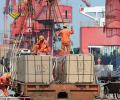
Import segments which recorded negative growth include gold, silver, transport equipment, coal, fertiliser, machinery and machine tools. However, exports of oil seeds, coffee, rice, tobacco, spices, pharma, and chemicals reported positive growth in June.

ONGC was the top loser in the Sensex pack, cracking over 16 per cent, followed by Reliance Industries, IndusInd Bank, Tata Steel, TCS, SBI, ICICI Bank and Bajaj Auto.

Owing to the risk perception attached with the segment by banks, the residential realty segment has been increasingly relying on non-banking financial companies and housing finance companies to raise debt financing, reports Abhijit Lele.
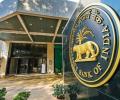
RBI in wait and watch mode as several risks to inflation continue to exist including a sudden reversal of food prices and oil price volatility.

Beside manufacturing, deceleration was also witnessed in sectors like agriculture, construction and electricity, gas and water supply.

According to ICRA, even in a high-growth scenario, wherein the second half of FY20 sees the incremental bank credit rise to Rs 6.5-7 trn, there will still be a 40-45% year-on-year decline.
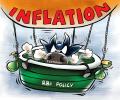
Currently, the retail inflation is well below the RBI's comfort level. The government has asked the central bank to keep inflation in the range of 4 per cent.

Despite the gains from Jet's closure, in 2018 and 2019, the airline continued to make losses in many quarters for a variety of reasons, including some mistakes like taking on Jet's aircraft, which were not in great shape and had business class configuration, a gamble that did not work for SpiceJet.

are in the process of building one at the Jio Center in Bandra Kurla Complex where the Maker Maxity building used to be. "This theatre will be on the top of the mall and should be able to accommodate 300 cars, and is expected to open sometime in January or February next year.

The government kept its nerve in the face of a massive shock. It chose not to resort to a massive fiscal stimulus. It focused instead on providing liquidity support and easing restrictions on movement in stages, observes T T Ram Mohan.
Anil Rego, CEO, Right Horizons, answers your personal income tax queries.

Stating that COVID-19 has not yet been contained in India, the rating agency in a statement said the government stimulus package is low relative to countries with similar economic impacts from the pandemic. "The COVID-19 outbreak in India and two months of lockdown -- longer in some areas -- have led to a sudden stop in the economy. That means growth will contract sharply this fiscal year (April 2020 to March 2021)," it said. "Economic activity will face ongoing disruption over the next year as the country transitions to a post-COVID-19 world."
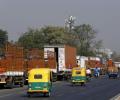
The industry said if the policy was announced, it would have taken 28 million vehicles bought before March 2005 off the road.

Investment in infrastructure was necessary for the economy, as power shortages, inadequate transport and poor connectivity affect overall growth performance, as per the Economic Survey 2019-20 tabled in Parliament by Union Finance and Corporate Affairs Minister Nirmala Sitharaman. "To achieve GDP of USD 5 trillion by 2024-25, India needs to spend about USD 1.4 trillion (Rs 100 lakh crore) over these years on infrastructure so that a lack of infrastructure does not become a constraint to growth," it said.

The Indian IT companies, which account for a large number of H-1B applications, are likely to face the additional financial burden because of this proposed increase in H-1B filing fees.

'If this first instalment of advance tax is paid by June 30, instead of June 15, then the interest on delayed payment will be levied at 0.75% per month instead of 1% per month,' notes Homi Mistry, a partner with Deloitte India.

From 100% tax deductions for contributions to PM-CARES fund to extending the due date for linking Aadhar and PAN card, the government has provided various tax relief and extensions in deadlines for statutory compliances, says Homi Mistry.

After a sharp sell-off in the past two months, overseas investors were once again seen turning bullish on Indian equities. FIIs bought shares worth Rs 63.5 billion in the past five sessions, their highest weekly investment tally in many months.
