
New business premium of life insurance companies grew 18 per cent year-on-year (Y-o-Y) to Rs 35,417 crore in February, driven by robust growth at the state-owned Life Insurance Corporation of India (LIC) due to a favourable base.

The information technology (IT) services industry may be headed for another year of sluggish growth. Based on the results of the top five IT services companies for the first quarter of 2025-26 (Q1FY26), analysts say the possibility of hitting high single-digit revenue growth in FY26 looks unlikely.

Net foreign direct investment (FDI) remained negative in November 2025 for the third consecutive month, mainly due to high repatriation, the Reserve Bank of India (RBI) said in its January bulletin.
Life Insurance Corporation of India (LIC) reported encouraging results for the April-June quarter (Q1) of FY26. The net premium income of India's largest life insurer was Rs 1.2 trillion, up 5 per cent year-on-year (Y-o-Y), in Q1. Renewal premium grew 6 per cent Y-o-Y to Rs 59,900 crore, while first-year and single premium grew 1 per cent and 4 per cent Y-o-Y respectively to Rs 7,500 crore and Rs 51,900 crore.

Finance Minister Nirmala Sitharaman's biggest challenge will be to find a new growth driver, particularly against the backdrop of a global economy ravaged by heightened uncertainty and fragmentation, financial markets on a precipice, and global commodity prices on a continued uptrend.

The finance minister said that consolidation of state-owned banks could proceed at any time without waiting for the recommendations of the proposed high-level committee on banking.

The 16th Finance Commission, led by Arvind Panagariya, has recommended maintaining the states' share in central taxes at 41% for the five-year period starting April 1, 2026. The government has accepted this recommendation, with Rs 1.4 lakh crore allocated to states for FY 2026-27 as Finance Commission Grants.

India's power demand rose 4.5 per cent year-on-year (Y-o-Y) to 143 billion units (BUs) in January, marking the highest consumption for the month since 2010, primarily on the back of severe cold wave conditions across northern and eastern regions of the country.

The new labour Codes, notified by the central government in November 2025, have pushed up employee costs for private-sector banks and insurance companies, with these firms reporting higher operating expenses in the October-December quarter (Q3FY26) due to the statutory impact of the new labour Codes.

Two-wheeler (2W) major Bajaj Auto on Friday posted its highest ever quarterly revenue and profit during the third quarter of 2025-26 (Q3FY26). Bajaj Auto's consolidated net profit for the quarter grew by 25 per cent year-on-year (Y-o-Y) to Rs 2,749 crore, with the revenue also growing 23 per cent to Rs 16,204 crore.

IT services major Infosys on Wednesday reported a 2.2 per cent decline in consolidated net profit to Rs 6,654 crore in the October-December quarter of FY26. The Bengaluru-headquartered firm had registered a net profit (attributable to owners of the company) of Rs 6,806 crore in the year-ago period.

India's merchandise exports experienced a slight decrease in February, while imports surged due to increased gold and silver purchases, leading to a widened trade deficit. The West Asia crisis is expected to further impact trade in the coming months.

Gold imports climbed 349.22 per cent to $12.07 billion in January, while silver imports rose 127 per cent to $2 billion.

Three additional vehicle makers and five more auto component makers will begin availing financial incentives under the production-linked incentive (PLI) scheme for the automobile sector from 2026-27 (FY27) onwards, Hanif Qureshi, additional secretary at the Ministry of Heavy Industries (MHI), said on Wednesday.

The shares of Titan Company hit its all-time high on the BSE and was the top gainer in the Sensex on Wednesday after the company released its business update for the third quarter of 2025-26 (Q3FY26). The stock closed at 4,272, up 3.94 per cent as compared to the Sensex, which was a tad down.

The forthcoming Budget could think of maintaining public capital expenditure at 3 per cent so that domestic resources are available for private investments, points out N R Bhanumurthy.

The Punjab government has allocated Rs 11,577 crore to home affairs, justice, and jails in the 2026-27 budget, focusing on strengthening institutional capacity, technology-driven surveillance, and prison security.

A pickup in freight rates, rising fleet utilisation and a long-awaited replacement cycle are breathing fresh life into India's commercial vehicle (CV) market, strengthening the investment case for Tata Motors' CV arm (TMCV). Despite a broadly steady December quarter (Q3) performance, brokerages remain divided on whether the upswing is strong enough to offset margin pressures.
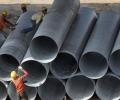
The Ministry of Steel on Monday signed Memoranda of Understanding (MoUs) with 55 companies for 85 projects under the third round of the Production-Linked Incentive (PLI) scheme for specialty steel.

IT services major Wipro on Friday reported a 7 per cent decline in consolidated net profit to Rs 3,119 crore in the third quarter of FY26, weighed by a one-time provisional impact of Rs 302.8 crore due to the implementation of new Labour Codes.

The FM proposed a rule-based automated process for small taxpayers in FY27 Budget.

Deloitte India on Thursday projected India's economy to grow 6.7-6.9 per cent in the current fiscal amid buoyant demand and policy reforms. Indian economy grew 7.8 per cent in the April-June quarter of current fiscal.

The amount involved in banking system frauds surged to Rs 21,515 crore in the first half of FY26, up 30 per cent from the same period last year, even as the number of frauds fell 2.8 times to 5,092.

Dabur's business update for Q3FY26 indicated mid-single digit consolidated revenue growth. The guidance is that growth in operating and net profits will beat revenue growth. In the domestic business, home and personal care (HPC) revenue grew in double digits, while healthcare is likely to post a sequential growth in low-single digits.

Vedanta, a conglomerate in mining and metals, has seen a surge in its share price on the back of multiple triggers. Its demerger appears to be on track, a strong non-ferrous commodity cycle is boosting margins, and silver bulls are interested in Hindustan Zinc, its subsidiary.

A shift appears underway in India's tax landscape. States with relatively smaller tax collections like Odisha and Telangana are emerging as the fastest-growing contributors to indirect and direct tax collections, respectively.

Tata Sons' dividend from Tata group companies for last financial year is expected to show a decline of 3.5 per cent to Rs 36,514 crore from Rs 37,832 crore a year earlier. This should be the first year-on-year decline in Tata Sons' dividend in the last nine years. The holding company had last reported a decline in FY16, when its proceeds had gone down 42.5 per cent to Rs 6,898 crore from Rs 11,993 crore a year earlier.

For FY26, the company has adopted a cautious outlook, anticipating domestic growth to broadly track the industry's low single-digit estimated growth amid ongoing economic headwinds.

Public sector banks' (PSBs') employee count grew for the first time in five years while private sector banks' staff strength saw a decline in 2024-25 (FY25), according to latest data released by the Reserve Bank of India (RBI). The employee count of state-owned lenders rose 0.22 per cent year-on-year (Y-o-Y) to 757,641 at the end of March 31, 2025 from 756,015 in FY24.

The selloff in domestic information technology stocks intensified on Friday, with the Nifty IT index sliding as much as 5.2 per cent during the session before paring losses to close 1.44 per cent lower.

India's high cost of capital due to relatively shallow corporate bond markets, limited institutional investor depth, sovereign risk premia, and regulatory restrictions on capital flows, is a constraint on private investment and long-run growth, the Economic Survey, authored by Chief Economic Advisor (CEA) V Anantha Nageswaran, said.
The government on Friday received financial bids for the strategic disinvestment of IDBI Bank, the Department of Investment and Public Asset Management (Dipam) said in an official statement on X.

HCLTech reported flat net income of Rs 4,235 crore in the second quarter of 2025-26 (Q2FY26) compared to last year, even as its revenue was up 10.7 per cent to Rs 31,492 crore helped by financial services and technology business verticals.

The Securities and Exchange Board of India (Sebi) has granted a no-objection certificate (NOC) to the National Stock Exchange of India (NSE), paving the way for the country's biggest exchange - currently valued at 5 trillion in the unlisted market - to file draft documents for its long-awaited initial public offering (IPO).

The government has proposed to lower debt-to-GDP ratio to 55.6 per cent in FY27, from 56.1 per cent in the current fiscal year, Finance Minister Nirmala Sitharaman said on Sunday.
The government has proposed to lower debt-to-GDP ratio to 55.6 per cent in FY27, from 56.1 per cent in the current fiscal year, Finance Minister Nirmala Sitharaman said on Sunday.

Non-banking financial companies (NBFCs) such as Bajaj Finance, Shriram Finance, Muthoot Finance, and IIFL Finance have regained their growth momentum after losing market share to banks in the post-Covid period. The growth surge is being led by diversified lenders and gold-loan companies while development-finance institutions such as Power Finance Corporation (PFC), REC, and Housing & Urban Development Corporation (Hudco) continue to grow at a slower pace.

The quarterly manufacturing index by the industry body Federation of Indian Chambers of Commerce & Industry (Ficci) rose to an all-time high in the third quarter of financial year 2025-26 (Q3FY26), with 91 per cent of respondents reporting either higher or same production levels, against 87 per cent in the previous quarter.

Asian Development Bank (ADB) on Friday warned that India's limited crude oil reserves of about 100 million barrels - sufficient for only 40-45 days of consumption - leave the country particularly vulnerable to supply disruptions through the Strait of Hormuz amid the ongoing war in West Asia.

India's eight core infrastructure sectors experienced a slowdown in production growth, reaching a two-month low of 4% in January. Crude oil and natural gas output declined, while refinery products remained flat. Overall growth for the April-January period was also lower compared to the previous fiscal year.
