
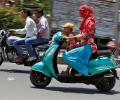
The two-wheeler industry was hit by an increase in insurance rates, liquidity crunch, poor sentiment, rural distress and uncertainty over the BS-VI regulations, among other factors.
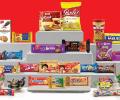
Indian consumers are likely to get respite from rising prices just before the festival season. Some consumer companies, including automakers, have indicated that they are planning to pause price hikes just before demand picks up in August, while keeping a close eye on volatile raw material prices.

Lenders have become worried as some dealers were not using the money provided to them for car financing.
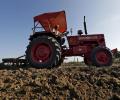
This rise was spurred by record kharif sowing - after a good rabi season - that ensured high disposable incomes in rural India.
After a very weak December quarter and a poor year-to-date fiscal year volumes-when sales plunged to the lowest in nine years, the signs in the first 15 days of January haven't been encouraging either. "Though the severity of the current wave is not as high as the previous one, it has hit the sentiments hard impacting conversion of enquiries into sales," said Vinkesh Gulati, president, Federation of Automobile Dealers Association (FADA).

During the meeting with Finance Minister Nirmala Sitharaman, the auto industry broadly presented factors such as issues regarding availability and affordability of financing, increasing cost of acquisition of vehicles and change in axle load capacity for commercial vehicles that have hurt demand.

As per the conditions set by General Motors, a dealer who does not accept its offer by July 15 would get only 50 per cent of the compensation amount being offered.

For automakers, the festive season is about raking it in through ramped up sales and attractive consumer offers. However, despite the robust demand, what may spoil the party this year is a global shortage of semiconductors.

As macroeconomic numbers continue to disappoint, reaching pre-Covid level is unlikely in FY21.

The first leg of the 35-day festive period, which ended with Dussehra, failed to bring any cheer for auto companies. While makers of passenger vehicles struggled to meet demand due to the persistent shortage of semiconductors, a recovery in demand remained elusive for two-wheeler manufacturers despite offers and schemes. The overall season, which ends two days after Diwali, is unlikely to bring any turnaround in either the supply or the demand scenario, said dealers and officials at auto companies.

Recently, South Korean Foreign Minister, Chung Eui-yong, dialled his Indian counterpart, S Jaishankar, in New Delhi. His government, he said, "regretted the offence caused to the people of India". A day earlier, India had summoned the South Korean ambassador to express its "strong displeasure" over "an unacceptable social media post".
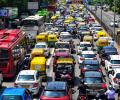
If the court order is implemented, it will lead to an increase in the insurance outgo for car owners by a minimum Rs 50,000 for car and a minimum of Rs 7,000 for two-wheeler owners.

With entry-level cars being preferred amid the pandemic, market leader Maruti Suzuki has strengthened its hold, along with Hyundai Motor India.
The muted expectation of dealers come at a time when vehicle manufacturers such as Maruti Suzuki, Hyundai Motor, Mahindra & Mahindra and others reported a double-digit fall in wholesale dispatches to dealerships in July and August.

Increasing the duties on auto parts and putting an additional cess on petrol and diesel could drive up costs of vehicles, specially where volumes are low and localisation is not viable.
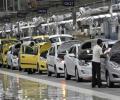
The government on Friday announced several relief measures including deferring one-time registration fee, lifting the ban on purchase of petrol/diesel vehicles by its departments and allowing higher depreciation, but it remained non-committal on the demand for a reduction in GST rates.

However, the World Bank has projected India's GDP growth rate at 7.5 per cent for the next three financial years, including the current one.

The development comes after a recent notification from the Union home ministry, which has permitted companies to resume manufacturing operations and reopening of shops in red, green and orange zones with certain riders.

The slowdown in growth is an industry-wide trend and companies are adjusting production to bring down the inventory levels at plants as well as dealerships.
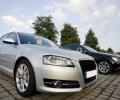
While two-wheeler sales are down 15 per cent year-on-year, passenger vehicles sales are lower by 5-7 per cent.

Renault will start with a slew of new products that will be launched over the second half of this year and next year, apart from giving facelifts to the Kwid and Duster.

Among those who have the most to lose from India's haphazard policies are dealers selling cars made by Toyota, Mahindra & Mahindra, Daimler AG's and Tata Motors' luxury arm, Jaguar Land Rover
