
India's automobile retail sales saw a 23.8 per cent year-on-year decline in October to 31.72 lakh units, primarily due to the shift of major festivals like Dhanteras and Diwali to November this year, according to the Federation of Automobile Dealers Associations (FADA). Despite the overall dip, electric vehicle sales reached an all-time high, and commercial vehicles, three-wheelers, and tractors recorded their best-ever October sales.

India's automobile retail market achieved a record 55.25 lakh units in sales during the 42-day festive season, marking a 2.21 per cent growth year-on-year, despite a 7.16 per cent decline in passenger vehicle sales. Electric vehicle adoption saw a significant surge, crossing the five-lakh mark for the first time in a single festive season.

India's automobile retail sales surged by 21.83 per cent year-on-year in June, reaching 25,57,234 units, marking the best June ever recorded across all segments, according to the Federation of Automobile Dealers Associations (FADA).

Indian automakers like Tata Motors Passenger Vehicles and Mahindra & Mahindra are experiencing increased semiconductor procurement costs due to surging demand from AI data centres. This global shift is tightening chip supplies for conventional automotive applications, forcing manufacturers to pay premiums and build inventories to maintain production, with concerns about prolonged supply constraints and rising prices for memory chips.

Automobile dealers in India are reporting healthy bookings ahead of Navratri and Dussehra, with the Federation of Automobile Dealers Associations (Fada) indicating strong confidence in a pickup in deliveries from mid-October, despite a high base from last year's GST-led surge.

Tata Motors is maintaining its lead over Mahindra & Mahindra in the race for the second position in India's passenger vehicle market, largely driven by its strong performance in electric vehicle sales. Both companies are aggressively expanding their SUV and EV portfolios and scaling up production to meet surging demand, indicating a fierce competition ahead.

India's auto sector has reported robust vehicle deliveries during Dhanteras, with major automakers like Maruti Suzuki, Tata Motors, and Hyundai India experiencing significant growth across two-wheeler, passenger vehicle, and commercial vehicle segments. This strong momentum is expected to continue through Diwali, driven by positive market sentiment and high demand, even in the pre-owned car market.

Indian automobile retail sales reached a record 25,36,920 units in September, marking a 31.82 per cent year-on-year growth, with passenger vehicles recording their highest-ever September sales at 4,27,213 units, according to the Federation of Indian Automobile Dealers (FADA).

Honda Motorcycle and Scooter India has maintained its position as the top-selling player in the retail two-wheeler market for the fourth consecutive month in October, intensifying its challenge to long-time leader Hero MotoCorp. This consistent performance, driven by strong scooter sales and shifting market dynamics, has significantly narrowed the gap between the two giants, with Honda now clearly establishing itself as a formidable contender for the market leader slot in the coming years.

A year after GST rates were rationalised, retail growth in automobiles has sustained beyond the initial festival surge, led by two-wheelers and passenger vehicles (PVs), with the Fada data showing rural markets emerging as a key driver of the post-GST demand recovery.

India's leading two-wheeler manufacturers, including TVS Motor, Bajaj Auto, and Hero MotoCorp, are preparing for a deceleration in growth during the second half of financial year 2026-27 (H2FY27). This anticipated slowdown is attributed to a high base effect from last year's GST rate cut, inconsistent rural demand, and a growing disparity between premium and entry-level segments.

Electric passenger vehicle retail sales in India surged by 81.2 per cent to 26,682 units in May, with Tata Motors leading the segment, while electric two-wheeler sales also saw a substantial 62.76 per cent increase, according to the Federation of Automobile Dealers Associations (FADA).
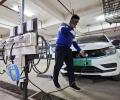
Electric vehicle (EV) sales in India are growing faster than the industry's ability to produce and deliver them, leading to supply shortages at dealerships during the peak festival season. This surge in demand is attributed to rising conventional fuel prices, making EVs a more attractive option for cost-conscious buyers.
As India's festive season approaches, passenger vehicle dealers are seeing a notable increase in inventories, yet discounts remain surprisingly moderate compared to previous years, signalling a tighter demand-supply balance in the automotive market.
India's automobile retail sales reached an unprecedented 24.23 lakh units in August, marking a 17.51 per cent year-on-year growth, with alternative fuels (CNG, hybrid, and electric) collectively surpassing petrol in the passenger vehicle segment for the first time.

September marked India's highest-ever monthly EV retail volume. More than one in nine two-wheelers retailed in September was electric.
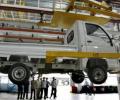
Rural commercial vehicle (CV) registrations have consistently outpaced urban sales from April to July 2026, driven by a significant diversification of the rural economy and the positive impact of GST-led consumption, according to experts and data from Fada.

India's electric two-wheeler market has seen record penetration, exceeding 11.2 per cent, driven by crude oil price fluctuations. This surge has led to an unexpected crisis for Indian OEMs, with unfulfilled customer demand reaching 20-30 per cent and average waiting periods exceeding four weeks, a situation expected to intensify during the upcoming festival season.

Total automobile retail sales in India surged by 25.89 per cent year-on-year to 25,91,138 units in July, driven by GST rationalisation, ease of retail finance, and favourable festival timing, according to the Federation of Automobile Dealers Associations (FADA). This marks the first time all vehicle categories recorded their best-ever July sales.

Electric vehicle retail sales in India reached a new monthly record of 3,27,901 units in July, marking a 66 per cent increase over the previous year, with nearly one in eight vehicles retailed now being electric.

Indian passenger vehicle manufacturers are significantly increasing production and stocking dealerships in anticipation of strong festival season demand, with new launches planned and supply bottlenecks being addressed. However, the industry faces potential moderation in growth during the second half of FY27 due to a high base from last year's post-GST surge, commodity inflation, and elevated inventory levels.

The company has also started scouting for land for a new plant, as it plans manufacturing capacity beyond its immediate volume requirements.

koda Auto Volkswagen India is actively exploring various approaches to penetrate India's burgeoning electric vehicle (EV) market, including importing global models, local assembly, and developing highly localised products, as EV penetration is expected to reach 17-18% by the end of the decade.
India's electric vehicle market achieved a significant milestone in June 2026, accounting for over 12% of total vehicle retail sales for the first time. This growth, driven by strong demand across electric two-wheelers, passenger vehicles, and commercial vehicles, saw overall EV retail sales surge by 63% year-on-year to a record 306,220 units, indicating a mainstream shift in mobility.

Electric vehicle (EV) retail sales surged 16.37 per cent year-on-year to 22,70,107 units in 2025, driven by a 77 per cent jump in electric passenger car sales, according to data released by dealers' body FADA on Wednesday. The EV makers had recorded a total sales of 19,50,727 units in 2024, the Federation of Automobile Dealers' Association (FADA) said.
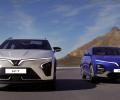
New players like Maruti Suzuki, VinFast, and Tesla are significantly expanding India's electric passenger vehicle (e-PV) market, capturing an 8.1 per cent share and contributing 18 per cent of incremental registrations in the first half of 2026, according to Fada Research data.
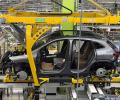
India's total automobile retail sales recorded a significant 9.55 per cent year-on-year growth in May, reaching an all-time high of 25,31,067 units, driven by strong performances in three-wheelers, passenger vehicles, and tractors, despite prevailing heatwave conditions and fuel price pressures.

Retail sales of vehicles across categories in India in 2025 grew by 7.71 per cent at 2,81,61,228 units as compared to 2,61,45,445 in 2024, with GST 2.0 helping overcome a subdued start to the year, Federation of Automobile Dealers Associations said on Tuesday.
India's passenger vehicle industry is poised for a record-breaking year in 2026, propelled by robust dispatches in the first half of the calendar year and strong demand for utility vehicles, despite facing several economic challenges.
Overall automobile retail sales in India grew a modest 2.95 per cent in April this year to 22,87,952 units with completion of purchases by customers around Chaitra Navratri, Akshay Tritiya, Bengali New Year, Baisakhi and Vishu helping April end on a positive note, Federation of Automotive Dealers Associations said on Monday.

JSW MG Motor India has unveiled ADAPT, India's first multi-powertrain new energy vehicle (NEV) platform, designed to support electric, hybrid, plug-in hybrid, and range-extender electric vehicles. The company plans to launch one electric SUV and one plug-in hybrid SUV based on this architecture during FY27, aiming to broaden its NEV portfolio and accelerate adoption in India.

Electric vehicle (EV) sales in India rose 28.60 per cent to 1,80,238 units in June over the period year-ago, driven by massive jump in e-passenger vehicle volumes, Federation of Automobile Dealers' Association (FADA) said in a statement on Tuesday. Electric passenger vehicle sales, as per FADA data, stood at 13,178 units in the previous month compared to 7,323 e-PVs in June 2024, registering a sharp increase of 79.95 per cent year-on-year.

India's electric two-wheeler (e2W) market is consolidating, with established manufacturers TVS Motor, Bajaj Auto, and Hero MotoCorp, alongside EV specialist Ather Energy, driving nearly 96% of incremental registrations in the first half of 2026, while former market leader Ola Electric experienced a significant decline in registrations.

Fuel prices have risen by about Rs 7.5 per litre since May 15, as global crude oil prices surged due to the ongoing conflict in West Asia and supply concerns around the Strait of Hormuz.

India's auto retail sector achieved record-breaking sales of 2,96,71,064 units in FY26, a 13.3% increase, primarily driven by the implementation of GST 2.0 which reduced the tax burden on mass-segment vehicles, according to the Federation of Automobile Dealers Associations (FADA).

Passenger vehicle retail sales witnessed 3 per cent on-year decline in May with customers delaying purchases in several states due to India-Pakistan conflict and further softening of demand for entry-level models, dealers' body FADA said on Friday. The passenger vehicle registrations last month stood at 302,214 units, as compared to 311,908 units in May 2024.

Automobile retail sales rose nearly 18 per cent year-on-year to over 27 lakh units in January, led by continued post-GST momentum, healthy rural cash flows on the back of harvest and weddings, and sustained demand visibility across freight, dealer's body FADA said on Tuesday.

Domestic automobile retail sales in India experienced a significant surge of 26 per cent year-on-year in February, driven by improved affordability and market confidence across various segments, according to FADA.
Retail sales of electric passenger vehicles (ePVs) nearly doubled in July 2025, surging 93 per cent year-on-year (Y-o-Y) to 15,528 units, even as overall passenger vehicle (PV) retail volumes declined marginally. In contrast, electric two-wheeler (e2W) sales dropped by 4.3 per cent to 102,973 units, according to the Federation of Automobile Dealers Associations (Fada) data.

Automobile retail sales grew 9 per cent year on year in 2024 riding on the back of robust demand for two-wheelers and passenger vehicles amid challenging business environment, dealers' body FADA said on Tuesday. Overall vehicle registrations stood at 2,61,07,679 units last year as compared to 2,39,28,293 units in the 2023 calendar year, recording a growth of 9 per cent.
