
The National Stock Exchange of India Ltd (NSE) has received regulatory approval from SEBI for its long-awaited Rs 30,000-crore initial public offering (IPO), positioning it to potentially become the country's largest-ever public issue.

"When you have more liquidity than good investment opportunities, there is no reason for MFs to sell a winning trade."
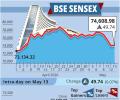
Indian benchmark equity indices, Sensex and Nifty, closed marginally higher, breaking a four-day losing streak, despite elevated crude oil prices and ongoing geopolitical uncertainties. The market saw a temporary pause in panic selling, though cautious sentiment persists.

Premier League club Liverpool FC has finalised a deal to sell a minority equity stake to a consortium led by British-Indian businessman Amit Bhatia.

The Securities and Exchange Board of India (Sebi) is reportedly 'close' to approving the National Stock Exchange's (NSE) initial public offering (IPO) draft documents, with an expected market debut by early next month. Sebi Chairman Tuhin Kanta Pandey also emphasised the regulator's focus on enhancing market resilience against evolving risks, including technology failures and the impact of artificial intelligence.

The authorities have said that it is not permissible to examine and review in 2026 the decision taken by the trustees in 1988 regarding the existence of necessity for transfer of shares.

Indian benchmark equity indices, Sensex and Nifty, experienced declines in early trade due to a surge in Brent crude oil prices, which rose above USD 90 per barrel, coupled with subdued global cues and ongoing US-Iran skirmishes. Track Sensex, Nifty on Auigust 12.

Indian benchmark indices Sensex and Nifty saw declines in early trade, primarily due to elevated crude oil prices stemming from the unresolved geopolitical situation in the Strait of Hormuz. Analysts suggest that while global sentiment improved slightly after a benign US inflation report, the ongoing US-Iran standoff continues to exert pressure on domestic equities. Track Sensex, Nifty on August 13.

Josh Kushner said Thrive Capital misjudged football's political dynamics, would have avoided FIFA's failed $20 billion rights plan, but still supports its aim of broader investment.

'India is vulnerable to the West Asia crisis in three ways: Energy costs, the business Indian companies conduct in the region, and remittances from the Indian diaspora.'

Indian benchmark indices closed mixed, with the Sensex gaining 113.61 points to 78,079.96 and the Nifty falling 40.10 points to 24,395.85, as elevated crude prices and ongoing geopolitical uncertainty in the Middle East made investors cautious.
Indian benchmark indices closed mixed, with the Sensex gaining 113.61 points to 78,079.96 and the Nifty falling 40.10 points to 24,395.85, as elevated crude prices and ongoing geopolitical uncertainty in the Middle East made investors cautious.

'I met with people who had their flats redeveloped. I saw this was a real human struggle.' 'People get caught in the middle between their dreams, wishes and their community.'

Smallcap and midcap funds now account for nearly 30% of active equity MF folios, as stock-market gains revive investor appetite for high-growth segments.

Becoming a shareholder isn't about predicting markets perfectly. What matters more is recognising when you're financially and mentally prepared to participate in wealth creation. If you've been wondering when you should start investing, here are five signs that suggest you're already ready.

Indian benchmark indices, Sensex and Nifty, closed almost flat in choppy trade as investors remained cautious due to ongoing uncertainty in West Asia, relentless foreign fund outflows, and anticipation of the RBI's monetary policy decision.

Six companies, including Blackstone-backed Horizon Industrial Parks and Lalithaa Jewellery Mart, are poised to collectively raise nearly Rs 5,600 crore through initial public offerings (IPOs) in the upcoming week, adding to the bustling primary market activity.

Newly listed companies Vedanta Aluminium Metal, SBI Funds Management and Manipal Health Enterprises have entered the Rs 1 trillion mcap list since March 2026.

JPMorgan has downgraded Indian equities to 'neutral' from 'overweight', citing elevated valuations, rising earnings risks, and limited exposure to next-generation technology like AI. The brokerage believes other emerging markets offer more attractive risk/reward propositions despite India's strong structural growth story.

Many investors are working hard as their own fund managers, unaware whether their efforts have actually rewarded them for the job.

E-commerce enablement platform Shiprocket Ltd saw its shares list with a 35 per cent premium on its market debut, trading at Rs 129.50 on the BSE and Rs 131 on the NSE against an issue price of Rs 97, achieving a market valuation of Rs 9,901.60 crore.

Foreign portfolio investors (FPIs) significantly increased their buying in Indian equities during the first half of August, with financial services attracting the largest inflows, reversing previous outflows. The IT sector also continued to see strong interest from overseas investors, driven by a reassessment of valuations and the role of Indian IT firms in AI deployment.

Amidst a sharp run-up in gold and silver prices, investors are advised to rebalance their portfolios by booking partial profits in precious metals and reallocating to domestic equities and debt, according to financial experts.
Foreign Portfolio Investors (FPIs) injected Rs 12,921 crore into Indian equities during the first week of August, extending their buying spree, driven by improving macroeconomic conditions, expectations of US rate cuts, lower crude oil prices, and a stable rupee.

The Airports Authority of India has received a request for a waiver from contractual restrictions that prevent airport concessionaires and their group entities from holding equity in scheduled airlines, Minister of State for Civil Aviation Murlidhar Mohol confirmed in the Rajya Sabha. This comes amid reports of the Adani group's interest in the airline business, despite their denial.
Indian benchmark indices Sensex and Nifty closed lower, with the Sensex dropping 388 points and Nifty declining 112 points, as a sharp rally in crude oil prices, driven by geopolitical uncertainties and concerns over the Strait of Hormuz, dampened investor sentiment and reignited inflation fears.

Inflows into non-resident Indian (NRI) deposit schemes decreased by 23.24 per cent to $2.78 billion during the first quarter of FY27, down from $3.61 billion in the previous year, according to Reserve Bank of India (RBI) data.

Manappuram Finance has announced the appointment of Ashish Singh as its new managing director and chief executive officer, effective January 1, 2027, marking a significant shift from its family-led governance structure.

JSW Group and China's SAIC Motor are in discussions for the next round of capital support for JSW MG Motor India, aiming to expand manufacturing capacity beyond 220,000 units annually to an ambitious one million vehicles and broaden its new-energy vehicle (NEV) portfolio.
Indian benchmark indices Sensex and Nifty closed lower, with the Nifty recording its fourth consecutive day of decline, primarily due to elevated oil prices and ongoing geopolitical tensions between the US and Iran, which dampened investor sentiment.

Indian benchmark indices, Sensex and Nifty, saw declines in early trade, with the ongoing US-Iran standoff cited as a major factor impacting investor sentiment and raising concerns about inflationary pressures and currency volatility for oil-importing nations like India. Track Sensex, Nifty on August 14, 2026.
Indian benchmark equity indices, Sensex and Nifty, extended their decline for a second consecutive day, primarily due to elevated crude oil prices and selling pressure on Tata Group stocks following Tata Sons Chairman N Chandrasekaran's announcement that he will not seek reappointment.

Nepal has launched a diplomatic initiative to secure climate-related compensation from major greenhouse gas emitters, asserting that post-disaster assistance for recent deadly flash floods should be viewed as a moral and legal liability, not charity. Foreign Minister Shisir Khanal highlighted Nepal's disproportionate suffering from global warming despite negligible emissions, citing rapid glacier melt and extreme mountain disasters. The country has formally approached the Loss and Damage Fund board for urgent financial aid following a catastrophic flash flood in the Bhotekoshi river basin.
Indian benchmark indices, Sensex and Nifty, experienced declines in early trade due to a significant spike in crude oil prices, driven by escalating geopolitical uncertainties, despite positive cues from Asian and US markets.

Jio Platforms Ltd, the digital and telecommunications arm of Reliance Industries, has approved filing draft papers for an initial public offering (IPO) involving a fresh issue of up to 27 crore equity shares, aiming to unlock value for shareholders and fuel its ambitious expansion into 5G, AI, and global markets.

Net investments into equity mutual fund schemes in India remained elevated at approximately 38,440 crore in April, despite a slight dip from March's high and a 3% month-on-month decline in Systematic Investment Plan (SIP) inflows.

Investors should cap gold allocation at 10-15 per cent and consider staggered purchases through gold ETFs.

'Once you're wrestling with making a merger of that scale value-accretive, you're also under pressure to keep growing the balance sheet and chasing liabilities, and other things start to slip as a consequence.'
New dematerialised (demat) account additions in India reached a six-month high in July, with 2.89 million new accounts opened, driven by a buoyant initial public offering (IPO) market and a broad-based rally in equities.
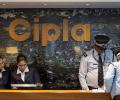
The Bombay High Court severely criticised the Maharashtra FDA for its "undue haste" and "high-handed" actions, forcing the regulator to withdraw orders against Cipla Pharma and five restaurants at the Mumbai Cricket Association premises. The court admonished the FDA for violating principles of natural justice and taking a "pedantic instead of pragmatic view," even threatening contempt action against officials.
