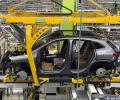
Automobile manufacturers are increasingly vocal about the mounting paperwork and delays associated with India's Production-Linked Incentive (PLI) scheme for the automotive sector, arguing that compliance requirements are becoming as challenging as meeting technical eligibility conditions. They are pushing for a simpler, faster, and more predictable certification and compliance framework.

Apple Inc, which had planned to shift only 10 per cent of its global production base from China to India with respect to iPhones at the end of FY26, is currently churning out one out of every four iPhones in the world from India.
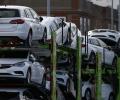
Three additional vehicle makers and five more auto component makers will begin availing financial incentives under the production-linked incentive (PLI) scheme for the automobile sector from 2026-27 (FY27) onwards, Hanif Qureshi, additional secretary at the Ministry of Heavy Industries (MHI), said on Wednesday.
The production-linked incentive (PLI) scheme for the automobile sector has created market distortions, excluded innovation-led electric two-wheeler (e2w) makers, and failed to convert cost advantages into export competitiveness, with 77 per cent of export volumes driven by non-PLI models, said a report released by the Centre for Domestic Economy Policy Research (C-DEP) on Friday.
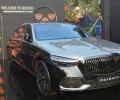
Elon Musk-led Tesla Inc is yet to express interest in India's flagship scheme to attract global investment in electric vehicle (EV) manufacturing, said Union Minister for Heavy Industries H D Kumaraswamy on Monday. In contrast, multiple global automobile giants -- such as Mercedes-Benz, koda Auto Volkswagen, Hyundai Motor, and Kia Motors -- are keen to participate, the minister noted.
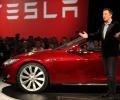
In its first official engagement with the Indian government, Elon Musk-led Tesla and other global automotive (auto) manufacturers sought clarification on the new electric vehicle (EV) policy, specifically regarding investment guidelines and the timeline for the domestic value addition (DVA) requirement. Officials who attended the meeting told Business Standard that the original equipment manufacturers (OEMs) tried to understand whether the complete investment would be made within three or five years and the duration they would have to achieve the 50 per cent DVA. "The consultation meeting was convened to address queries from auto OEMs.
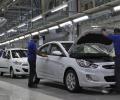
The government has decided to extend the Rs 25,938-crore production-linked incentive scheme for the automotive sector by one year, Union Heavy Industries Minister Mahendra Nath Pandey said on Tuesday. Post extension, the five-year scheme, originally in place from 2022-23 to 2026-27, will be active until 2027-28. At present, incentives are applicable under the scheme for determined sales of Advanced Automotive Technology (AAT) products (vehicles and components) manufactured in India from 1 April 2022 onwards for a period of five consecutive years.
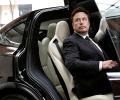
'Companies like Tesla and others have been given a long rope in India.'
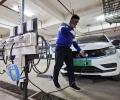
The government on Friday approved an electric-vehicle policy, under which duty concessions will be given to companies setting up manufacturing units in the country with a minimum investment of $500 million, a move aimed at attracting major global players like US-based Tesla. According to an official statement, the companies setting up manufacturing facilities for e-vehicles will be allowed to import a limited number of cars at lower customs duty. The policy seeks to promote India as a manufacturing destination for EVs and attract investment from reputed global EV manufacturers, it added.

Tata Motors, the market leader in electric four-wheeler space, has sought incentives for its Tiago EV under the government's production-linked incentive (PLI) scheme, group chief financial officer P B Balaji said on Tuesday. The Mumbai-headquartered firm has applied for all variants of the Tiago, which recently hit a sales milestone of 10,000 units. "The Automotive Research Association of India certification is done.
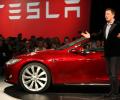
If Tesla comes in, India's position as a manufacturing hub will rise many notches, as it will become only the second country, after China, to have both Apple as well as Tesla.
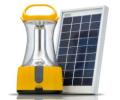
it offers significant advantages over conventional solar lanterns.
