
Domestic passenger vehicle dispatches in India are estimated to have grown by approximately 21 per cent to 4.60 lakh units in September, with major carmakers like Maruti Suzuki, Tata Motors, M&M, and Hyundai all reporting double-digit growth, driven by increased supplies for the upcoming peak festival season and healthy demand.

Indian passenger vehicle manufacturers are significantly increasing production and stocking dealerships in anticipation of strong festival season demand, with new launches planned and supply bottlenecks being addressed. However, the industry faces potential moderation in growth during the second half of FY27 due to a high base from last year's post-GST surge, commodity inflation, and elevated inventory levels.

Luxury car buyers in India are spending lakhs -- and sometimes crores -- to make their cars truly their own, turning personalisation into a growing business opportunity for automakers.

India-EU FTA opens a bigger European market for Indian carmakers while giving European brands greater access to India.

Geopolitical disruptions have made shipping times unpredictable and raised costs for Volvo Car India, which may have to increase vehicle prices if the situation persists, its Managing Director Jyoti Malhotra said on Monday.

Mercedes-Benz India's Managing Director & CEO Santosh Iyer stated that demand continues to outstrip supply, particularly for the CLA electric vehicle, with over 1,000 orders and deliveries extending to March-April 2027. The company could have sold an additional 1,000 vehicles if supply had been adequate.

Tata Group's British luxury carmaker Jaguar Land Rover (JLR) announced plans to reduce its global workforce by approximately 4,000 roles over the next two years, aiming for 1.7 billion in savings to enhance sustainable profitable growth and invest in future technologies.

Automobile manufacturers have informed NITI Aayog that they face significant challenges in tracing 20-25-year-old vehicles due to multiple ownership changes, hindering their ability to meet Extended Producer Responsibility (EPR) targets for end-of-life vehicles (ELVs). They are seeking government support, including access to updated Vahan registration records, to locate these vehicles and encourage owners to use authorised scrapping centres.
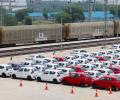
India's Ministry of Power has notified the third phase of Corporate Average Fuel Economy (CAFE-III) norms for passenger vehicles, effective from April 1, 2027, which set relatively softer efficiency targets for lighter cars and demand greater improvements from heavier vehicles, a move expected to benefit manufacturers like Maruti Suzuki India.

Hardeep Singh Brar, President and CEO of BMW Group India, has urged state governments like Delhi to remove price caps on road tax benefits for electric vehicles (EVs), arguing that such limits deter luxury-car buyers and hinder the transition to cleaner mobility in pollution-affected regions.

Volkswagen, a long-standing but minor player in India's fiercely competitive automotive sector, is now exploring a strategic partnership with the JSW group, aiming to revitalise its market presence, enhance profitability, and potentially establish India as a key export hub for electric vehicles.

India's leading passenger vehicle manufacturers are significantly increasing investments and factory capacities, alongside planning major product launches for FY27, driven by strong confidence in sustained domestic demand growth despite global geopolitical tensions and supply chain risks.
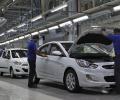
Indian carmakers experienced a robust start to the new fiscal year, with an estimated 4.5 lakh passenger vehicles sold in April, marking a 27 per cent increase year-on-year, attributed to factors like GST 2.0, repo rate cuts, and income tax benefits.

Tata Motors Passenger Vehicles (TMPV) is strategically expanding its international footprint by launching the Nexon, rebranded as Osprey, in South Africa, a move set to significantly boost its export volumes and solidify India's position as a major automotive export hub.

A cyberattack on an automaker can spread through its wider supply chain and create significant financial losses.

Skoda Auto is strategically navigating the competitive Indian automotive market by prioritising profitable growth, exploring new powertrain options like CNG and a limited diesel return, and gearing up for a locally produced electric SUV, all while expanding its retail footprint.
With passenger vehicles (PVs), two-wheelers and three-wheelers registering double-digit growth, manufacturers raise production as the industry enters the festival season.
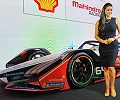
Formula E is entering its Gen4 era with ambitious plans to close the performance gap with Formula One, aiming for near-F1 speeds on several tracks by the end of the next four-season cycle. The all-electric series anticipates Gen4 cars reaching 335 kmph with significant lap time improvements, driven by advanced technology and high efficiency. Despite manufacturer exits, co-founder Alberto Longo asserts continued interest, while CEO Jeff Dodds believes electric racing could eventually surpass F1 in performance, bolstered by new partnerships like Disney+ to boost awareness.

Maruti Suzuki India (MSIL) reported a 9.1 per cent year-on-year decline in net profit for the April-June quarter of 2026-27, marking its second consecutive quarterly fall. This dip occurred despite a significant 29.3 per cent jump in sales volume, primarily due to escalating commodity prices, increased energy costs, and logistics disruptions stemming from the West Asia conflict.

BMW Group India says every Re 1 depreciation in the rupee against the euro trims its profit margin by about 1 per cent, prompting the company to consider further price increases.
Maruti Suzuki India's CFO, Arnab Roy, has urged the central government to introduce an amnesty scheme or an 'as-is' settlement option to resolve past indirect tax disputes, aiming to clear legacy litigation and foster growth in the automotive industry. Roy emphasised the need for a 'smarter way to address the past' to provide long-term certainty for businesses.

Jaguar Land Rover (JLR) India reported its highest-ever first-quarter retail sales for FY27, with 1,665 vehicles retailed, an 11 per cent year-on-year increase, largely due to sustained demand for premium SUVs and the benefits of the India-UK Free Trade Agreement.
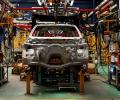
Passenger vehicle dispatches in the domestic Indian market are estimated to have surged by 33 per cent to approximately 4.7 lakh units in July, with market leaders Maruti Suzuki and Hyundai reporting record sales, alongside significant growth from Tata Motors and Mahindra & Mahindra.
Tata Motors expands its market leadership in India's electric passenger vehicle (ePV) segment, capturing 39 per cent of the market in Q1FY27, while simultaneously strengthening its position as the nation's second-largest carmaker amidst fierce competition and rapid market growth.

Mercedes-Benz India plans to continue introducing hybrid vehicles, including the new AMG E 53 plug-in hybrid EV, to meet consumer demand, viewing hybrids as a crucial bridge to full electrification despite the absence of supportive government policies.

The refreshed Brezza will target first-time, replacement and additional-car buyers as Maruti responds to changing preferences and intensifying competition in compact SUVs.

VinFast has gone from an unknown brand to India's fifth-largest EV carmaker in just seven months, but its toughest battle is only beginning.

While the starting price is the same as the Duster at Rs 10.4 lakh, the top-end is slightly cheaper at Rs 18.5 lakh for the 1.3l automatic.

The luxury carmaker plans to drive growth through local assembly of the MINI Countryman, expansion into 10 new cities and a broader product portfolio.

While SUVs have steadily gained share across the industry, data shows that nearly three in 10 luxury vehicles sold in India are sedans, highlighting the segment's resilience despite years of SUV-led growth.

'With inflationary pressures now at elevated levels and the adverse cost environment persisting, the company has to pass on a portion of the increased costs to the market, while continuing to ensure that the impact on customers is kept to the minimum extent possible.'

Network scale seen as central to tapping smaller markets.

India's domestic passenger vehicle sales experienced a robust 24.6 per cent year-on-year increase in June, propelled by favourable government policies like income tax relief and repo rate cuts, alongside resilient rural demand, even as global crude oil prices pose potential cost pressures.

The Delhi government has approved the Delhi EV Policy 2.0, which will phase out fresh registrations of internal combustion engine (ICE) two-wheelers and three-wheelers over the next two years, starting with a ban on ICE 3Ws and N1 category LCVs from January 1, 2027, and ICE 2Ws from April 1, 2028.

JSW Motors, part of the JSW group, is set to enter India's passenger vehicle market with plans to launch 15 new-energy vehicles (NEVs) over the next four years, with deliveries commencing from December 2026.

American electric carmaker Tesla has launched the 2026 Model Y Premium rear-wheel drive in India, priced at Rs 50.89 lakh, making it the company's most affordable offering in the country.

The scheme, called 'Suhana Safar', targeted customers who aspire to own a car but were hesitant because of concerns around arranging the down payment or managing future EMI obligations.

Indian automakers are reviving legacy nameplates to leverage brand recall and stand out in a crowded market, as classic badges like Sierra, Safari, Baleno and Scorpio return to attract buyers.

'In India's competitive automotive market, staying relevant means continuously raising the bar.'

Oil-marketing companies (OMCs) are set to significantly expand the sale of flex fuel (E85) across India, with plans to reach 5,000 outlets in major cities by the end of next year, according to Petroleum Minister Hardeep Singh Puri. This move aims to boost ethanol demand, reduce crude oil imports, and cut carbon emissions, coinciding with the launch of India's first flex-fuel vehicles by Maruti Suzuki and Hero MotoCorp.
