Reserve Bank of India Deputy Governor Rohit Jain has stated that India cannot rely solely on bank balance sheets to fund the extensive investment required for its 'Viksit Bharat' (developed India) goal by 2047, emphasising the critical need for deeper corporate bond, foreign exchange, and derivatives markets.

Credit card transactions in India have surged over 2.6 times between 2021 and 2025, driven by private sector banks, while debit card usage declines due to growing adoption of UPI and digital wallets, according to an RBI report.

Credit card transactions in India have surged over 2.6 times between 2021 and 2025, reaching 570 crore volumes and Rs 23.2 lakh crore in value, with private sector banks significantly increasing their market share, according to a recent RBI report.

The International Monetary Fund (IMF) warned on Tuesday that India's general government debt (comprising both central and state government debt) could exceed 100 per cent of gross domestic product (GDP) in the medium term. It also cautioned that long-term debt sustainability risks are high due to the significant investment required to meet India's climate change mitigation targets. The Indian government, however, disagreed, arguing that risks from sovereign debt are extremely limited as it is predominantly denominated in domestic currency.
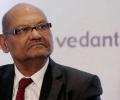
Mining magnate Anil Agarwal's conglomerate on Friday announced a major business shake-up, with flagship Vedanta Ltd approving a spin-off of its metals, power, aluminium and oil and gas businesses into separate listed entities and an overhaul of lucrative zinc unit planned as part of value creation and reducing debt load. Vedanta will issue one share of the five demerged businesses for every share held in the company, the firm said in a statement. The entire exercise, which would require shareholder and lender approval as well as a nod from the stock exchanges and courts, is expected to be completed in 12-15 months, its president for finance Ajay Agarwal said.
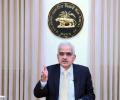
The challenge for the RBI in 2024 is likely to be less about containing elevated inflation and more about curbing excessive financial market exuberance and a 'problem of plenty', notes Sajjid Chinoy, Chief India Economist JP Morgan.

'I believe the modified scheme is much more beneficial and simpler.'

India opened up its economy to the private sector in 1991.

Why can't we have a sunset clause for the ARCs, which is a global norm? questions Tamal Bandyopadhyay.

The most pressing issue facing the financial sector is the rising stock of non-performing assets in the banking system

Most adult Indians should have access to bank deposits, credit and remittance facilities as well as insurance and mutual fund products in the next decade, and technology will play a big role in this transformation, says Tamal Bandyopadhyay.

Most expect the Budget to be path-breaking.
