
Indian stock markets saw a significant rebound, with the Sensex jumping nearly 790 points, primarily fuelled by strong buying interest in telecom, pharma, and private banking shares, despite a volatile trading session and a weakening rupee.

Indian benchmark indices Sensex and Nifty experienced volatile trade, declining in early deals before fluctuating, as investors reacted to unabated foreign fund outflows and rising geopolitical uncertainties, particularly in West Asia.

Insights from behavioural economics suggest that an ambitious nudge can be effective if three conditions are met, points out Ram Singh Insights from behavioural economics suggest that an ambitious nudge can be effective if three conditions are met, points out Ram Singh, director, Delhi School of Economics.

Indian benchmark indices Sensex and Nifty rebounded in early trade after three days of decline, driven by a rally in Sun Pharma following its USD 11.75 billion acquisition of US-based Organon & Co, alongside a positive trend in global equity markets.

'FPIs are unlikely to return unless there is equilibrium between valuation premium and earnings growth.'

Indian equities on Dalal Street saw volatility as global market trends and fresh tariff concerns linked to Donald Trump impacted investor sentiment. Track Sensex, Nifty50 movement and key market drivers for April 9, 2026.

Indian equity benchmark indices Sensex and Nifty rebounded in early trade, driven by buying in blue-chip stocks and a positive trend in Asian markets, with domestic institutional investors providing crucial support.

Indian benchmark equity indices, Sensex and Nifty, closed lower due to investor caution over rising bond yields, a weaker rupee, and fresh fuel price hikes, which have revived inflation concerns.
Indian markets on Dalal Street rallied sharply as easing tensions in the US-Iran conflict and stable oil prices boosted sentiment. Track Nifty 50 and BSE Sensex performance and key global triggers.

Indian equities on Dalal Street declined in early trade on Monday as crude oil prices climbed amid fears of further escalation in the West Asia the war. Track Sensex, Nifty50 movement and key market drivers for Apr 6, 2026.

Indian benchmark indices Sensex and Nifty experienced a decline due to renewed geopolitical concerns in the Strait of Hormuz, a strained US-Iran ceasefire, and the rupee hitting a record low against the US dollar.

The Reserve Bank of India (RBI) has projected that crude oil prices will average USD 85 per barrel and the rupee will weaken to 94 against the dollar by FY27, according to its bi-annual Monetary Policy report.

The Indian rupee plummeted to a new all-time closing low of 95.81 against the US dollar, driven by surging crude oil prices, persistent inflation concerns, and a strengthening dollar index.

Indian benchmark stock indices, Sensex and Nifty, closed nearly 1 per cent lower following the collapse of US-Iran negotiations, which heightened concerns of a prolonged conflict in West Asia and drove crude oil prices sharply higher.

Indian benchmark indices Sensex and Nifty closed higher, with the Sensex climbing 355.90 points, driven by positive state election results and better-than-expected Q4 earnings, despite ongoing geopolitical concerns.

Indian equity markets experienced a significant downturn as geopolitical tensions in West Asia, rising oil prices, and foreign fund outflows dampened investor confidence. The Sensex and Nifty both fell sharply in early trade, reflecting broader global market weakness.

Fitch Ratings has warned that India's oil marketing companies (OMCs) could face significant credit pressure if crude oil prices remain elevated, leading to eroded earnings and increased working capital needs due to delayed fuel price pass-through.
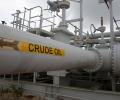
Crude oil prices experienced a significant drop following the announcement of a US-Iran ceasefire and the reopening of the Strait of Hormuz, leading to heavy selling by traders.
Sensex plunges over 1,400 points and Nifty slips near 22,250 amid Trump's Iran threat, rising crude oil prices, and FII selling. Here are the key reasons behind today's market crash.
Indian equities on Dalal Street saw volatility as global market trends and fresh tariff concerns linked to Donald Trump impacted investor sentiment. Track Sensex, Nifty50 movement and key market drivers for April 2, 2026.
The Indian rupee depreciated significantly against the US dollar, reaching a new all-time low due to rising oil prices, a strong dollar, and ongoing geopolitical concerns. Domestic equity market declines and foreign investment outflows further contributed to the rupee's weakness.

Rupee slumped 69 paise to an all-time low of 92.18 against the US dollar in early trade on Wednesday, as a sharp spike in crude oil prices amid geopolitical tensions following the escalation of the US-Iran conflict weighed on investor sentiment.
Indian equity benchmarks, Sensex and Nifty, ended lower after a spectacular rally, with the Sensex tumbling 931 points, as renewed tensions in West Asia, particularly the risk to the ceasefire deal after Iran closed the Strait of Hormuz, dampened investor optimism.
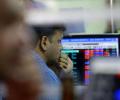
Indian stock market benchmark indices Sensex and Nifty experienced a significant drop in early trade due to rising crude oil prices, bearish global market trends, and continuous foreign fund outflows.

Indian stock markets experienced a significant sell-off, with the Sensex tumbling over 1,300 points, driven by escalating crude oil prices due to US-Iran tensions and Prime Minister Narendra Modi's call for austerity measures, which amplified investor concerns about India's economic outlook.

The Indian rupee depreciated by 52 paise to settle at 93.35 against the US dollar, driven by failed US-Iran peace talks, surging crude oil prices due to a potential US blockade of Iranian ports, and a global flight to the greenback. This geopolitical uncertainty is also leading to foreign capital withdrawal from domestic equities.

Indian stock markets are poised for volatility this week, driven primarily by the outcomes of five state assembly elections, ongoing high crude oil prices amid West Asia tensions, and the release of Q4 corporate earnings, according to market analysts.

Indian benchmark indices, Sensex and Nifty, saw a significant rebound in early trade, driven by a decline in crude oil prices. This drop followed US President Donald Trump's announcement of progress in negotiations with Iran towards an agreement to end the war, leading to a temporary pause in 'Project Freedom' to escort ships through the Strait of Hormuz. Track Nifty 50 and BSE Sensex performance and key global triggers.
Indian equity benchmarks Sensex and Nifty surged nearly 1 per cent, driven by strong earnings reports from FMCG and auto sectors, alongside a rally in Asian markets and signs of de-escalation in geopolitical tensions.
Indian benchmark stock indices Sensex and Nifty rebounded nearly 1 per cent, snapping a three-day decline, driven by rallies in Reliance Industries and Sun Pharma, alongside positive global market trends and easing geopolitical tensions.

The Indian government has refuted claims of an impending Rs 25-28 per litre hike in petrol and diesel prices post-assembly elections, stating no such proposal is under consideration by the Ministry of Petroleum and Natural Gas.
Indian stock market indices Sensex and Nifty experienced a significant drop in early trade, reversing a three-day rally. The decline was triggered by a sharp increase in crude oil prices, weak global market trends, and continuous outflows of foreign funds.

Indian benchmark equity indices, Sensex and Nifty, experienced a decline in early trade, ending a three-day rally, primarily due to heavy selling in IT stocks and concerns over prolonged instability in West Asia.

Crude oil prices experienced a sharp decline after US President Donald Trump announced a temporary halt to military strikes on Iran's energy infrastructure, easing geopolitical tensions and supply disruption fears.
Indian stock market indices Sensex and Nifty experienced a significant decline, driven by rising crude oil prices, sustained foreign fund outflows, and selling pressure in major bank stocks.

Benchmark equity indices Sensex and Nifty tumbled in early trade on Wednesday, tracking a bearish trend in Asian markets, as the conflict in West Asia widened, driving oil prices higher.

Godrej Consumer Products Ltd (GCPL) delivered a robust Q4FY26 performance, with steady demand in India and signs of stabilisation in international markets, despite persistent inflationary pressures. The company expects to maintain profitability in FY27 through strategic cost management and pricing adjustments.

'Once the market decides it wants to go up, it goes up -- no amount of bad news can really hold it back.'

S&P Global Ratings has increased India's GDP growth forecast for the next fiscal year to 7.1 per cent, citing private consumption, investment, and exports as key drivers. However, the agency also cautioned that the conflict in the Middle East could strain India's fiscal position due to higher energy prices.
Indian benchmark indices Sensex and Nifty experienced declines due to a sharp rally in crude oil prices, continuous foreign fund outflows, and geopolitical uncertainties. Regulatory developments in the banking sector, particularly the implementation of the Expected Credit Loss (ECL) framework, also contributed to the selling pressure.
