
India's foreign exchange reserves saw a substantial increase of USD 9.063 billion, reaching USD 697.121 billion for the week ended April 3, 2026, according to the Reserve Bank of India (RBI). This surge follows a previous week's decline and brings the reserves closer to their all-time high.

Tata Sons, now debt-free, has asked the RBI to drop its 'upper-layer NBFC' tag and allow it to stay private.

A crucial Tata Trusts board meeting was unexpectedly postponed, highlighting internal conflicts over veto power, Tata Sons listing, and trustee eligibility, raising concerns about the stability of the $180 billion conglomerate.

The Indian rupee depreciated by 28 paise to settle at 93.44 against the US dollar, influenced by ongoing uncertainties surrounding West Asia peace negotiations, volatile crude oil prices, and the Reserve Bank of India's recent adjustments to non-deliverable forward market regulations.

The Reserve Bank of India's (RBI's) short dollar forward positions rose by $6 billion in September - the first increase in seven months - indicating the central bank's readiness to defend the rupee in the forward market amid pressure on the currency, latest data showed. The net short dollar position stood at $59.4 billion at the end of September, up from $53.4 billion in August.

The Indian rupee saw a significant appreciation against the US dollar following President Trump's suspension of military strikes against Iran and the Reserve Bank of India's decision to maintain its key interest rate. Market sentiment was further buoyed by positive comments from the RBI regarding the health of the banking sector.

'You set up your SIPs and you do not touch them. Not during COVID, not during a war scare, not when your neighbour tells you the market is finished. You let the noise pass over you.' 'The beauty of this approach is that it does not require courage or conviction in the moment. It just requires inertia -- keep the SIP running and do not look at your portfolio too often.'

From the Sensex firms, State Bank of India, Bajaj Finserv, Bajaj Finance, Maruti, HCL Tech, Larsen & Toubro, Mahindra & Mahindra and Infosys were among the major winners. However, Hindustan Unilever, Eternal, Tata Motors Passenger Vehicles, and Sun Pharma were among the laggards.

India's net foreign direct investment (FDI) recorded a positive $4.6 billion in February, breaking a six-month streak of negative figures, attributed to increased gross inflows and reduced repatriations, according to the Reserve Bank of India.
The Indian government has issued an updated Standard Operating Procedure (SOP) for processing Foreign Direct Investment (FDI) applications, aiming to clear all proposals within 12 weeks, a two-week extension from the previous 10-week target, to ensure a fully paperless and transparent process.

The Supreme Court has sought responses from the Centre, the CBI and others on a plea filed by a 78-year-old retired banker who was duped of Rs 23 crore after allegedly being put under "digital arrest" for nearly a month.

Banks cannot treat compliance as a quarter-end activity, and must have stronger operational discipline and data governance throughout the year, Reserve Bank of India (RBI) Deputy Governor Swaminathan J said in a speech at the Third Annual Global Conference of the College of Supervisors.

Reserve Bank Governor Sanjay Malhotra on Friday said the central bank does not target any band for the rupee in the forex market, and allows the domestic currency to find its own correct level.

Fino Payments Bank (Fino) has become the first such entity to get an in-principle approval from the Reserve Bank of India (RBI) to transition into a small finance bank (SFB).

The Bombay High Court has directed HDFC Bank to refund Rs 38 lakh to a Pune businessman who lost the amount in a digital fraud, citing the account holder's lack of fault and RBI guidelines on customer protection.

'Once the currency goes out of the hand, then possibly your major challenge is that it will not come back.'

The Reserve Bank of India (RBI) on Tuesday announced a fresh round of liquidity measures through open-market operations (OMOs) and a foreign exchange buy-sell swap, under which it will inject close to Rs 3 trillion into the banking system. The central bank said it would purchase Government of India securities worth Rs 2 trillion through OMOs, spread across four tranches of Rs 50,000 crore each to be conducted on December 29, January 5, January 12 and January 22.

Indian bank credit expanded by 16.08 per cent year-on-year in FY26, marking its fastest pace since FY24, while deposits grew by 13.47 per cent, according to RBI data. Experts caution that year-end figures may be inflated due to reporting date changes, but acknowledge strong momentum in corporate, MSME, and retail segments.

Bank of Baroda economists project India's GDP to grow 6.5-6.8 per cent in FY27 but warn that the fiscal deficit could overshoot the budgeted 4.3 per cent target, potentially reaching 4.7-4.8 per cent of GDP due to subsidy overruns, excise duty cuts, and oil marketing company losses.

Finance Minister Nirmala Sitharaman convened a high-level meeting with bank heads to assess cybersecurity risks linked to advanced AI models, following concerns over Anthropic's Claude Mythos system and its potential impact on financial data security.

A foreign brokerage warns that sustained crude oil prices above USD 100 per barrel could push India's inflation above the RBI's tolerance level, potentially triggering interest rate hikes.

The consumer price index (CPI)-based inflation hitting an all-time low in October would encourage the six-member monetary policy committee (MPC) of the Reserve Bank of India (RBI) to cut the policy repo rate in its upcoming December 3-5 meeting. However, the July-September GDP growth, expected to be above 7 per cent, may act as a deterrent.

TCS, India's largest IT firm, is aiming to become the world's leading AI-led technology services company. CEO K Krithivasan highlights the company's strategy, including upskilling its workforce and executing nation-scale projects in India.

India's banking system is grappling with a persistent liquidity surplus exceeding Rs 5 trillion, driven by significant government spending and bond redemptions, leading market participants to anticipate the Reserve Bank of India will step up Variable Rate Reserve Repo operations to manage the excess funds.
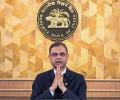
Shrugging off concerns over the depreciation of rupee, the RBI has cut interest rate by 25 basis points to 5.25 per cent in a bid to further bolster economic growth, which rose to a six-quarter high of 8.2 per cent in the second quarter of the current financial year.

The Reserve Bank's gold reserves crossed 880 metric tonnes in the first half of 2025-26 with the central bank adding 0.2 metric tonnes in the last week of September. The total value of the gold was $95 billion as of September 26, 2025, according to the latest data from the Reserve Bank of India (RBI).

The contraction in total reserves was driven by a fall in gold reserves, which dropped $13.49 billion to $117.19 billion during the reported week.

India's foreign exchange reserves decreased by USD 7.052 billion to USD 709.759 billion in the week ending March 13, according to the Reserve Bank of India (RBI). This decline follows a previous drop and comes after reserves reached an all-time high in February.

Flows from overseas Indians into Non-Resident Indian (NRI) deposit schemes have fallen by 24.17 per cent to approximately $11.04 billion between April 2025 and February 2026, down from $14.56 billion in the previous year, according to Reserve Bank of India (RBI) data.
The relation between a regulator and its regulated entities is collaborative and not adversarial with the common objective of maintaining the stability and credibility of the financial system. However, the action on regulated entities like penalties and business restrictions are the last resort, Reserve Bank of India (RBI)'s governor Sanjay Malhotra said on Friday.
The net liquidity surplus in the banking system fell to Rs 16,875 crore on Thursday the latest data by the Reserve Bank of India (RBI) showed, lowest since 22 January.

While the economy will wait for a rate cut in December, the banking industry should be happy with the wave of liberalisation -- a big push for growth in bank credit, points out Tamal Bandyopadhyay.

IRCTC is expanding its payments arm, IRCTC Payments, to handle transactions across its ticketing platform and tap government clients, aiming to scale its annual payment processing to approximately 1 trillion.
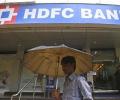
HDFC Bank, India's largest private-sector lender, has revised its FY27 growth trajectory, stepping back from earlier guidance to align with a more measured 12 per cent year-on-year expansion, citing geopolitical uncertainties.

India's foreign exchange reserves decreased by USD 11.413 billion to USD 698.346 billion during the week ending March 20, primarily due to a significant reduction in gold reserves, according to the Reserve Bank of India (RBI).

'We are staying away from making forward-looking statements on when we will reach 1 trillion, etc. But growth will be rapid; it's only a matter of time.'

Indian stock markets are expected to remain highly sensitive to geopolitical developments, particularly the US-Iran situation, and crude oil prices this week, with analysts also highlighting the influence of the rupee-dollar trend, foreign investor activity, and upcoming inflation data.

The Supreme Court of India will hear a suo motu case concerning victims of digital arrest, a growing form of cybercrime where fraudsters impersonate officials to extort money from victims.

The Indian rupee rebounded against the US dollar after the Reserve Bank of India (RBI) restricted banks' net open positions in dollars. This move prompted banks to sell dollars, providing temporary support for the rupee amidst ongoing geopolitical tensions and rising oil prices.

Unified Payments Interface (UPI) transactions in India reached a record high in March, with 22.64 billion transactions, marking a significant increase from the previous year and highlighting the growing adoption of digital payments.
