
'You have to get private investment to somewhere between 35% to 36% of GDP. It is hovering about 30%-31%.'
Like with all great crashes, some had noticed the cracks. "... cash balances (of banks) seem, from the available indications, to be hopelessly inadequate; and it is hard to doubt that in the next bad times they will go down like ninepins. If such a catastrophe occurs, the damage inflicted on India will be far greater than the direct loss falling on the depositors," said John Maynard Keynes in his May 1913 work "Indian Currency and Finance", written before his path-breaking work in macroeconomics laid the foundation of dealing with global crises.

There remains a debate on who said this: "When the facts change, I change my mind. What do you do, Sir?" Was it the British economist John Maynard Keynes or the American economist Paul Samuelson. Irrespective of who said it, this sentiment appears to have found resonance in ITC's boardroom in recent years.

In 1930, John Maynard Keynes predicted that by 2030 technology would be so advanced that three hours of work per day would suffice. Has AI brought about the transformation that Keynes predicted, asks Atanu Biswas.

Instead of worrying about imported gold, FM should broaden the tax base to dispel concerns about govt-driven inflation.
There is a tendency to greet new technologies promising large potential returns with exaggerated optimism. But widespread hysterical behaviour ("irrational exuberance") with price increases detached from all underlying economic is far from norm.
Although more economic research has been done in the past 25 years than ever before, the economists whose names are most frequently referenced today, such as Hyman Minsky and John Maynard Keynes, are from earlier generations.
The first reason is that prices are bound to rise because there will always be several demand-supply mismatches in the economy.
India ranks at 165 among the 178 countries and among the South Asian countries, it is the lowest
The world needs more regulation today, not a return to autarky
Turning tail from its worst valuation ever on the world's currency markets, the US Dollar has now gained more than 3% since the start of November.
The current stock market situation, to an extent, can be explained in this context.
In the long-term we are all dead. Agreed! But, if we don't plan well enough for the long-term, we might be as good as dead even in the short-term!
While we have listed above some key rules to be adhered to before selecting a company for investment, there is one bigger rule that applies to stock market investing: discipline.
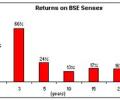
Adequate and careful investing in stocks is one way to achieve the goal of happy and comfortable retired life, although it comes with some extra risk.

India's time use survey for January-December 2019 had found that an average person in urban areas spends 485 (eight hours and five minutes) minutes on employment and related activities.
India has no option but to shut China out, notes T C A Srinivasa-Raghavan.
'Those who are talking of adopting the Narasimha Rao-Manmohan Singh policy must understand now that what was a reform then is no longer a reform now,' argues Sukumar Mukhopadhyay who was associated with the 1991 economic reforms.
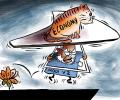
''I have been saying for the last 25 years, to no avail naturally, that the only government asset that is politically unproblematic is land,' says T C A Srinivasa Raghavan.

It is time to shrug off the ideological shackles about the way we work, play and live, says Ajit Balakrishnan.

'The stimulus message was tagged on to what was meant to be an exhortation to self-reliance, glossing over the near impossibility of merging the immediate requirement of relief for a huge population and a questionable strategy for the future trajectory of a large economy aspiring to superstardom,' points out Shreekant Sambrani.

For a bunch that fancies itself so greatly and does not hesitate to express an opinion on everything, this is very odd behaviour, says T C A Srinivasa-Raghavan.

The so-called 'fourth industrial revolution' will bring ever faster cycles of innovation, posing huge challenges to companies, workers, governments and societies alike

The inability of the economy to create new jobs faster than jobs are lost to automation leads to unemployment.

Former Prime Minister Dr Manmohan Singh on Thursday termed Narendra Modi administration's scheme to abolish 500 and 1,000-rupee notes as "a monumental management failure".

'A very vast majority of us will catch it at some point, about 8 out of 10 won't feel much worse than a common cold's nuisance, if at all, but some will die.' 'A very, very vast majority, at least about 98 per cent of those infected, if not more, under any circumstances, will live through it,' observes Shekhar Gupta.

The middle class's long push to force the state to retreat from the economy may be reversing, says Ajit Balakrishnan.

Now, the world over, policymakers are dusting off their copies of Keynes' classic, The General Theory of Employment, Interest and Money, and figuring out whether there are any answers there to our own challenges of growing our economies.

Prime Minister Narendra Modi announced its imminent replacement in his Independence Day address, but the new name, structure and key personnel became known only a week ago.

'The government has said it has kept its powder dry to fight the true battle against the debilitating influence of the pandemic.' 'The release of the shocking economic data this week should act as the fuse for using that powder now.' 'Further delays will make the battle that much harder,' notes Shreekant Sambrani.

'All of Indira Gandhi's bad economic ideas are being strengthened, from nationalised banks to anti-poverty, handout yojanas,' says Shekhar Gupta.

Investors can take heart from the first Cabinet meeting in the second innings.

The fact that the US dollar has become the world's preferred reserve currency is now the core of global financial crisis, says Mohan Guruswamy.

'Demonetisation, is in principal, a mistake, because it involves a theft -- a taking of private property by the State.' 'It is one of those bad Indian ideas that has been tried twice in the past, with two failures for the record books.' 'This cloud over the economy will probably remain as long as Modi is in power.'

The announcement of the formation of the BRICS bank will have as much an impact about how the non-G7 countries manage their economies and their foreign reserves, as it does on the intellectual discourse. The development priorities and agenda which was hitherto set by western experts responding mostly to western priorities and notions will now have to compete with an intellectual tradition that is and can be very different, says Mohan Guruswamy.
