
Sri Lanka's main opposition party Samagi Jana Balavegaya (SJB) on Monday said it is ready to lead the next government to bring stability to the bankrupt island nation as it grapples with political and economic crises and any resistance to the move in Parliament will be seen as a 'treacherous act'.

'Nobody wants him to gain power.' 'But saying that all these players together conspired against Imran Khan and had him arrested would be in the realm of conjecture but possibilities cannot be ruled out.'

The IMF and World Bank have stopped loans, and the FATF warned its 39 member nations to block Taliban assets.

The current Euro-Atlantic Monetary Fund must become an International Monetary Fund.

During the reporting week, gold reserves increased marginally by $87 million to $26.796 billion.
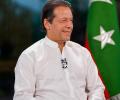
In an interview with the Financial Times following an assassination attempt this month, Khan said he no longer 'blamed' the US and wants a 'dignified' relationship if re-elected.

India's reserve position with IMF rose by $ 7 million to $ 3.636 billion.
During the week, gold reserves decreased by $200 million to $26.709 billion.

Mr Modi might have questions to ask himself on the most formidable strategic challenge before India that he inherited from the United Progressive Alliance: The triangulation between China and Pakistan. The failure to break out of it, or even loosen it a bit, is something to reflect on, notes Shekhar Gupta.

Prime Minister Narendra Modi Wednesday said the International Monetary Fund (IMF) sees India as a "bright spot" in the global economy and as per the World Bank, India is in a better position to deal with the global headwinds than many other countries. This is because of India's strong "macroeconomic fundamentals", Modi said while virtually addressing the inaugural function of the 7th edition of Invest Madhya Pradesh-Global Investors Summit in Indore. In the past eight years, the government has increased the speed of reforms and removed many hurdles in the way of investments.

Thousands of demonstrators have hit the streets since April 9, as the government ran out of money for vital imports; prices of essential commodities have skyrocketed and there are acute shortages in fuel, medicines and electricity supply.
During the week, gold reserves declined by $443 million to $26.910 billion.
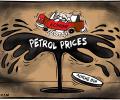
Amid news of a fuel shortage in some parts of the country and wider unrest over fuel issues in the neighbourhood, an analysis of the data from international tracker globalpetrolprices.com shows that the per litre price of petrol is higher in India than in seven out of its nine neighbours.

Saudi Arabia has agreed to provide US$ 4.2 billion worth of assistance to cash-strapped Pakistan to support its economy, it emerged on Wednesday after Prime Minister Imran Khan held talks with Saudi Prince Mohammad bin Salman in Riyadh this week.

Gold reserves increased $1.54 billion to $32.68 billion in the reporting week.

Eminent economist Arvind Panagariya has said India is on the cusp of returning to a high growth trajectory and voiced confidence that the country will become the world's third-largest economy by 2027-28. Currently, India is the fifth largest economy "so it's another five years.We are already in (the year) 2023. "So 2027-28, India should be the third-largest economy," Panagariya, Columbia University Professor and former Vice Chairman of NITI Aayog, told PTI in an interview in New York.

A committee headed by Patel recommended retail inflation targeting and a monetary policy committee.

The country's foreign exchange reserves crossed the $600 billion mark for the first time after increasing by $6.842 billion in the week ended June 4, RBI data showed on Friday. The reserves surged to a record $605.008 billion in the reporting week, helped by a rise in foreign currency assets (FCA), a major component of the overall reserves, as per weekly data by the Reserve Bank of India (RBI). In the previous week ended May 28, 2021, the reserves had swelled by $5.271 billion to $598.165 billion.
Gold reserve also declined by $340 million to $30.55 billion.

China's embassy in Colombo has sought an urgent meeting with senior Sri Lankan authorities after Colombo sought a deferment of the planned docking of a high-tech Chinese research vessel at the strategic Hambantota port over which India raised concerns, sources said.

Announcing her appointment, IMF Managing Director Christine Lagarde hailed the Mysore-born Gopinath as "one of the world's outstanding economists with impeccable academic credentials, a proven track record of intellectual leadership and extensive international experience".

Rating agencies Crisil and Icra on Monday revised down their India growth projections for the current fiscal and the second quarter mainly due to the ripple effect of slowdown in global growth and mixed crop output. Crisil downgraded the India growth forecast by 30 bps to 7 per cent while Icra pegged the economic expansion at 6.5 per cent for the second quarter of FY2022-23. "We have revised down our forecast for real gross domestic product growth to 7 per cent for fiscal 2023 from 7.3 per cent, primarily because of the slowdown in global growth that has started to impact our exports and industrial activity.

India is poised to be the fastest-growing major economy in the world and an engine of global growth despite global headwinds, says leading industrialist and Aditya Birla Group Chairman Kumar Mangalam Birla. The economic activity in India has witnessed a sharp recovery to pre-pandemic levels on the back of a rapid and widespread rollout of the vaccination programme, Birla said in the latest annual report of UltraTech Cement Ltd. "A strong digital ecosystem, fiscal and monetary policy and various government schemes helped small and medium enterprises and the worst affected sections of the population to survive while reviving demand and bringing the economy back on track," said Birla while addressing UltraTech's shareholders.

The vaccination drive was only one important part of India's globally recognised pandemic management and response strategy, observes Dr Vinod K Paul.

India's current account slipped into a deficit of $9.6 billion or 1.3 per cent of GDP in the September quarter, the Reserve Bank said on Friday. The current account, which records the value of exports and imports of both goods and services along with international transfers of capital, was in a surplus mode both in the quarter-ago and year-ago periods. India's current account surplus had stood at $6.6 billion or 0.9 per cent of GDP in the April-June 2021 quarter, while in the year-ago period (Q2FY22), the surplus had stood at $15.3 billion or 2.4 per cent of the GDP, the data said.

Gold reserves in the reporting week increased by $707 million to $33.52 billion.

Indian economy is expected to grow by 10 per cent or more in the current fiscal, and 8 per cent plus in the next fiscal year, Niti Aayog Vice-Chairman Rajiv Kumar said on Tuesday. Addressing a book launch event, Kumar further said that seven years of the Modi government has laid a strong economic foundation for businesses to thrive in India. "There was a hiccup (in economic growth) for two years due to COVID-19 pandemic.
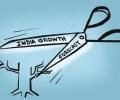
The biggest risk to India's growth outlook is an escalation of geopolitical tensions, especially if these tensions spread to the Asian region, RBI Monetary Policy Committee (MPC) member Jayanth R Varma said on Wednesday. Varma, in an interview to PTI, said that inflation and inflationary expectations appear to be moderating and high inflation will certainly not become the 'norm' in the country. He is cautiously optimistic about the Indian economy as after the pandemic abated, consumption demand has begun to recover though the recovery is uneven across sectors and industries.

The foreign exchange kitty had crossed the half-a-trillion mark for the first time in the week ended June 5, 2020, after it had swelled by $8.223 billion to stand at $501.703 billion.
For the week under review, foreign currency assets, which are the biggest parts of the reserves, increased by $1.642 billion to $410.453 billion.

India's growth in the last three financial years has averaged just 1.9%. It is natural to project rapid growth from this low base. Crucial to that would be the assumption that the economy has suffered no lasting damage from the pandemic, observes T N Ninan.
Terming the Indian growth pattern as impressive, the International Monetary Fund has said that it does not foresee the economy overheating as long as the current monetary policy is in place. "(India's) growth has been impressive--9.7 per cent in 2006, 8.9 per cent in 2007 and we are viewing at 8.4 per cent in 2008. That is really an impressive growth pattern," IMF Managing Director Rodrigo de Rato said.
Gold reserves were up by $1.525 billion in the reporting week to $37.625 billion.
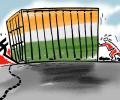
India has been relatively insulated from the severe headwinds in the West. However, with a third of the global economy expected to slip into recession in calendar year 2023, the impact will strongly be felt on India's exports and trade economy, leading economists said in a panel discussion at the Business Standard BFSI Insight Summit in Mumbai on Wednesday. The panel comprised former Reserve Bank of India executive director and former Monetary Policy Committee member Mridul Saggar, State Bank of India Chief Economic Advisor Soumya Kanti Ghosh, Citibank India Chief Economist Samiran Chakraborty, ICRA Chief Economist Aditi Nayar, and IndusInd Bank Chief Economist Gaurav Kapoor. The topic of the panel discussion was No recession in sight: Is India decoupled from developed economies?

A statement issued by the Prime Minister's Office on Monday said that Mahinda Rajapaksa intends to propose a new Constitutional Amendment to the cabinet in order to fulfil the people's aspirations.

Prime Minister Mahinda Rajapaksa became the only member of the family to retain a cabinet position in his younger brother Gotabaya Rajapaksa's new cabinet of 17 ministers appointed on Monday, as the island nation was facing the worst economic crisis.

Chief Economic Adviser K V Subramanian on Wednesday said India is expected to hit a growth rate of 6.5-7 per cent in 2022-23 and accelerate further to 8 per cent in the subsequent years on the back of reforms undertaken by the government. He also said the government is expected to meet the fiscal deficit target of 6.8 per cent in the current fiscal despite pressure on revenue collections.
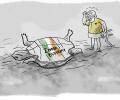
The International Monetary Fund (IMF) on Tuesday slashed India's growth forecast for 2022-23 (FY23) by 80 basis points to 7.4 per cent, citing less favourable external conditions and rapid policy tightening by the central bank. In its update to the April World Economic Outlook, the IMF said that though a global recession in 2022 was ruled out with a growth estimate of 3.2 per cent, the balance of risks was squarely to the downside, driven by a wide range of factors that could adversely affect the global economic performance. "The risk of recession is particularly prominent in 2023, when in several economies growth is expected to bottom out, household savings accumulated during the pandemic will have declined, and even small shocks could cause economies to stall.

When he didn't respond (Mr Saver has lost count of how many relationship managers he has had in the past few years!), the gentleman landed up at his doorstep and started pleading with him to open fixed deposits with the bank, observes Tamal Bandyopadhyay.
