
L&T was the top gainer in the Sensex pack, rising over 3 per cent, followed by Bajaj Finance, Reliance Industries, IndusInd Bank, SBI and HDFC Bank. NSE Nifty surged 168.05 points to 14,653.05.
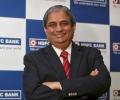
Tamal Bandyopadhyay details HDFC Bank's digital journey.

Private banks' net profit grew 26.3 per cent year-on-year (Y-o-Y) to Rs 48,982 crore in the first quarter ended June 2024 (Q1FY25) owing to healthy growth in credit and other income. The gross non-performing assets (GNPAs) increased with the end of dispensation granted during the pandemic, according to the data compiled by BS Research Bureau for listed 18 private banks.

There was no smooth surge in middle class prosperity for foreign businesses to tap into because of the Indian economy was mismanaged, argues Debashis Basu.

Do not get repair work started without informing the insurer as the latter like to carry out end-to-end verification of damages and documents before approving a claim.

IPOs inherently carry more risks than stocks that have been listed on the exchanges for some time.

The net credit card additions in the banking sector nearly halved to 2 million in the first quarter of the current financial year (Q1FY25) from the previous quarter due to seasonal and regulatory factors. According to the Reserve Bank of India (RBI) data, the net credit card additions during the April-June quarter of FY25 stood at 2 million, 48 per cent lower than 3.9 million in the December-March quarter of FY24.

Stock markets snapped their five-day losing run on Friday with the benchmark BSE Sensex closing higher by 75 points on value-buying in banking and oil shares after recent losses. The 30-share BSE Sensex rose by 75.71 points or 0.10 per cent to settle at 73,961.31. During the session, it hit a high of 74,478.89 points and a low of 73,765.15 points.

Axis Bank was the top gainer in the Sensex pack, soaring over 6 per cent, followed by Bajaj Finserv, HDFC, Bajaj Finance, ITC, IndusInd Bank, SBI, ICICI Bank and Reliance Industries.

The post-Covid pandemic boom in corporate revenues appeared to have faded away in 2023-24. Yet, companies have reported a sharp recovery in their profits in FY24, driven by high margins. Their combined net sales, including gross interest income for lenders, rose by a modest 4.8 per cent year-on-year (Y-o-Y) in FY24.

IT services company's CEO outlined an ambitious three-year roadmap to accelerate revenue growth and lift margins.

From India, Reliance Industries is the only one in the overall top-200 list and is followed by HDFC Bank at 209th, ONGC at 220th, Indian Oil at 288th and HDFC Ltd at 332nd place.
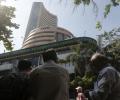
IndusInd Bank was the top loser in the Sensex pack, shedding over 3 per cent, followed by Tata Steel, HUL, Asian Paints, Titan and SBI.

The veteran banker has been instrumental in building the bank from scratch and turning it into the largest private sector lender of the country.

Domestic brokerage HDFC Securities blocked trading in NSE's cash segment for its clients for a limited period due to a "technical glitch".

International Finance Corporation will put in $200 million and HDFC will contribute $600 million to create $800-mn corpus for affordable homes

'An in-house contest encourages employees to share yoga and well-being practices with their families.'

From the Sensex basket, Tech Mahindra, Tata Steel, JSW Steel, HCL Technologies, Tata Consultancy Services, Larsen & Toubro and Kotak Mahindra Bank were the biggest laggards. Mahindra & Mahindra, Power Grid, Bajaj Finance, IndusInd Bank and Maruti were the major gainers.

The tailwind of low price erosion in the US generics market, seen by domestic pharmaceutical companies in calendar year 2023 (CY23), may be reversing slowly, caution analysts. According to the latest data from US-based Centers for Medicare and Medicaid Services (CMMS), price erosion in calendar year 2024 (CY24) on a year-to-date (YTD) basis stood at a high of 15 per cent in the oral solid dosage (OSD) segment compared to a low of 1 per cent in CY23. This erosion, according to a report by Antique Stock Broking, was the highest in the last three years.

The bank has said rent payments will not earn reward points, and redemption of reward points on various cards have been capped in certain segments.

Other top losers in the Sensex pack included Bharti Airtel, Asian Paints, TCS, HCL Tech, Tata Steel, SBI, IndusInd Bank and Hero MotoCorp, declining up to 3.28 per cent.

Adani Ports, NTPC, Infosys, Hindustan Unilever, HCL Technologies and Sun Pharma were among the other big gainers. However, Larsen & Toubro, Bajaj Finance, State Bank of India, Axis Bank and HDFC Bank were amonh the major laggards.
Among the Sensex firms, Power Grid, Kotak Mahindra Bank, Tech Mahindra, Bajaj Finserv, ITC, Bharti Airtel, Nestle, NTPC, Bajaj Finance, Reliance Industries, Infosys and HDFC Bank were the major gainers.
Puri will hang up his boots this October as he will reach the maximum age limit of 70 for a chief executive officer of a private bank. Puri has been at the helm of HDFC Bank for the past 26 years, since its inception in 1994.

A day after facing massive erosion from their wealth, equity investors became richer by Rs 13.22 lakh crore on Wednesday with markets making a strong comeback. The 30-share BSE Sensex jumped 2,303.19 points, or 3.20 per cent, to settle at 74,382.24. During the day, it rallied 2,455.77 points, or 3.40 per cent, to 74,534.82.

Among the Sensex firms, Bajaj Finance jumped 4.44 per cent and NTPC rose over 3 per cent. IndusInd Bank, Axis Bank, Tata Motors, Nestle, Power Grid, Infosys, Bajaj Finserv and HDFC Bank were the other major winners. HCL Tech, Mahindra & Mahindra, Maruti and Hindustan Unilever were among the laggards.

Equity benchmark indices Sensex and Nifty closed marginally lower on Friday as investors booked profit in FMCG, IT and healthcare stocks after the BSE Sensex and Nifty hit fresh lifetime highs in intra-day deals. The 30-share BSE Sensex dipped 7.65 points or 0.01 per cent to settle at 75,410.39. During the day, it rallied 218.46 points or 0.28 per cent to hit its all-time intra-day high of 75,636.50.

Private life insurers experienced reasonable growth in the July-September quarter (second quarter, or Q2) of 2023-24 (FY24), and the October data is also encouraging. The individual weighted received premium (WRP) for private players grew by 19.8 per cent year-on-year (Y-o-Y) in October. However, Life Insurance Corporation (LIC) of India had slower growth, pulling the industry growth rate down to 13 per cent Y-o-Y.

'In phases when smaller stocks do well, an equal-weight index performs better than its market cap-weighted peer.'

Shares of brokerages and market infrastructure institutions (MIIs) witnessed heavy selling pressure following the Securities and Exchange Board of India's (Sebi's) pivot to a uniform fee structure, which analysts fear could dent revenues. Discount brokerages, which currently benefit from a spread between client charges and exchange fees, are expected to be most affected. Shares of Angel One, the third-largest brokerage by active clients, fell 8.7 per cent. Groww and Zerodha, the largest brokerages, are not publicly listed.

From the Sensex pack, Tata Steel, Titan, Tech Mahindra, Wipro, Bajaj Finserv, Bajaj Finance, Nestle India, Tata Motors and JSW Steel were the biggest laggards. ICICI Bank, Axis Bank, HDFC Bank, State Bank of India and Kotak Mahindra Bank were the gainers.

Younger people, who usually have a longer investment horizon which allows them to handle the interim volatility, may go for them.

Insurance companies reported nearly 23 per cent growth in first year premium in the first quarter of financial year 2024-25, when compared to the same period last year, with market leader LIC leading the charge with 28 per cent growth. According to the data released by the Life Insurance Council, the new business premium (NBP) increased by 22.91 per cent year-on-year (Y-o-Y) to ~89,726.7 crore in Q1FY25 from ~73,004.87 crore in Q1 FY24, reflecting a robust demand for insurance policies in the country.

FDs are not advisable for long-term wealth creation as their post-inflation, post-tax returns are not very attractive.

With high credit growth and healthy asset quality, listed commercial banks are expected to report steady growth in earnings during the fourth quarter ended March 2024 (Q4 FY24). Profits are expected to grow at 9.6 per cent year-on-year (Y-o-Y) and net interest income (NII) by 8.7 per cent in Q4 FY24, according to Bloomberg analysts' estimates. According to Motilal Oswal Securities, while bank credit growth has been robust, deposit growth has also gathered pace.

rediffGURU Dev Ashish answers your personal finance and mutual fund queries.

'India's top companies currently lack the organisational wherewithal to hire and train 2 million interns annually, given their current scale of operations and existing employee base.'

On the Sensex chart, NTPC, SBI, UltraTech Cement, ICICI Bank, Tata Steel, Bajaj Finserv and Bjaja Finance were among the major laggards, shedding as much as 1.63 per cent.

The bottom lines of several private sector banks have taken a hit following the recent guidelines released by the Reserve Bank of India (RBI) on alternate investment fund (AIF) investments. Last month, the RBI announced that regulated entities, such as banks, non-bank lenders, and home financiers, cannot invest in AIFs that have directly or indirectly invested in companies that have borrowed money from the lenders. In case an entity had already made such an investment, they must liquidate the investment or make 100 per cent provision, RBI had said.

Credit-to-deposit (CD) ratio of major public sector and private sector banks during the October-December quarter of FY24 inched up as compared to the previous quarter though government-owned lenders reported a lower rate than their private peers. CD ratio is the ratio of the funds that banks lend as compared to the funds raised in the form of deposits. The CD ratio of top public sector banks (PSBs) - State Bank of India, Punjab National Bank, Bank of Baroda and Canara Bank - was lower than their private counterparts.
