
A nationwide strike called by trade unions to protest against the central government's labor policies had a mixed impact across India. While normal life remained largely unaffected in most parts of the country, some sectors like banking, transport, and insurance experienced disruptions. Sporadic incidents of violence were reported in West Bengal.

Banking operations across the country may be impacted on Thursday as some bank unions would be joining the one-day nationwide strike called by central trade unions. Ten central trade unions, except Bharatiya Mazdoor Sangh, will observe the nationwide general strike to protest against various policies of the central government. Many lenders, including IDBI Bank and Bank of Maharashtra, in regulatory filings on Wednesday said their normal working could be affected at the branches and offices.
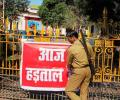
Some of the services like cash deposit and withdrawal at the counter and cheque clearances have been impacted due to the strike by banking staff.

Employees of four bank unions participating in strike are from All India Bank Employees Association, Bank Employees Federation of India, All India Bank Officers' Association and National Union of Bank Employees.

The strike notices were given by workers' unions of various sectors such as coal, steel, oil, telecom, postal, income tax, copper, banks and insurance.
If you want to apply for a job at State Bank of India (SBI), any default on loans or credit card payment will render your ineligible.
To facilitate such restrictions on entities found to have 'wilfully' defaulted on bank loans, the Reserve Bank is exploring ways to share details of these defaulters with Sebi on a real time basis.

The staff of public sector banks had gone on a nationwide strike for two days beginning February 10 after discussions with the IBA failed.

Trade union leaders claimed that the strike would be even bigger than the one last year as the number of striking workers is expected to swell to 18 crore

Ten trade unions to go on strike to protest against changes in labour laws
