
Hindustan Lever said on Monday it has received government's approval to change its name to Hindustan Unilever Ltd following which, its new corporate identity represented by a new logo will come into effect.
Hindustan Unilever Ltd's (HUL's) second quarter 2025-26 (Q2FY26) consolidated revenue rose 2 per cent to Rs 16,250 crore, with low or flat volume growth. Demand remained stable but goods and services tax (GST) transition and prolonged monsoon hurt offtake.
Shareholders took the FMCG major to task on issues ranging from the mercury pollution in the pristine environs of Kodaikanal in Tamilnadu to changing the name to Hindustan Unilever Limited.

The combined market valuation of five of India's top-10 most valued firms eroded by Rs 1 lakh crore last week, with IT giant Tata Consultancy Services (TCS) experiencing the largest decline amidst a bearish trend in domestic equities.

Analysts on average were expecting a profit of Rs 1,043 crore or Rs 10.43 billion, according to Thomson Reuters data.
Unilever's shadow on HUL has been lengthening for some time. One indication recently was the change of name from Hindustan Lever, the identity that had been established in the country for half a century.
Modern trade retail accounts for 5-6 per cent of the overall sales revenues of FMCG companies. It has been reported in the past that FMCG players like Godrej Consumer Products and Dabur had taken a tough stance against defaulting modern trade retailers and had stopped supplying to them or supplying only in return for cash payment, a deviation from the practice of supplying against credit.

Indian benchmark indices, Sensex and Nifty, saw declines in early trade, influenced by rising crude oil prices and ongoing geopolitical tensions in West Asia. Experts suggest that crude oil remains a primary concern, with Brent holding near USD 88 a barrel due to renewed US warnings against Iran, embedding a geopolitical risk premium in energy markets. Track Sensex, Nifty
Hindustan Unilever Ltd (HUL) reported a 3.17 per cent year-on-year decline in consolidated net profit to Rs 2,680 crore for the June quarter, even as revenue from product sales surged by 10.26 per cent to Rs 17,149 crore, marking its highest growth in 13 quarters.
In its recent annual report for 2011-12, the country's largest fast-moving consumer goods (FMCG) company, the market value of which is about Rs 1,00,000 crore (Rs 1,000 billion), stated these segments were "key capabilities in order to win in the future".

Indian benchmark indices, Sensex and Nifty, saw a significant rebound in early trade, with the Sensex jumping 726 points and the Nifty climbing over 200 points, primarily driven by strong performances in IT stocks, HDFC Bank, and renewed foreign fund inflows. Track Sensex, Nifty on July 29.
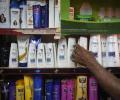
HUL and Genpact aim to enable these businesses to eventually get absorbed into the supply chains of large consumer companies, including that of HUL. In 2021, the maker of Sunsilk shampoos committed to spending Rs 2,000 crore annually with diverse businesses by 2025, Ansu Archana, procurement director, beauty & wellbeing, HUL, told Business Standard. Archana added that the program aligns with Unilever's wide-ranging set of commitments and actions to help build a more equitable and inclusive society.
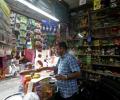
India's leading FMCG companies, including Hindustan Unilever and Dabur, reduced their permanent workforce in FY26, even as most firms in the sector, such as Tata Consumer Products and Marico, increased median employee remuneration, reflecting a mixed trend in staffing and compensation strategies.
Indian benchmark indices Sensex and Nifty recorded sharp gains, rising over 1 per cent, driven by strong performances in IT stocks, HDFC Bank, and renewed foreign fund inflows, despite mixed global cues and elevated crude oil prices.

Indian benchmark indices Sensex and Nifty ended flat on Tuesday, with the Sensex dipping nearly 70 points, as investor sentiment turned cautious ahead of crucial global central bank policy meetings and a significant sell-off in Asian markets.
The company plans to overhaul business and rationalise costs in a bid to reach parent Unilever's new profit targets, reports Viveat Susan Pinto.
FMCG major Hindustan Unilever Ltd on Monday reported a net profit of Rs 408.06 crore (Rs 4.08 billion) for the quarter ended September 30, while the same was Rs 520.74 crore (Rs 5.21 billion) in the corresponding period last fiscal. The company's total income stood at Rs 3470.49 crore (Rs 34.70 billion) for the quarter under review, while it was at Rs 3162.82 crore (Rs 31.63 billion) in the same quarter previous year.

Indian equity benchmark indices Sensex and Nifty plummeted over 2 per cent following US President Donald Trump's declaration that the interim agreement with Iran is 'over', which led to a sharp rally in crude oil prices and heightened geopolitical tensions.

Indian benchmark indices, Sensex and Nifty, bounced back significantly after two days of losses, with the Sensex climbing 443.97 points to settle at 76,922.64, driven by positive global market trends and a drop in crude oil prices.
Indian benchmark equity indices, Sensex and Nifty, closed lower for multiple consecutive days, with the Nifty extending its losses to a seventh day, primarily due to elevated crude oil prices following the expiry of the US-Iran ceasefire without a diplomatic resolution.

The combined market valuation of four of India's top-10 most valued firms, including State Bank of India, Bharti Airtel, Tata Consultancy Services, and Larsen & Toubro, eroded by Rs 1 lakh crore last week amidst a volatile and range-bound equity market.

Indian benchmark indices Sensex and Nifty rallied in early trade, driven by a significant decline in Brent crude oil prices, which fell below the USD 73 per barrel level, and positive trends observed across most Asian equities.
Indian benchmark indices, Sensex and Nifty, experienced significant declines, with the Sensex falling 493 points and the Nifty dropping for the sixth consecutive day, primarily due to elevated crude oil prices reaching USD 91 per barrel and diminishing hopes for a diplomatic resolution in West Asia.

Indian benchmark indices Sensex and Nifty saw gains in early trade, driven by a decline in crude oil prices due to easing geopolitical tensions in West Asia and strong buying interest in the IT sector.

Indian benchmark indices closed mixed, with the Sensex gaining 113.61 points to 78,079.96 and the Nifty falling 40.10 points to 24,395.85, as elevated crude prices and ongoing geopolitical uncertainty in the Middle East made investors cautious.
Indian benchmark indices closed mixed, with the Sensex gaining 113.61 points to 78,079.96 and the Nifty falling 40.10 points to 24,395.85, as elevated crude prices and ongoing geopolitical uncertainty in the Middle East made investors cautious.

Indian benchmark indices Sensex and Nifty climbed in early trade, driven by buying in blue-chip stocks like Reliance Industries and ICICI Bank, alongside a notable cooling in crude oil prices.

The top 500 listed companies had 860 women directors or board members overall.

FMCG major HUL has posted biggerprofit on improved demand.

Indian equity benchmark indices, Sensex and Nifty, ended marginally lower in a volatile trading session, surrendering early gains due to profit-taking in blue-chip stocks and persistent macroeconomic concerns, despite positive global cues.

Indian benchmark indices Sensex and Nifty closed lower for the second consecutive day, driven by investor caution over conflicting geopolitical signals from West Asia and fresh foreign institutional investor (FII) outflows.

Indian benchmark stock indices, Sensex and Nifty, experienced mixed trading following the introduction of a new Closing Auction Session (CAS) for shares with futures and options (F&O) contracts, aimed at enhancing price discovery transparency. Track Sensex, Nifty on August 4

Indian benchmark indices Sensex and Nifty closed higher, with the Sensex climbing 355.90 points, driven by positive state election results and better-than-expected Q4 earnings, despite ongoing geopolitical concerns.
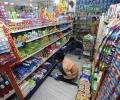
Consumer goods major Hindustan Unilever on Monday posted a 21.91 per cent increase in net profit to Rs 1,062.31 crore in the quarter ended December 31 on robust sales across businesses.
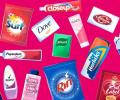
Hindustan Unilever (HUL) hiked prices across its portfolio of products by 3-13 per cent in multiple tranches in February, with the sharpest increase of 13 per cent seen in the 100 gm Lux soap pack, the price of which increased to Rs 35 from Rs 31 earlier. The price of the 125 gms soap pack of Lifebuoy was hiked from Rs 31 to Rs 33, a rise of 6.5 per cent. In January, the company had hiked the price of the same stock-keeping unit from Rs 29 to Rs 31.

Indian benchmark indices Sensex and Nifty ended a four-day rally, closing lower on Tuesday following the introduction of a new Closing Auction Session (CAS) for F&O stocks, which has added a layer of volatility and led to an early adjustment in market structure.

Indian benchmark indices Sensex and Nifty tumbled nearly 1 per cent for the third consecutive day, driven by a sharp spike in crude oil prices and significant selling in bank stocks, with Brent crude jumping to USD 95.27 per barrel.
Indian benchmark indices Sensex and Nifty closed flat, paring early gains due to renewed hostilities between the US and Iran, which unsettled investor sentiment and led to profit booking in metal, oil & gas, and telecom shares.
Indian benchmark indices, Sensex and Nifty, experienced a decline in early trade due to uncertainty surrounding the upcoming US-Iran negotiations in Doha. Foreign fund outflows and a dip in major IT stocks further contributed to the market's cautious sentiment, despite mixed performance in global markets.

As NSRCEL enters its next phase, the incubator plans to focus on AI, deep technology and global partnerships as it looks to expand its reach.
