
India's privatisation push, once projected as a cornerstone of economic reform, has suffered another setback, with the Centre set to call off the IDBI Bank stake sale, highlighting the political and structural constraints shaping the country's disinvestment policy, experts say.

The forthcoming Budget could think of maintaining public capital expenditure at 3 per cent so that domestic resources are available for private investments, points out N R Bhanumurthy.

Highlights of the Economic Survey 2025-26

Since their inception, they have cumulatively distributed over Rs 26,700 crore to unitholders.

The July-September quarter (Q2) business update on revenue by FSN E-Commerce Ventures (Nykaa) was well received by most investors and the share price surged over 6 per cent, driven by one block deal. Even after Wednesday's minor dip, it was still higher at Rs 257.50 as compared to Monday's close of Rs 255.55.

Growth accelerated for Zomato operator Eternal in the second quarter of financial year 2026 (Q2FY26). Zomato's business to commerce (B2C) operations delivered a strong 57 per cent year-on-year (Y-o-Y) rise in net order value (NOV) to Rs 23,164 crore while consolidated revenue soared 183 per cent Y-o-Y (90 per cent Q-o-Q) to Rs 13,590 crore during the period, with like-for-like (LFL) growth of 65 per cent, and acceleration in the quick commerce (QC) segment, which recorded NOV growth of 137 per cent Y-o-Y (27 per cent Q-o-Q).

Foreign portfolio investors (FPIs) infused Rs 22,615 crore into Indian equities in February, marking the highest monthly inflow in 17 months, driven by factors such as the interim India-US trade deal, correction in domestic market valuations, and strong corporate earnings.

Wipro on Wednesday reported a 25.9 per cent year-on-year rise in consolidated net profit for the March quarter to Rs 3,569.6 crore, but warned of a weak quarter ahead with up to 3.5 per cent expected drop in IT services revenue for Q1FY26, amid global uncertainties. CEO and Managing Director Srini Pallia said clients remain cautious in the face of macroeconomic uncertainty.

The army has been behind the other two forces in capex since FY21.

The Union Cabinet on Wednesday approved a relief package for debt-laden Vodafone Idea, freezing the AGR (Adjusted Gross Revenue) dues at Rs 87,695 crore and rescheduling the payment from FY32 to FY41, according to sources.

India's top cement producers delivered a solid July-September quarter (Q2) in 2025-26 (FY26), lifted by firmer prices, higher sales volumes, and a favourable base. Seasonal weakness and maintenance outages did dent sequential performance, but the overall picture remained positive - and the road ahead looks steady.
Tata Steel on Wednesday reported a 272 per cent year-on-year (Y-o-Y) jump in consolidated net profit, attributable to owners, at Rs 3,101.75 crore in the second quarter of 2025-26 (Q2FY26) led by higher sales volumes in India and planned cost takeouts across geographies.
State Bank of India on Saturday reported an all-time high profit of Rs 21,028 crore in December quarter FY26 on a standalone basis.

There is positive sentiment for Tata Steel on the basis of strong domestic demand, a turnaround of European operations and moderate valuations. A combination of capacity expansion, efficiency gains, higher asset utilisation, and improved operating leverage may lead to margin expansions.

India offset the decline in exports to traditional destinations by sharply ramping up shipments to Jordan (18,086 per cent), Hong Kong (17,006 per cent), Spain (13,436 per cent), the Philippines (2,235 per cent), and Namibia (1,068 per cent) in H1FY26.

The Nifty 50 index could rise around 24 per cent from current levels to 32,032 by December 2026 in a bull-case scenario, Kotak Securities said in a recent note. "We value Nifty at a 10 per cent premium (at 22x) to the 10-year average price-to-earnings of 20x on 2027-28 estimated (E) earnings per share (EPS) of Rs 1,456, and arrive at a December 2026 Nifty target of 32,032," the analysts wrote.

The banking sector could see better loan growth in the third quarter of financial year 2026 (Q3FY26) with improved net interest margins (NIMs), though the full impact of latest rate cuts will be largely felt in the fourth quarter. There may be lower slippage in unsecured loans and microfinance institutions (MFIs) along with steady recovery trends, which should lower credit cost.

FMCG major Hindustan Unilever Ltd (HUL) on Thursday reported a two-fold jump in consolidated net profit to Rs 6,603 crore in the December quarter of FY'26, on a year-on-year basis, driven by a one-off positive impact from the demerger of its ice cream business.

'When there is such an elaborate and a strong process, one would have expected anyone to either place the issues so that they can be addressed or go to the regulator and probably tell them rather than creating a kind of uncertainty for the stakeholders.

India's electric two-wheeler (e2W) manufacturers have urged the government to extend subsidies under the PM E-Drive (Electric Drive Revolution in Innovative Vehicle Enhancement) scheme beyond March 2026, cautioning that a withdrawal could slow near-term demand even as confidence in long-term electric mobility adoption remains intact.

Trent reported decent margins in the second quarter (July-September) of 2025-26 (Q2FY26) but growth moderated. Same store growth was low single-digits. Trent's revenue growth decelerated in Q2FY26 at 17 per cent year-on-year (Y-o-Y) while area additions were offset by decline in revenue per square foot (sq ft).

'Economic activity appears to have peaked in the second quarter of FY26, with industrial output, exports, and business confidence all softening from October 2025.'

The consumer price index (CPI)-based inflation hitting an all-time low in October would encourage the six-member monetary policy committee (MPC) of the Reserve Bank of India (RBI) to cut the policy repo rate in its upcoming December 3-5 meeting. However, the July-September GDP growth, expected to be above 7 per cent, may act as a deterrent.

Godrej Consumer Products (GCPL) had a disappointing third quarter (Q3FY25) with flat volumes (after 7 per cent growth H1FY25). Price hikes will be required to maintain margins to offset the cost of palm oil inflation. However, some analysts see Q3 as an exception with strong volume growth expected to resume and it may be the fastest growing FMCG player in FY26.

The Reserve Bank of India (RBI) on Friday delivered a 25 basis point (bps) repo rate cut analysts expected, driven by the strong 8.2 per cent GDP growth in the September quarter. However, analysts do not expect a runaway market rally as the impact of US tariffs continues.
After three consecutive months of heavy selling, foreign portfolio investors (FPIs) turned net buyers in the first week of February, infusing more than Rs 8,100 crore in Indian equities, aided by improving risk sentiment, along with a trade deal with the US.

'LIC will reduce but not fully exit its stake in IDBI Bank, which remains an important bancassurance partner,' says LIC of India' MD and CEO R Doraiswamy.

It is after seven years that a sedan has claimed the top spot -- Dzire had last achieved the No.1 position in 2018.
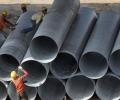
The Ministry of Steel on Monday signed Memoranda of Understanding (MoUs) with 55 companies for 85 projects under the third round of the Production-Linked Incentive (PLI) scheme for specialty steel.

Both the life and non-life insurance segment posted over 20 per cent premium growth in November for the first time in this financial year (FY26), supported by the reduction in goods and services tax (GST) on premiums from 18 per cent to zero and a favourable base effect.

'My concern is that, although everything is expressed in monetary terms, you are effectively combining values that have been adjusted using different price measures.'
Axis Bank reported a sharp drop in net profit in the second quarter of financial year 2026 (Q2FY26) on higher provisions and weak operating profit growth while revenue growth was moderate. But loan growth and deposit growth improved to double-digits year-on-year (Y-o-Y) and asset quality also improved with the gross non-performing loan or NPL ratio moving down.

The government bond yield curve is likely to flatten in the financial year 2027 (FY27) as the Reserve Bank of India (RBI) is expected to ease supply pressure in the ultra-long segment. In FY26 so far, reduced investments by insurance companies and pension funds pushed up yields on ultra-long tenor securities, steepening the curve.

India's industrial production grew at a two-year high of 6.7 per cent in November this year, driven by strong performances in mining and manufacturing, according to official data released on Monday.

Automobile exports from India rose 24 per cent in 2025 driven by robust demand for cars, two wheelers and commercial vehicles in the overseas markets, as per the latest SIAM data. Overall exports last year raced to 63,25,211 units as against 50,98,474 units in the 2024 calendar year, up 24.1 per cent.

Tata Motors' commercial-vehicle (CV) business reported a 48 per cent year-on-year decline in net profit to Rs 705 crore in Q3FY26, even as profit before tax (PBT) rose 65 per cent to Rs 2,568 crore.
FSN E-Commerce Ventures Ltd, the parent company of beauty retailer Nykaa, recorded a 3.4x growth in net profit at ~34.43 crore in the second quarter of FY26, up from ~10.04 crore in the corresponding period last year.

Net direct tax collection grew about 8.82 per cent to over Rs 18.38 lakh crore in the current fiscal till January 11 due to slower refunds and better corporate tax mop-up.

Brokerages expect the company to continue outperforming in the auto segment, driven by launches and the strong trajectory of healthy bookings.
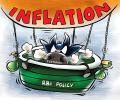
The Reserve Bank on Wednesday lowered the inflation projection for the current fiscal to 4 per cent from 4.2 per cent earlier, taking into account good agricultural output and falling crude prices.
