
India's decision to ban the export of non-basmati white rice has pushed up global prices, prompting multilateral lending agencies, such as the International Monetary Fund (IMF), to call for a reconsideration of the move. Though nothing has been spelled out yet officially, sources said, the government might consider requests for government-to-government sale of non-basmati white rice, especially to West African nations where India is a major supplier. Also, traders and exporters of specialty regional rice varieties like sona masuri or gobindo bhog feel that they have been short-changed.

The June quarter numbers of the country's largest listed healthcare services provider, Apollo Hospitals Enterprise (Apollo), were in line with Street estimates on the operational front. Net profit estimates, however, missed expectations due to higher interest and tax outgo. The revenue performance of the core hospital segment was robust, registering a 13 per cent increase over the year-ago quarter.

The Nifty IT has been one of the worst-performing indices on the bourses this calendar year. Rising concerns of a potential global recession, which investors fear can dampen demand for export-facing domestic information technology (IT) giants, have sent the index down over 30 per cent on a year-to-date basis. By comparison, the Nifty50 Index has shed 2.8 per cent during the period, reveals data by ACE Equity.
ITC has been one of the best performing large-cap stock at the bourses thus far in calendar year 2022 (CY22), rallying nearly 52 per cent during this period and outperforming the sector benchmark - the S&P BSE FMCG index - by a wide margin that moved up around 17 per cent during this period. However, the counter has lost over 5 per cent from its recent high of Rs 346.25 hit on September 23, 2022 and has underperformed the S&P BSE Sensex, which has lost nearly 2 per cent since then. So, is the rally in the stock coming to an end, and is this a good time to book profit?

Indians remitted close to $2 billion in November under the Reserve Bank of India's (RBI's) liberalised remittance scheme (LRS), latest data released by the central bank showed. Outward remittances under the scheme jumped 29 per cent to $1.99 billion compared to $1.54 billion in the year-ago month. Sequentially, outward remittances under the scheme were up about 3.5 per cent.

Tata Steel has built an iron ore chest of nearly 600 million tonnes (mt) and will look for more as it prepares for life beyond 2030 when its legacy captive mines come up for auction. The lease for four of its existing iron ore mines -- Joda East, Noamundi, Katamati, and Khondbond -- that feed the domestic operation with low-cost iron ore is going to expire in 2030, following changes in mining regulations. The year will also coincide with Tata Steel's ambitious target of doubling steelmaking capacity in India to 40 mt, increasing the need for iron ore. The company is pushing the pedal to ensure that it has enough resources to meet enhanced needs.

A decision on the interest rate for close to 60 million active subscribers of the Employee Provident Fund Organisation (EPFO) is likely to be taken in the next Central Board of Trustee (CBT) meeting, starting on March 25. A letter from the social security organisation regarding the convening of the 233rd CBT meeting was sent to all the board members last week, soliciting their presence in the meeting. Although the venue and the agenda haven't been drawn out yet, sources familiar with the matter say that the interest rate is unlikely to go below 8 per cent level amid a rising interest rate scenario across the globe.

Fresh formal job creation declined sequentially for a third straight month in February to fall to a 21-month low, signaling pressure in the employment market. These are the findings from the latest payroll data released by the Employee Provident Fund Organisation (EPFO) on Thursday. The number of new monthly subscribers under the Employees' Provident Fund (EPF) declined 10 per cent sequentially to 738,052 in February from 819,659 in January.

'Large-caps are better placed to withstand the impact of higher input cost inflation, rising rates and withdrawal of excess global liquidity.'

The broking industry's pecking order is set to change with Groww, a fin-tech startup from Bengaluru, poised to topple the industry's poster boy, Zerodha, as the leading brokerage in the number of active investors. According to data provided by the portal Topsharebrokers.com, Zerodha has 6.32 million active investors, while Groww is at 5.99 million. It is projected that Groww, which has grown at a much faster clip over the past two years, will surpass Zerodha this month, or next month.

'The fiscal pressure will be there, but the intent of the government behind this move is to spur demand and growth.'

Auto industry volumes have grown by 2.5 per cent overall, led by domestic sales of three-wheelers, two-wheelers and passenger vehicles (PVs) in the first quarter of this financial year. Analysts predict an 18 per cent growth in revenues for automotive original equipment manufacturers (OEMs) and profit growth of 69 per cent year-on-year (YoY). However, on a sequential basis, a decline in revenues as well as earnings before interest, taxes, depreciation, and amortisation (Ebitda) margins is expected.

Benchmark equity indices Sensex and Nifty closed higher by more than half a per cent on Wednesday following buying in IT, financial and oil stocks after the RBI slowed down the pace of interest rate hikes. Ending its two-day slide, the 30-share BSE Sensex rebounded by 377.75 points or 0.63 per cent to close at 60,663.79 with 24 of its constituents posting gains. The broader Nifty of the NSE spurted by 150.20 points or 0.85 per cent to settle at 17,871.70, riding on a rally in Adani Enterprises, Adani Ports and HDFC Life.

These stocks offer the best combination of maximum 'buy' recommendations from brokerages and share price upside over the next 12 months.
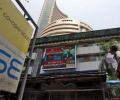
Equity benchmark indices Sensex and Nifty buckled under selling pressure after a nine-session rally on Monday, as massive sell-off in IT, tech and telecom counters unnerved investors.

Arguing that the recent elevation in retail inflation is not structural but supply-driven and therefore potentially transitory, a foreign brokerage report has forecast that the benign interest rate regime will continue at least until next June. The assessment comes a day ahead of the third bimonthly monetary policy review on Friday wherein it's widely expected that the monetary authority will leave the key rates unchanged at 4 per cent even though the consumer prices have been on remaining above 6 per cent since May and crude prices have been north of $70 a barrel for months.
