Born in Maniktala in Kolkata, Gupta is the son of a freedom fighter-turned-journalist father and school teacher mother.
An orphaned Gupta, who came to Harvard Business School on a scholarship after completing his B-Tech in Mechanical Engineering from IIT Delhi, charted an enviable career graph for himself.
Following initial years of struggle after his parents' untimely death, Gupta topped his class at Harvard and applied for a position at McKinsey, but was turned down for lack of business experience.
After a professor personally intervened with the then head of McKinsey, Gupta joined its New York office in 1973.
Click on NEXT for more...
In just over 20 years, he rose to the position of global head of the company, becoming the first ever India-born CEO of a US international corporation.
Gupta's rise through the ranks of Corporate America was stellar with enviable posts like board seats at Goldman Sachs and Procter and Gamble, co-founder of the prestigious Indian School of Business, advisor to the executive leadership of the Bill and Melinda Gates Foundation as also the United Nations dotting his resume.
Gupta was also a director of the AMR Corporation, the parent company of American Airlines.
The Rockefeller Foundation appointed him a trustee; he was named special advisor on management reform to then UN Secretary-General Kofi Annan and additionally served on the UN Commission on the Private Sector and Development and was co-chairman of the United Nations Association of America.
Click on NEXT for more...
He was hailed as a poster-boy of Indians scaling great heights in corporate echelons abroad and his friends described him as a god-fearing, "first-class guy".
However, after a stellar career that was 40 years in the making, it took only one year for Gupta's downfall.
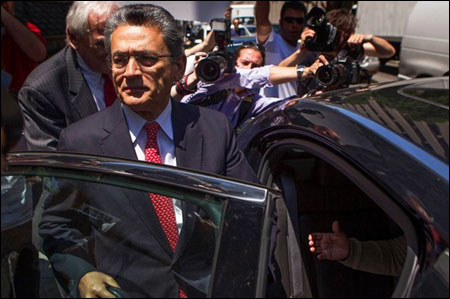
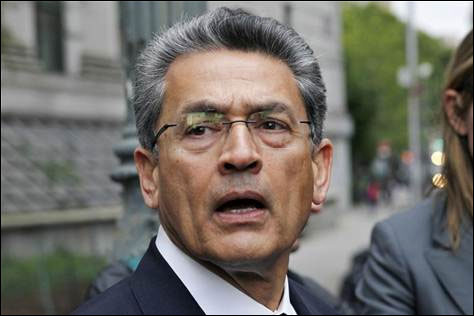
He was slapped with insider trading charges on October 26 last year and the shine and honour that had become synonymous with Gupta's name began eroding after the FBI arrested him.
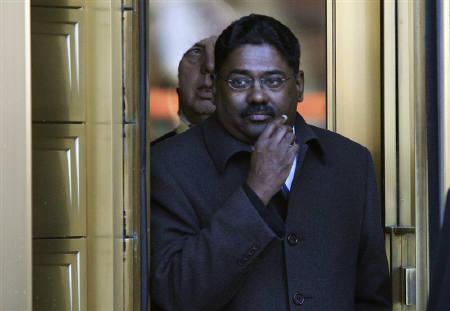
A US court held Gupta guilty in June this year of providing insider information to Galleon hedge fund founder and friend Raj Rajaratnam, in one of America's biggest insider trading cases.
Click on NEXT for more...
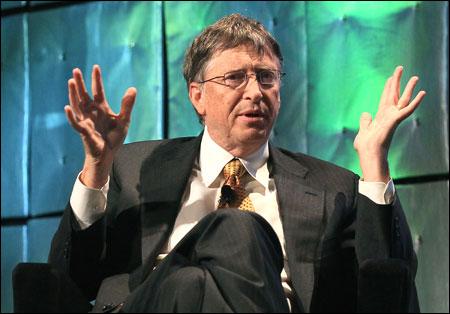
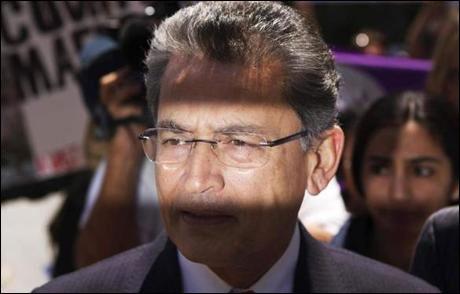
The Microsoft founder had worked with Gupta when the Goldman executive had served as chair of the Global Fund to Fight AIDS, Tuberculosis and Malaria.
Gates said while he was "not in a position to comment on any of the particulars of the case" against Gupta, he wanted to lend his voice "to round out Rajat's profile as you consider the appropriate sentence for him."
"Many millions of people are leading better lives – or are alive at all - thanks to the efforts he so ably supported," Gates said in his letter.
Annan said Gupta has worked on many projects with him, including one on management reform at the UN in which Gupta was an adviser.
"I came to respect his judgment, and we became good friends," Annan said in his letter.
"I urge you to recognise Rajat for the good he has done in the world, to give him the credit that he deserves for helping others and to take into account his efforts to improve the lives of millions of people," the former UN chief said.
Click on NEXT for more...
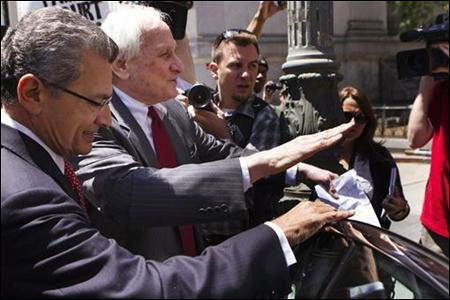
Gupta's lawyer Gary Naftalis sought probation for his Harvard-educated client, saying Gupta is willing to live in Rwanda and work with the local government on health care and agricultural initiatives.
Naftalis said Gupta's "once sterling reputation, built over decades, has been irreparably shattered, and his business and philanthropic accomplishments tainted."
Gupta's "monumental fall" is itself severe punishment and courts have previously recognised that "if used wisely, probation is sufficiently serious punishment to satisfy the statutory mandate that the sentence reflect the seriousness of the offence and provide just punishment," he said.
Click on NEXT for more...
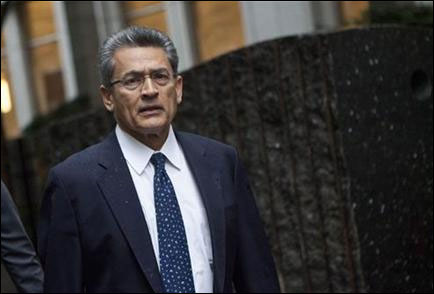
Naftalis said Gupta could work with homeless and runaway youth and offered "a less orthodox but innovative proposal" of him living in the backward districts of Rwanda and working with local government on health care initiatives with particular focus on HIV/AIDS and malaria and agricultural development.
Bharara sought a prison term of 8-10 years for Gupta, who he said repeatedly flouted the law and abused his position of trust and in his "callousness and above-the-law arrogance" committed crimes which were "extraordinarily serious and damaging to the capital markets."
"Gupta's crimes are shocking," Bharara said last week, adding that "a significant term of imprisonment is necessary to reflect the seriousness of Gupta's crimes and to deter other corporate insiders in similar positions of trust from stealing corporate secrets and engaging in a crime that has become far too common.
 © 2026 Rediff.com - Advertise with us - Disclaimer - Privacy Policy - Feedback - About us - Terms of use - Grievances