This article was first published 14 years ago
Home »
Business » Stunning views of India's greenest building
Stunning views of India's greenest building
Last updated on: June 6, 2011 08:38 IST
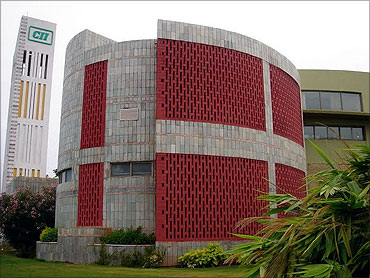
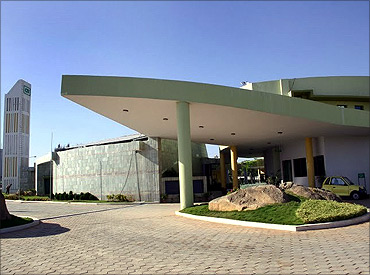
Image: CII-Sohrabji Godrej Green Business Centre.
This is India's greenest building and one of the most eco-friendly buildings in the world.
Futuristic and energy-efficient, this unique building represents the changing face of an eco-friendly India.
Located in Hyderabad, the CII-Sohrabji Godrej Green Business Centre received the prestigious LEED (Leadership in Energy and Environmental Design) Platinum rating in 2003.
As we celebrate the World Environment Day (June 5), take a tour through India's most ecofriendly building...
Photographs, courtesy: CII-Sohrabji Godrej Green Business Centre
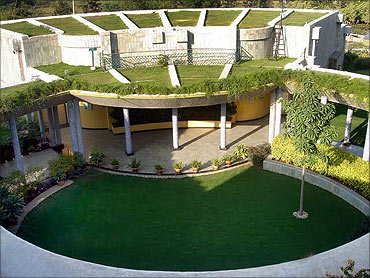
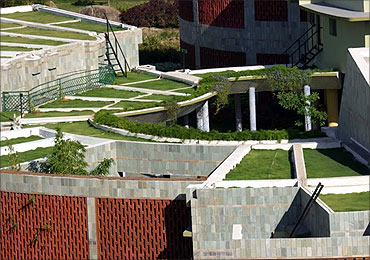
Image: Roof garden to reduce heat.
This is the first platinum rated green building outside the United States and the third building in the world to receive this rating.
Image: Aerial view of the CII Sohrabji Godrej Green Business Centre Building at Hyderabad.
The CII-Sohrabji Godrej Green Business Centre is successful model of public-private partnership between the government of Andhra Pradesh, Pirojsha Godrej Foundation and the Confederation of Indian Industry (CII), with the technical support of USAID.
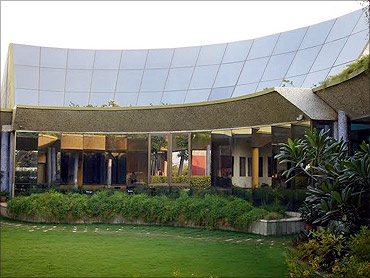
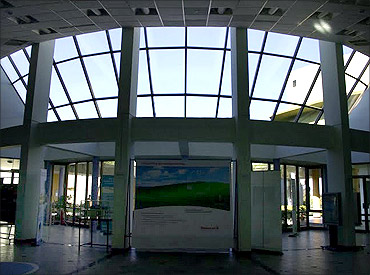
Image: High performance glazing to bring in natural light while minimising heat ingress.
The centre offers advisory services to the industry on environmental aspects and works in the areas of green buildings, energy efficiency, water management, renewable energy, green business incubation and climate change activities.
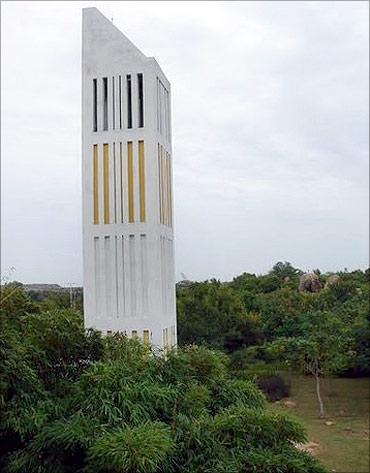
Image: Wind Tower precools the fresh air entering Air Handling Units and Towers.
The centre urges key stakeholders to adopt green practices and facilitates market transformation, paving way for India to become one of the global leaders in green businesses by 2015.
Image: Roof top garden to reduce heat.
A green building uses less water, enhances energy efficiency, conserves natural resources, generates less waste and provides healthier spaces for occupants, as compared to a conventional building.
Image: Roof garden protects the building from heat.
This green building has used 88 per cent less artificial lighting than normal buildings and 80 per cent of the building materials are recycled or recyclable.
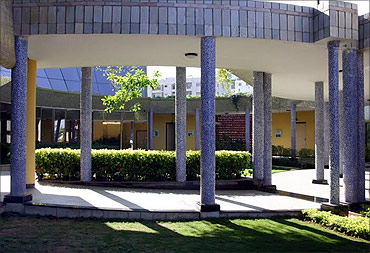
Image: Use of broken ceramic tiles for cladding on pillars in the foyer area.
It offers 50 per cent energy savings compared to a normal building and 35 per cent reduction in potable water use.
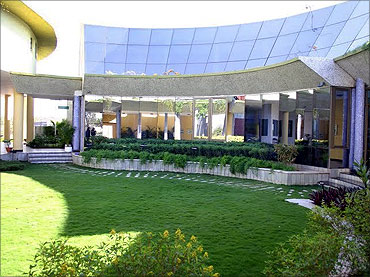
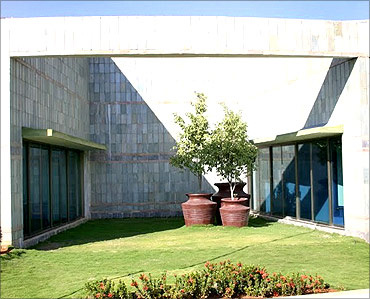
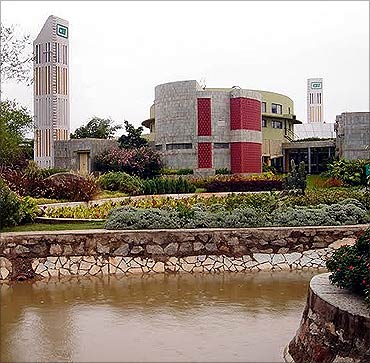
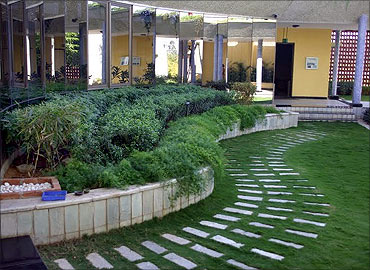
Image: Central courtyard of the building.
Green buildings save around 40-50 per cent of energy and 20-30 per cent water. The Green Business Centre is a zero water discharge building. Waste water is treated and reused here.
Image: Use of paver blocks in the drive way and parking area to facilitate percolation of rain water.
Other benefits include better ventilation, good environment and day lighting which significantly enhances the productivity of occupants.
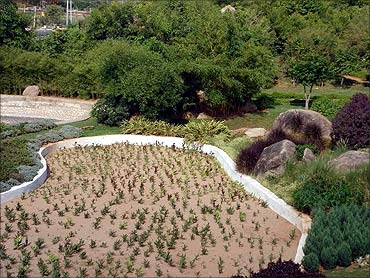
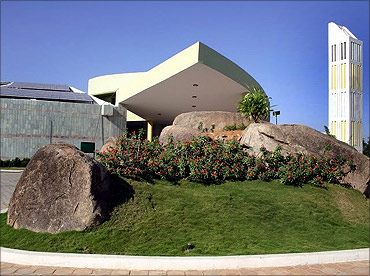
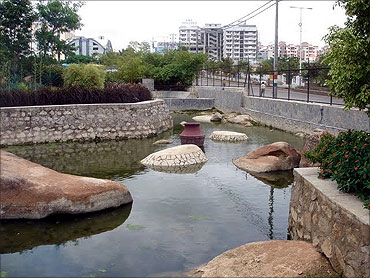
Image: Rocks retained within the site to minimise ecological imbalance.
Today, India has more than 1,050 registered green building projects with a built-up area of over 648 million sq. ft from a meager 20,000 sq. ft of green built-up area in 2003.
Image: Locally available stone cladding for the external facade.
Today, India has certified and registered green buildings as government and private sector offices, residential, banks, airports, convention centre, institutions, hospitals, hotels and factory buildings.
Image: Courtyard between two living spaces to bring in natural daylight.
"Green buildings are financially attractive. Though the construction of a green building would be 5-8 per cent higher for a platinum building than a conventional building, the incremental cost gets paid back within 3-4 years," says S Raghupathy, Senior Director & Head, CII-Godrej GBC.
Image: Waterbody to store and treat water.
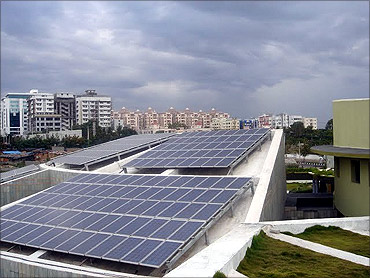
The roof gardens and solar PV panels absorb the heat, thereby reducing the temperature by about 4 to 5 degrees celsius inside the building. The solar panels are used to provide about 15 to 20 per cent of the building's electricity.
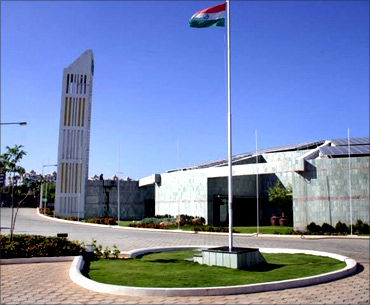
Image: A view of the CII Sohrabji Godrej Green Business Centre Building.
"The next two decades would present a great opportunity for the country to pursue the path of green buildings. This would result in immense national benefits" Raghupathy says.
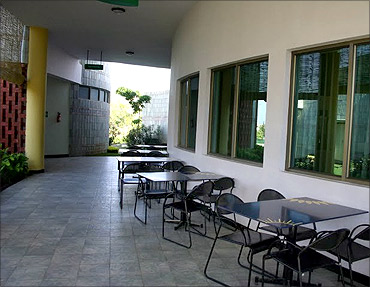
Image: Reused furniture in the cafeteria.
The market potential for green building products and technologies is estimated to be $100 billion by 2012.
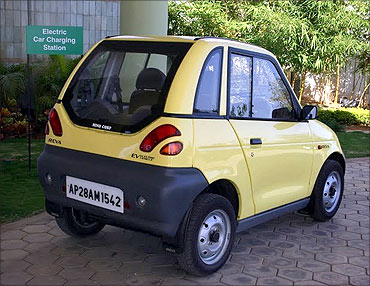
Image: Eco-friendly electric car used here.
The materials used in construction make the building a green haven. Wood has not been used as doors or tables, instead it is made out of compressed sugarcane molasses.
Image: On site solar energy - photo voltaic panels generate electricity.
The increasing cost of conventional resources of energy has resulted in high expenditure for official and residential premises. In India, energy costs have risen by more than three fold in the last decade. The need of the hour is to switch to greener options to save power.
Image: Good ventilation keeps the room cool.
With the green mantra gaining momentum, around 1,20,000 green homes are coming up in India.
Image: Central courtyard.
The Indian Green Building Council has introduced the IGBC-Green Factory Rating IGBC will soon be launching rating programmes for green cities, green schools and existing buildings.

 © 2025 Rediff.com - Investor Information - Advertise with us - Disclaimer - Privacy Policy - Feedback - About us - Terms of use - Grievances