
Bentley Motors expects India to become one of its 10 largest markets globally within the next five years, driven by lower import duties under the India-UK free trade agreement (FTA) and a growing base of wealthy consumers, according to CEO Frank-Steffen Walliser.

Cash-strapped SpiceJet has cancelled over 70% of its scheduled flights across major Indian airports, including Delhi, Mumbai and Bengaluru, as the airline grapples with severe financial and operational challenges, impacting thousands of travellers.
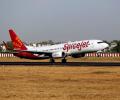
SpiceJet's board has approved a proposal to raise up to Rs 5,500 crore through various financial instruments, including equity, as the airline grapples with significant unpaid dues, salary delays, and operational disruptions. The move aims to address cash-flow constraints and strengthen its balance sheet amidst ongoing financial and regulatory scrutiny.

'Airport redevelopment plans should not, in themselves, result in the withdrawal, denial or reallocation of historical slots.'

Mumbai International Airport Ltd (MIAL), controlled by the Adani group, plans to unilaterally shift international flights to 14 destinations from Mumbai airport to Navi Mumbai airport if airlines do not voluntarily submit relocation plans. This move is part of MIAL's strategy to redevelop Mumbai airport's Terminal 1 due to safety concerns, aiming to temporarily shift 5 million passengers annually.
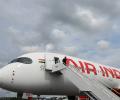
Air India group CEO Tewolde Gebremariam announced plans to order more wide-body aircraft to boost international operations, while simultaneously addressing the 'major concern' of high operating costs. The airline aims for profitability 'very soon' despite significant financial losses in recent fiscal years.
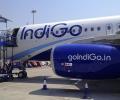
IndiGo is undertaking a comprehensive review of its long-standing policy against fuel hedging, particularly in light of rising jet fuel prices and its ambitious long-haul expansion plans. CEO Willie Walsh stated that while domestic competitors don't hedge, international expansion necessitates a re-evaluation to manage risk and provide stability against volatile fuel costs.
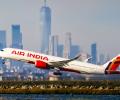
The reduction is primarily driven by high airfares, increased fuel costs, and rupee depreciation, leading to softer passenger demand.

India's passenger vehicle wholesales increased by 12.4 per cent year-on-year in October, reaching 528,384 units, driven by robust festival demand, GST rate cuts, income-tax relief, and low interest rates, which collectively improved vehicle affordability.

6 out of 10 flyers had experienced higher baggage weights at airport check-in than at home.

'Retail investors should study IPO prospectuses, business models, financial performance and valuations instead of relying on listing-day hype.'

'In the past, when the Indian markets have been flat for two years, the next year's returns have ranged between 5 per cent and 55 per cent.'

'They allow people to enter and exit. And there is transparency. There is market infrastructure. There is technology. There is cyber security. And then there are enough enablers.'

Two-thirds of India's 160 airports, approximately 120, have very low utilisation rates, with only 40 operating at 70-80 per cent capacity.

Adani Group-controlled Mumbai International Airport Ltd (MIAL) has reiterated that airlines must decide whether to shift flights to Navi Mumbai, temporarily suspend operations at Mumbai airport, or pursue other alternatives from the summer 2027 schedule due to Terminal 1's redevelopment.

The proposal caught auto makers by surprise.

Mercedes-Benz India's Managing Director & CEO Santosh Iyer stated that demand continues to outstrip supply, particularly for the CLA electric vehicle, with over 1,000 orders and deliveries extending to March-April 2027. The company could have sold an additional 1,000 vehicles if supply had been adequate.
Mumbai International Airport Ltd (MIAL) has informed airlines that it will not shift any international flights from Mumbai airport to Navi Mumbai airport until the end of the winter season in March next year, following discussions with the Airline Operators Committee.

India remains one of the Hyundai Motor group's most important and strategic markets globally. The initiative positions India as a strategic core market for the group's growth, emerging market expansion, and next-generation automotive innovation.

Geopolitical disruptions have made shipping times unpredictable and raised costs for Volvo Car India, which may have to increase vehicle prices if the situation persists, its Managing Director Jyoti Malhotra said on Monday.
