
Tata Steel is strategically positioned for growth, leveraging India's robust steel demand, significant cost transformation programmes, and favourable protectionist policies in the EU and UK. The company is expanding its India capacity and optimising operations in its European units to enhance profitability and reduce debt.
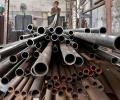
The imposition of safeguard duty, an uptick in exports, and an increase in input cost are driving steel prices higher. The latest round of price increase took place on Friday, with some steel mills increasing hot-rolled coil (HRC) prices by ~500-750 a tonne, according to price reporting and market intelligence firm BigMint. HRC is a benchmark for flat steel.
With the worst in terms of pricing pressures behind Tata Steel, its outlook is expected to improve. Europe has seen hot rolled coil prices rise this January after the European Union's (EU's) carbon border adjustment mechanism (CBAM) kicked in and further price improvements may be on the cards once import quotas come into play in June.
Ahead of the key meeting called by the steel ministry with the industry captains on Monday to discuss the impact of rising steel imports, companies have raised the issue of cheaper 'substandard' inflows from China, Vietnam, and South Korea, saying they are setting the benchmark for domestic prices and squeezing the profitability of Indian producers.
There is positive sentiment for Tata Steel on the basis of strong domestic demand, a turnaround of European operations and moderate valuations. A combination of capacity expansion, efficiency gains, higher asset utilisation, and improved operating leverage may lead to margin expansions.
The Indian steel industry is faced with a paradox: Rising demand and falling prices. Demand continues to surge as user industries gather pace, with the World Steel Association projecting around 9 per cent annual growth for India over 2025 and 2026, the year domestic demand is projected to be almost 75 million tonnes (mt) higher than in 2020.

India on Monday imposed a 12 per cent provisional safeguard duty for 200 days on five steel product categories, including hot rolled coils, sheets and plates, to protect domestic players from surge in imports. The decision follows a recommendation for the same by the Commerce Ministry's investigation arm DGTR. Last month, the DGTR suggested to impose the duty.
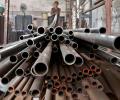
Domestic steel prices have seen an increase over the past couple of months in anticipation of a safeguard duty, but a looming global trade war is likely to weigh as threat of import rises and prospect of export flounders. Data from BigMint showed that in March 2025, hot rolled coil (HRC) prices ex-Mumbai increased by Rs 600 per tonne month-on-month (M-o-M), rising from Rs 48,400 per tonne in February to Rs 49,000 per tonne.
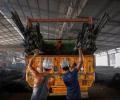
The "weaponisation" of economic activity - through tariffs and sanctions - is now a reality, with countries leveraging these tools strategically, External Affairs Minister S Jaishankar said at the Raisina Dialogue recently.
Stocks of Indian steel companies are reeling from pricing pressure that is partly blamed on cheap imports. The stocks have declined up to 9 per cent on the NSE in one month, likely allowing investors an opportunity to use the correction to enter the pack as pricing pressure eases. "In steel or any other commodity, if prices or spreads are nearing their bottom, it can be an opportune time to invest in those stocks. In India, domestic fundamentals such as steel consumption remain robust, hence one can take fresh positions in these counters," said Amit Dixit, an analyst at ICICI Securities.
Steel companies are witnessing margin pressures in Q2FY25 and this may persist until China sees growth recovery.
Stocks of Indian steel companies are reeling from pricing pressure that is partly blamed on cheap imports. The stocks have declined up to 9 per cent on the NSE in one month, likely allowing investors an opportunity to use the correction to enter the pack as pricing pressure eases. "In steel or any other commodity, if prices or spreads are nearing their bottom, it can be an opportune time to invest in those stocks.
More than 2,800 jobs will be axed as Tata Steel plans to close its blast furnaces at the Port Talbot plant in South Wales in the UK. Of the total job cuts, 2,500 will be in the next 18 months, said Indian conglomerate Tata. A further 300 jobs are to go in three years.
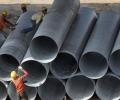
Strong demand in the domestic market, coupled with an increase in raw material prices, is pushing up steel prices. According to SteelMint, a market intelligence and price reporting firm, the list price of flat steel has seen an increase of Rs 750-2,000 per tonne for October deliveries. The long steel price witnessed an increase of Rs 1,500 per tonne towards the end of September.

Leading steel producers offered to reduce prices of hot rolled coils by Rs 4,000 a tonne, as part of their efforts to ease inflation. Steel prices have risen by a whopping 49 per cent during the past one year triggering concerns that soaring prices of the metal were augmenting inflationary pressures on the economy. Indian Steel Alliance was dissolved it amid fears that the industry was indulging in cartelisation. ISA had been campaigning against imposing export duty.
Industry body Indian Steel Association on Tuesday said exports of hot rolled coils by integrated steel producers declined 35 per cent in the first half this fiscal to 6.4 million tonnes as its member companies gave more priority to the domestic marke
Worried by a spike in Chinese imports, the Indian Steel Association (ISA) plans to take up the matter with the government and seek measures to fix "trade distortions". Alok Sahay, secretary general of the group that represents the country's steel producers, said systemic changes were needed. "In order to take any trade measure, it takes a minimum of 15 months' time, due to prevalence of lesser duty rule in India, making India an easy target. "We are going to write to the government on this," he said.
Industrial metals (ferrous and non-ferrous) suffered great volatility once the Ukraine War began in February 2022. First, there was a sharp price rise due to fears of supply disruption, followed by weak global demand. China's weakness and rolling lockdowns have hit production and demand.
The festive season will mean business for the steel industry as it is the time when automotive and consumer appliance companies bump up demand to prepare for higher sales, experts have said. Ranjan Dhar, chief marketing officer at ArcelorMittal Nippon Steel India (AM/NS India), said that bookings by auto and consumer appliance industries are 20 per cent higher ahead of the festive season compared to last year. "While this could be for a couple of months, it could normalise later at approximately 10 per cent," he said.
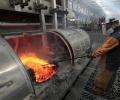
In the first two months of the current fiscal, Indian exports of finished steel reportedly grew by almost 76 per cent on a YoY basis and China alone accounted for close to 60 per cent of the increase.
The prospect of a mid-month price increase in cold rolled (CR) and galvanised steel--used by automobile and consumer durables makers--has abated with the government deferring a decision to impose a safeguard duty on the intermediate product, hot rolled coils.

Positive cues from China - which accounts for 56.5 per cent of global crude steel production - are likely to keep demand-supply in balance and provide support to prices. All eyes have been on China, which opened after New Year holidays, as it was widely expected that prices would recover post-holidays after the weakness in January. Jayanta Roy, senior vice president, ICRA pointed out, barring last year when Covid-related restrictions affected China's steel demand in February 2020, historical trends show a typical upward movement in steel prices post-new year festivities. China's opening post-holidays was keenly awaited, especially in the wake of the sluggishness in the market in January.
As a measure to pre-empt dumping from China, the government has slapped restrictions on imports of specific steel items used widely in the automobile, oil and construction industries.
Jatinder Mehra, chief executive officer, Essar Steel said, "I believe, in July, there will be some push in the market. In the Indian market, revival has already begun. Auto, fabrication, capital goods and white goods are doing very well." In the flat products segment, hot rolled coil prices have not seen a hike since September last year. Last month, long product, cold rolled and galvanised prices were raised.
The country's leading steel producers have devised a new strategy to pass on rising raw material costs to the end users without raising prices. Companies are now levying raw material surcharges while keeping the base price unchanged.
Crude oil is not the only commodity seeing a price correction on fears of an economic slowdown. The same sentiment is driving prices of a range of important industrial metals like copper, zinc, aluminum and the precious metal gold. As a result, prices are now below what they were three months ago.
Plan to move cautiously with an increase of Rs 500-1,000 per tonne.
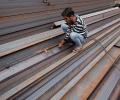
Raw material prices had been on the rise, but since Russia waged war on Ukraine, prices have surged.
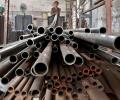
The imposition of 15 per cent export duty on steel has suddenly altered the prospects of the sector to negative and led to a big sell-off in steel stocks. Iron ore and pellet exports have to face duties of 45-50 per cent, which means they become uncompetitive. The Ukraine war has led to a supply crunch in global markets and pushed up prices, with Europe, in particular, looking for replacements for Ukrainian and Russian exports.
Prices in the domestic market are increasing because there is a demand pull, and internationally, prices have gone up.
The rising prices characterising the steel industry have been primarily due to hike in input costs besides increase in demand, a study has found out.
Following price hike of Rs 500 per tonne by Steel Authority of India Ltd, other private producers on Monday announced hike in prices of hot rolled coils by the same amount.
 © 2026 Rediff.com - Advertise with us - Disclaimer - Privacy Policy - Sitemap - Feedback - About us - Terms of use - Grievances