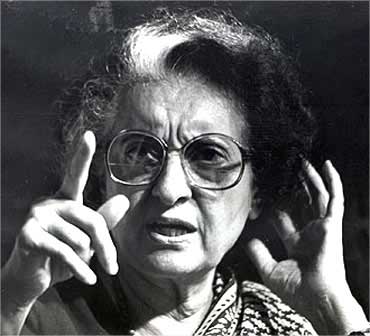
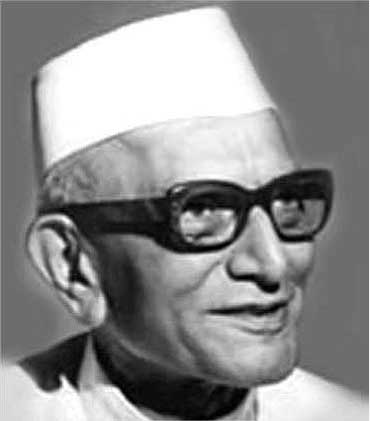
Even though Morarji Desai presented eight Union budgets and Indira Gandhi presented just one, in February 1970, India's economic policies of that era are more closely identified with the prime minister of the day rather than the longest serving finance minister of post-Independence India.
Indira Gandhi summed up her famous "growth with social justice" budget speech on 28 February 1970 with the words: "That framework, I believe, is consistent with the political, economic and social realities of our country.
. . .

If we allow the present momentum of growth to wane for the sake of some purely temporary advantage, we will deny ourselves the cumulative benefits of a higher rate of growth for all time to come. If the requirements of growth are urgent, so is the need for some selective measures of social welfare.
The fiscal system has also to serve the ends of greater equality of incomes, consumption and wealth, irrespective of any immediate need for resources. At the same time, the needs of these sectors of our economy, which require private initiative and investment must also be kept in mind in the interest of the growth of the economy as a whole."
. . .
They were both respected both within policy making circles and outside. If Jawaharlal Nehru came to trust and depend on C D Deshmukh, Dr. Manmohan Singh came to trust and depend on P Chidambaram. Yet, there are no major policy ideas outside of the field of taxation that are associated with either of them.
. . .
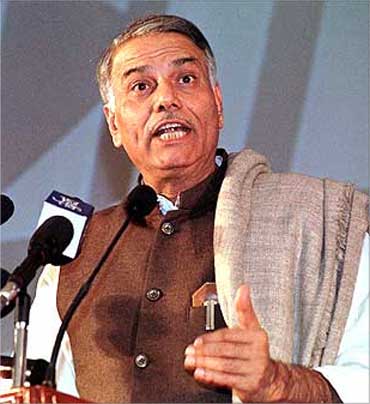
However, despite his five budgets, few will today recall any grand vision that Sinha came to represent, apart from his stellar role in balance of payments management in the wake of the economic sanctions imposed on India after the Pokhran II nuclear tests of May 1998.
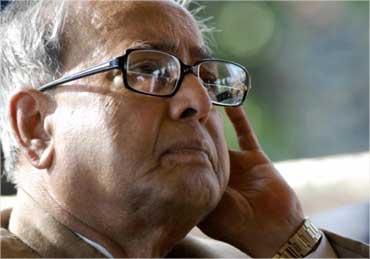
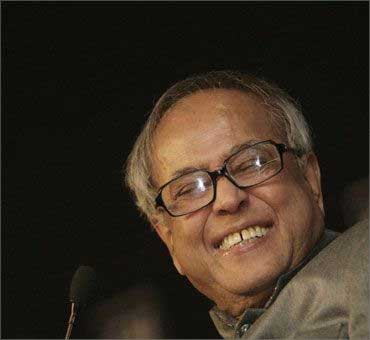
What does all this mean for Union finance minister Pranab Mukherjee as he prepares this morning to present his sixth Union budget?
Surely, Mukherjee must wonder what his legacy might be. Will he be remembered as the perennial prime minister-in-waiting? Will he be remembered as the best, the most capable, most experienced "Number two", that successive prime ministers have turned to for advice and support? Or, would Mukherjee want to be remembered as the man who guided the ship of the Indian economy as it sailed from the safer waters of an 'emerging market economy' to the uncharted ones of a "rising power"?
. . .
For centuries China and India were number one and two, till maritime supremacy and industrial technology helped Europe and the West to gain precedence.
But to what extent will history credit Mukherjee with the economic policies that have been responsible for India's rise, when it was Manmohan Singh who first conceptualised that rise in terms of India's economic prowess when he told the Indian Parliament, in July 1991, "No power on earth can stop an idea whose time has come. I suggest to this august house that the emergence of India as a major economic power in the world happens to be one such idea."
That is the challenge before Mukherjee this morning. Will he be businesslike and present a good finance minister's budget, that markets and investors will hail, but historians will forget? Or, will he rise above the din of Parliament and show the way forward, seeking not just a footnote, but a para, if not a chapter, in history books?

 © 2025 Rediff.com - Investor Information - Advertise with us - Disclaimer - Privacy Policy - Feedback - About us - Terms of use - Grievances