
'The protection of secrecy and anonymity gets lost with this linking.'
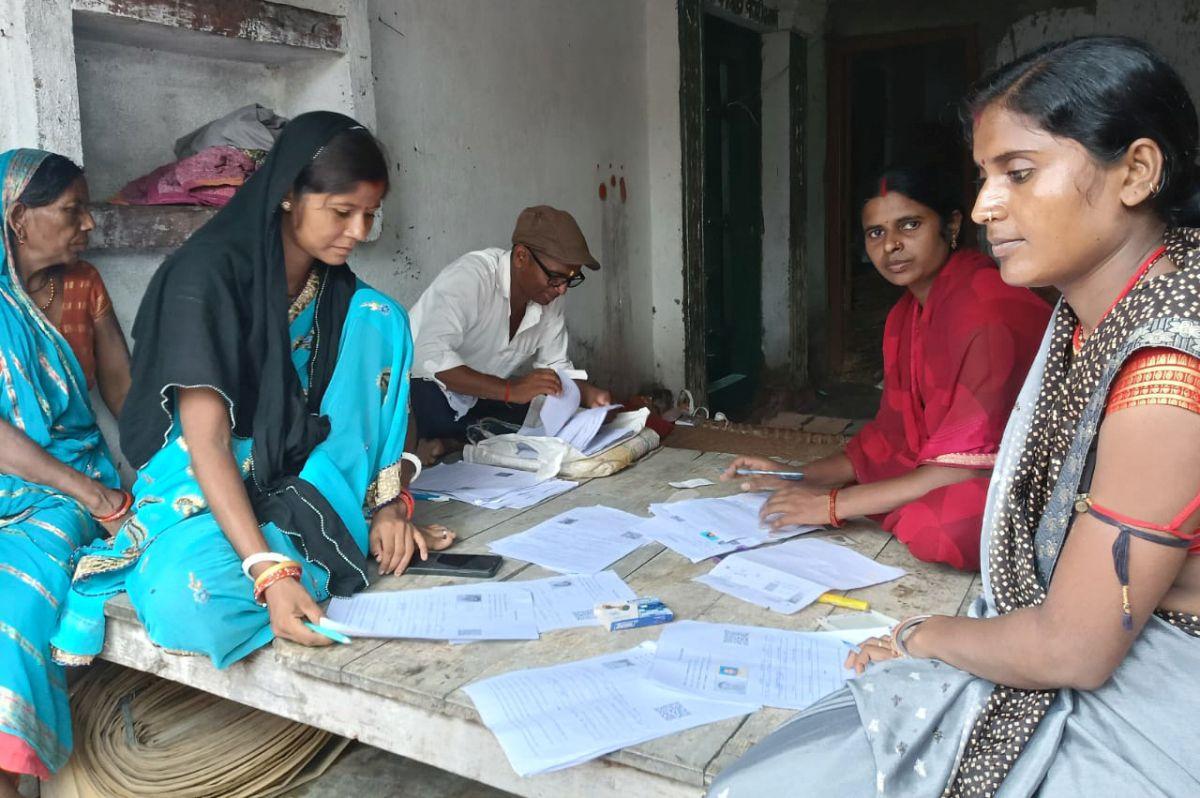
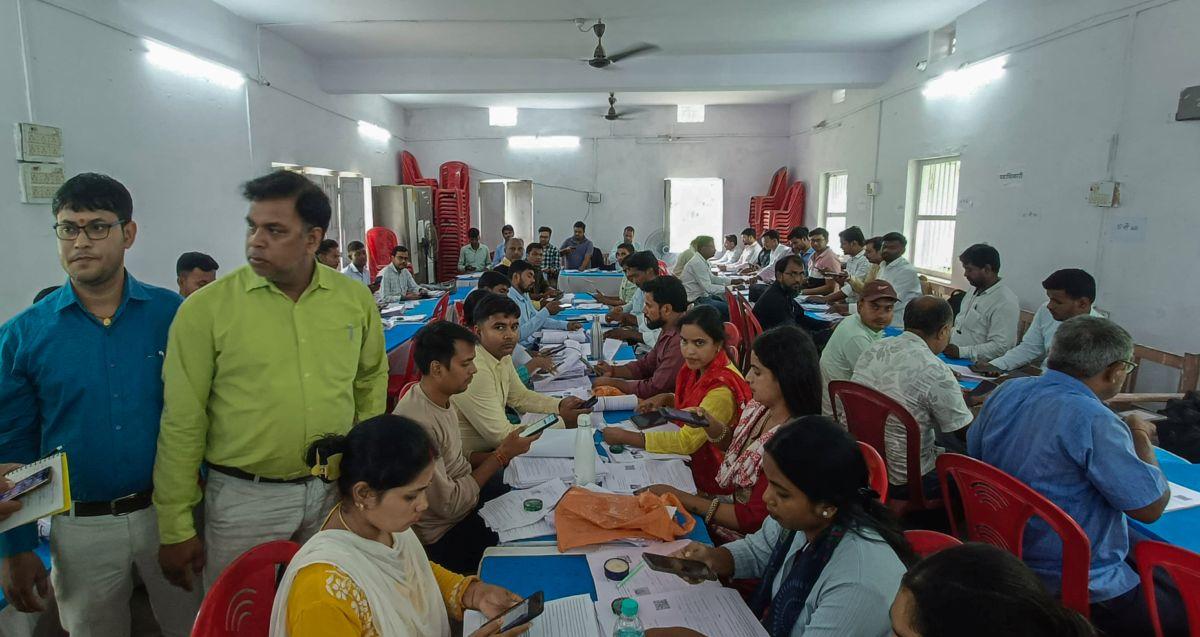
Months before the Bihar state assembly election, the Election Commission of India (ECI) started a Special Intensive Revision (SIR) of the electoral rolls in the state.
The reason for SIR according to the ECI was to 'ensure that no eligible citizen is left out while no ineligible person is included in the Electoral Roll'.
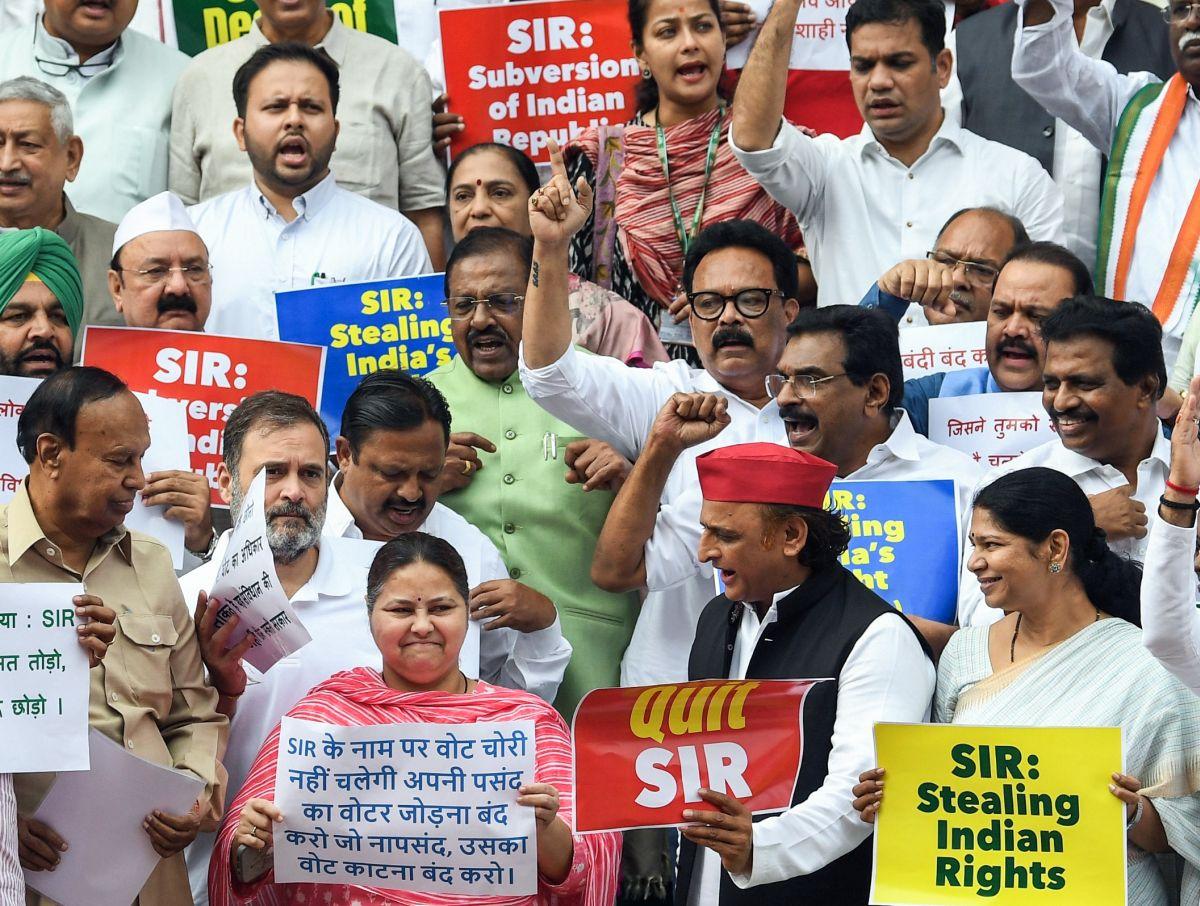
But the Opposition parties did not take kindly to the SIR, which they charged with discriminating and disenfranchising voters.
What was shocking was the exclusion of the Aadhar card and Voter ID card as identity proof.
Those who feared that the ECI's move would affect the vulnerable population, especially those in the rural areas, migrant labourers, and individuals who might have lost personal belongings in floods or other natural disasters over the years, appealed to the Supreme Court.
The Supreme Court came heavily on the Election Commission's decision to ask for multiple documents for roll revision in Bihar. The Supreme Court urged the Election Commission to accept Aadhaar, ration cards and EPICs for voter identity verification.
It appears the ECI is firm on its decision to exclude the Aadhar card and Voter ID card.
The enumeration drive in Bihar began on July 1 and the draft electoral roll will be published on August 1. The final roll will be out on September 30.
"It is beginning to be clear that even the ECI knows that the UID is of no use in keeping the electoral rolls in order," Dr Usha Ramanathan, who has been campaigning on the social, legal and economic aspects of the Aadhar card project from 2009 onwards as an independent legal researcher, tells Rediff's Shobha Warrier.
Part one of a must read interview:
There was a time if you didn't have an Aadhaar card, you didn't exist. But the situation today is that the Election Commission does not consider the Aadhaar card as a valid identity proofs in Bihar.
How do you see this?
The Election Commission has some explaining to do.
In 2015, when the UID project was under challenge in the Supreme Court and the court had ordered that the ID could not be mandatory, the Election Commission began a drive to link it with the voter ID.
That was halted after the matter was taken to court.
A couple of years ago, the ECI started another round of linking the UID with the voter ID, claiming that it would help in de-duplication.
Earlier this year, when the West Bengal government raised the issue of duplicate numbers, the ECI used the digital data base of the voter rolls to deal with the duplicate numbers. They did it without the Aadhaar (UID). And now, when the Supreme Court asks them to consider Aadhaar as an ID, they have turned it down.
It is beginning to be clear that even the ECI knows that the UID is of no use in keeping the electoral rolls in order.
Its interest every time that it brings up the UID has been only to link it with the voter ID.
Also, the UID database is incredibly defective.
Sixteen years after it was launched, it abounds with tales of non-correctable errors of names and date of birth, biometric failures -- fingerprints are a problem, iris never took off, facial recognition is the latest experiment, and it is all reduced to an OTP which is a luxury for those who don't have phones or whose numbers change because of circumstance -- identity fraud, exclusion, people who have lost their number, others unable to enrol often getting a message that they are duplicates!
Almost every scam has a UID element.
Recently, the UID asked the Registrar General of India for a list of people on the death register so they can update the UID database `after due validation'.
This is how the UIDAI goes scraping off other databases, which are themselves incomplete and not reliable, which is why the 'due validation'.
And since the UIDAI has no system in place for such validation, I must say it sounds like a phrase without definite meaning.
All this has meant that the number can be mandated to be on every database, but it is uncertain for people as an ID.
The ECI seems not to particularly care when it asks for the voter ID and the UID to be linked, leaving the onus on the individual.
Its unwillingness is when it is asked to accept the UID as a legal ID.
Today, we are asked to link Aadhaar with every other id we have. This way, people are totally exposed. Is it a right thing to do?
It is, in fact, a very unwise, even dangerous thing to do.
Databases are not impenetrable.
How often do we hear of databases being breached?
Cyber security is still in its nascence.
The thing about databases is that, unlike physical assets which we know when it is stolen, we may not even know when data gets stolen.
For years now, Commodore Batra has been warning us about the foolishness of the data, including health data, of the armed forces being linked with the UID, and the increased vulnerability it creates.
Who's listening?
We have become aware of databases being breached only when ethical hackers tell us, or someone sees it on the Dark Web, or, very occasionally, our cybersecurity agency CERT-IN may notice the breach.
Imagine the data about every individual in a country being in the hands of an adversary, or even a friend! And us, not even knowing!
Have you wondered what kind of surveillance must have been inexistence for the five scientists in Iran to be targeted and killed?
They knew where they were, and where to attack them. Doesn't it make you wonder?
Let's be clear about this: This vulnerability that is being created by linking all databases and making the profiling of persons and communities so easy, is putting the whole nation at risk, even as it is putting every individual at risk.
In the context of elections, when the voter ID gets linked with the UID, which is ubiquitous in every database, tracking voting patterns and connecting that with the profiles of people voting there is prone to create its own vulnerabilities.
You may remember when people were protesting against locating the Kudankulam nuclear power plant in their neighbourhood, in an act of protest they threw their voter IDs into the compound of the district administration, signalling that they were upset with their voices not being heard.
Newspapers reported that an angry district official had asked for the voter IDs to be collected and checked to see if they were on the PDS, and to have their rations stopped.
If the UID were embedded in the voter ID as it is in all the other databases, the administration would be able to mete out punishment without any process.
Those needing State support, say in food, education, health, work, housing, would be most threatened.
You mean, it will become easy for political parties to find out who voted for them and punish the people living in an area that did not vote for the winning party?
The danger in that is not difficult to see.
The UID has been expanded to reach large numbers of databases, literally from before birth to after death.
The profiling of people has been made so easy.
Linking it with the voter ID adds one more element of convergence of data.
The protection of secrecy and anonymity gets lost with this linking.
We cannot afford to forget that government has access to all these databases, and so the ability to create profiles of every person, every constituency, every state.
More than the political parties, it helps whichever government is in power.
See, the government has access to a lot of data, including having control over the UID database. This is under the Aadhaar Act.
Further, we are at a stage where all this data is being pushed to be used for commerce and private companies are being egged on to take the data and make products, and develop AI tools.
Everybody in the US made a lot of noise when Elon Musk asked for social security information. There was a lot of dust kicked up when Musk tried to get his hands on information from the social security, income tax and other state systems.
Here, in India, there is not even a whisper when the government says to corporates, even start-ups to 'please come and take the data' so that they can make products and commerce out of it.
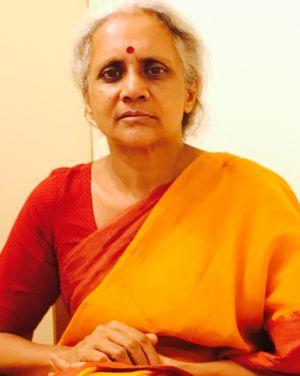 IMAGE: Dr Usha Ramanathan
That makes every individual exposed and vulnerable...
Exactly.
There has to be a difference of imagination between the corporate and the State.
If the State and the corporates have the same imagination, corporate imagination will triumph.
And corporates' imagination is not about people nor is it about national security; it is about profit.
In the technology field, it is now no secret that corporate imagination is about taking control of people, their feelings and emotions.
Feature Presentation: Aslam Hunani/Rediff