
'Where rostering systems are automated and duty time software interfaces directly with DGCA, the assertion that they suddenly discovered crew shortages is simply implausible.'
'If adequate crew planning hasn't materialised within 12 to 24 months from inception, how will 45 days -- from December 5 to February 12 -- suddenly resolve matters?'
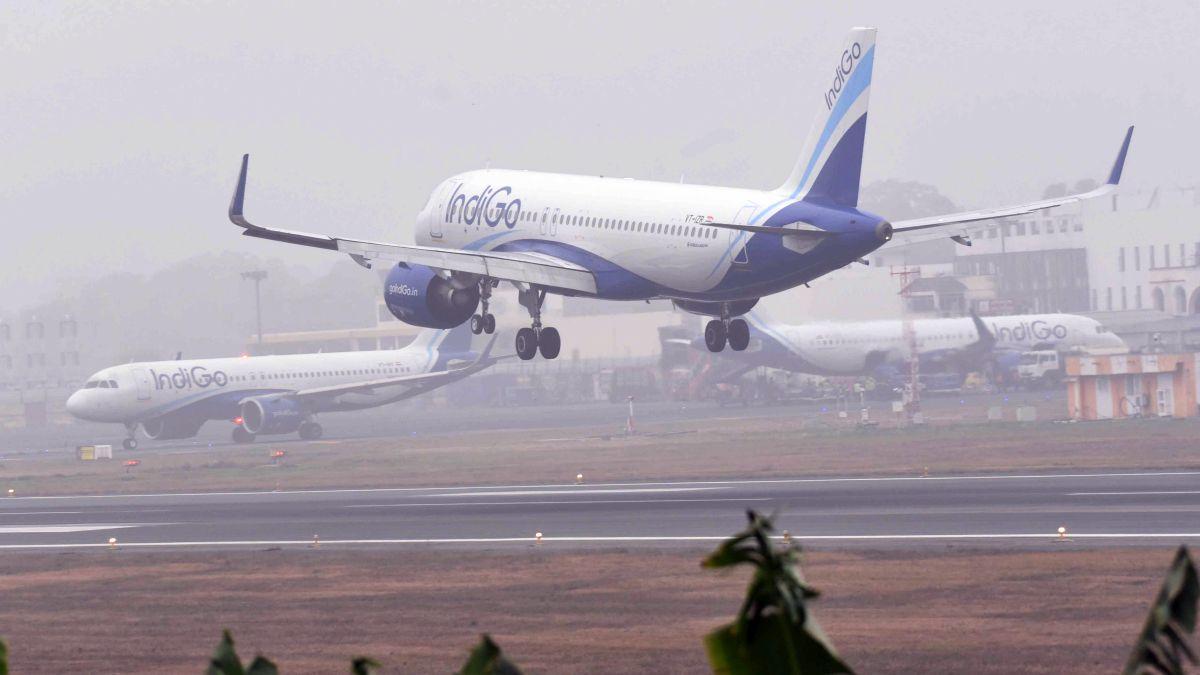
Captain Kishore Chinta, a retired squadron leader in the Indian Air Force and currently chief pilot at Sirius India Airlines, offers a damning assessment of IndiGo's recent operational chaos.
In this comprehensive interview with Prasanna D Zore/Rediff, Captain Chinta argues that the cancellation of approximately 1,500 IndiGo flights over four days was not a planning oversight, but an orchestrated strategy to pressure the regulators into relaxing pilot duty time limitations.
IndiGo has attributed the massive cancellations -- 1,500 flights over four days -- to planning gaps. In simple terms, could you explain how alterations to pilot rosters precipitated such extensive flight cancellations?
In essence, the civil aviation requirements concerning flight duty time limitations (FDTLs) underwent revision following extensive deliberations involving the DGCA, airlines, and court interventions.
This amendment was issued on March 26, 2024, with phase one implementation scheduled for July 1, 2025 and phase two for November 1 (2025).
The critical modification reduced the night duty period from midnight-to-5-am to midnight-to-6-am. Consequently, whenever a pilot operated beyond 5 am, their subsequent rest period had to be extended correspondingly.
This effectively rendered pilots unavailable for five to six additional hours compared to previous scheduling parameters. (All) airlines received adequate notice to augment their staffing accordingly.
If the implementation timeline was well-established, what precipitated this crisis?
Phase one proceeded smoothly. During phase two, IndiGo submitted their winter schedule -- operational from November 15 -- three months in advance, as mandated (by the DGCA). When airlines request additional flights, they must demonstrate compliance regarding crew availability, aircraft capacity, parking facilities, ground staff, cabin crew, and maintenance personnel.
If IndiGo proposed 300 additional flights, they would have submitted comprehensive compliance documentation to DGCA for approval.
In the contemporary environment, where rostering systems are automated and duty time software interfaces directly with DGCA, the assertion that they suddenly discovered crew shortages is simply implausible.
This represents a well-orchestrated manoeuvre to pressure the government and DGCA -- tactics reminiscent of Air India's historical practices.
Are you suggesting IndiGo orchestrated this crisis deliberately?
Absolutely. There exists not an iota of doubt.
Several months prior, they unilaterally reduced privilege leave entitlements from 42 to 30 days annually, citing new FDTL implementation.
This effectively compelled pilots to work 12 additional days yearly for identical remuneration, increasing pilot availability for extended hours. The exemption currently extends until February 12.
If adequate crew planning hasn't materialised within 12 to 24 months from inception, how will 45 days -- from December 5 to February 12 -- suddenly resolve matters?
Pilot training requires approximately six months. This exemption will undoubtedly be extended repeatedly, with complete disregard for court orders or contempt proceedings.
Could you quantify the financial implications?
Consider this: 550 cancelled flights incurred zero fuel expenditure for IndiGo. Initially, they offered no complimentary cancellations, compelling desperate passengers to rebook at elevated costs.
Average passenger expenditure on hotel accommodation, transportation, and meals approximated nine to ten thousand rupees. For 550 flights, this represents approximately 100 crore rupees in losses borne by ordinary citizens.
IndiGo's losses? Absolutely zero. Indeed, they benefited -- the same pilot complement now operates with curtailed leave and flying allowances. Over the subsequent 75 days, they will generate an additional Rs 40 crores to Rs 300 crores simply by maintaining current operations.
Which routes experienced the highest cancellation rates?
Examination of cancelled flights reveals a pattern -- predominantly low-occupancy sectors averaging 50 to 60 per cent capacity across three specific cities. Notably, no international flights were cancelled nor routes like Delhi-Goa. The selective cancellation strategy becomes evident upon detailed analysis.
Why has DGCA apparently give in to IndiGo's demands?
That question demands regulatory explanation. The DG has made public appeals to pilot organisations for support.
Are human lives now expendable? Is DGCA suddenly comfortable with fatigued pilots operating aircraft? Why authorise excessive flights beyond operational capacity? One should undertake only what one can reasonably accomplish to ensure smooth operations.
If IndiGo submitted comprehensive winter schedule plans, including crew availability for 300 additional flights, why did DGCA approve withdrawal of FDTLs without adequate verification?
That represents a question the regulator must address -- whether they approved the winter schedule without conducting proper due diligence regarding the airline's capability to operate these flights within regulatory frameworks.
Regulators establish enforcement frameworks and conduct periodic audits to verify compliance. They lack the resources or personnel strength for daily monitoring of pilot training schedules and bench strength adequacy. It operates as a perpetual oversight mechanism.
Absent this incident (DGCA first asking for implementation of FDTL guidelines and then withdrawing them), the subsequent audit would have identified discrepancies between trained pilot numbers, approved schedule requirements, cancellation rates, and punctuality performance.
I characterise this as orchestrated drama because IndiGo, as a well-established operation, maintained full awareness that they lacked requisite staff for winter schedule execution.
Does this crisis expose fundamental problems regarding lack of competition, given IndiGo's 61 per cent market dominance creates a duopoly where the entire nation's air travel suffers when one carrier stumbles?
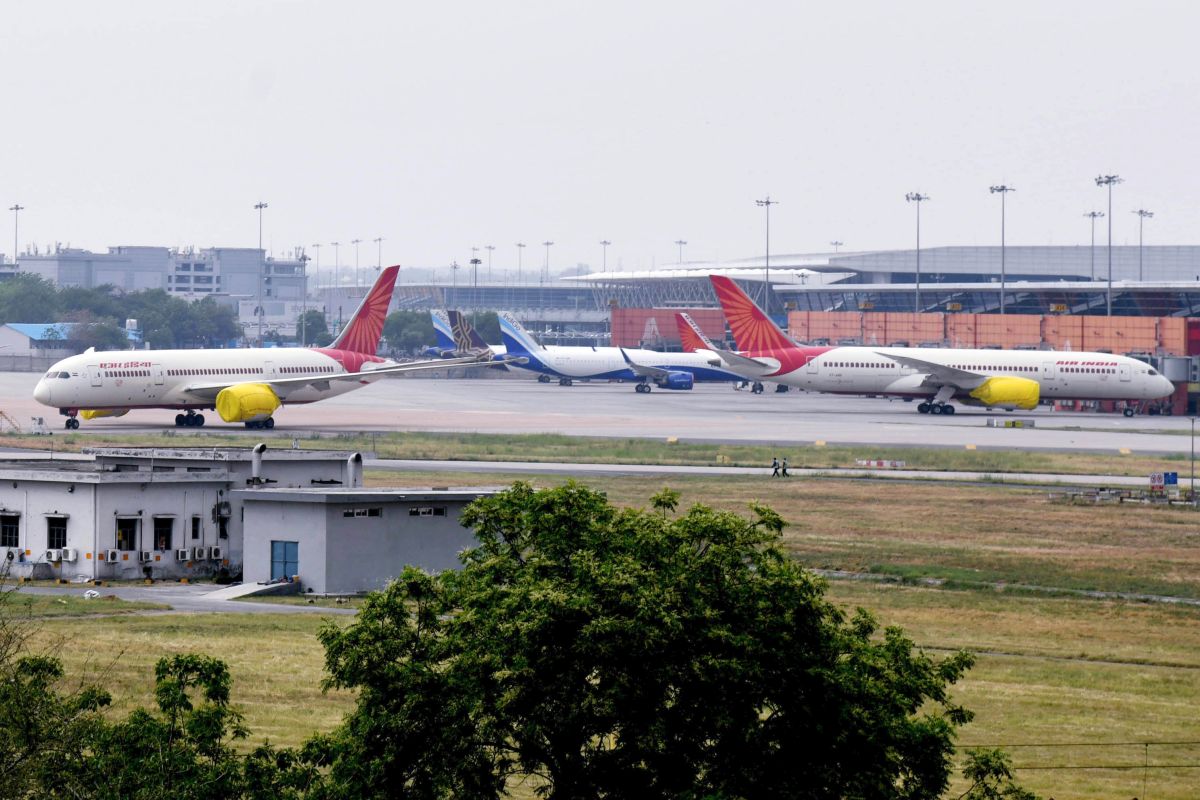
Market leaders exist across all sectors. While 61 per cent represents substantial dominance, no industry participant remains invincible.
Jet Airways once commanded significant market share before its collapse. When pursuing expansion strategies, commensurate groundwork becomes essential.
United Airlines and American Airlines confronted severe pilot shortages three years prior when they failed to anticipate that 25 per cent of their workforce would retire within five years. Such lapses lack credibility for established carriers.
Airlines calculate cost indices comprehensively. As fare-paying passengers, individuals might be surprised to learn their revenue contribution. Cargo carried below the passenger deck generates greater revenue than passenger fares themselves.
Consider e-commerce operations -- Amazon, Flipkart -- where do overnight deliveries originate? BlueDart alone cannot manage such volumes, nor can railways. This explains the progressive reduction in checked baggage allowances from 30 kilos to 25, then 20, then 15, now 12 kilos. We shall eventually reach the Southwest Airlines model -- no complimentary checked baggage whatsoever.
As fare-paying passengers, your revenue contribution remains minuscule. Flights operate with merely 10 or 12 passengers from 180-seat configurations while maintaining profitability. How? The payload below deck remains consistently full -- fewer passengers simply means increased cargo capacity.
IndiGo has presented projections to the civil aviation ministry suggesting operations will stabilise by February 19, 2026, following rule relaxations. Do you find this credible?
Their strategy appears straightforward -- reduce flight frequencies, compel increased crew availability, curtail leave entitlements. With a thousand-pilot pool, if 10 per cent have leave curtailed, you effectively create 100 additional available pilots.
Doesn't this directly compromise aviation safety?
This is precisely what nobody addresses. Would you board a bus knowing the driver hasn't slept for two or three consecutive nights, having rested merely two or three hours?
People mistakenly believe duty cessation immediately translates to restorative sleep. Human physiology doesn't function thus.
Consider attending a wedding until 2 am, then attempting normal Monday morning productivity at 7.30 am -- grogginess and diminished performance are inevitable.
When operating aircraft (under such conditions where pilot fatigue exist), lives hang in the balance. This fundamental reality escapes public understanding.
Pilot duty time violations, extensively documented and researched, demonstrate that operating under previous limitations significantly increases risk factors.
The general public remains uninformed that these modifications (earlier FDTL guidelines that gave more time to pilots to rest and overcome fatigue between flights, which, unfortunately, have now been withdrawn by the DGCA) enhance safety rather than creating operational inconvenience.
Are the new pilot rules the sole reason for cancellations, or do deeper issues exist -- crew shortages, internal mismanagement?
As I stated, one should undertake only what one can reasonably accomplish. IndiGo possesses sufficient financial resources to establish adequate pilot bench strength. What's lacking is willingness -- their strategic priorities favour aircraft acquisition and alternative expansion avenues.
Pilot recruitment ranks low on their priority hierarchy. Only when confronted with unavoidable circumstances do they act.
Can one anticipate robust regulatory action against IndiGo by DGCA, given discussions regarding arm-twisting?
That's precisely where the duopoly argument gains traction. Without alternatives, they (duopolies in any business including airlines operators) operate with impunity.
Historically, Air India exploited their market dominance similarly -- union statements dictated outcomes. IndiGo now replicates precisely what Air India once did.
So IndiGo represents the new Air India?
Yes, that constitutes the ground reality.
With elevated fares and unreliable service, is the low-cost model failing Indian passengers? What immediate changes would restore trust?
The low-cost model has succeeded globally -- Ryan Air, Tiger Airways Singapore, FlyDubai, Southwest Airlines in America. The substantial majority of fare-paying customers simply require transportation from Point A to Point B via the most expedient route.
Comfort remains their lowest priority. They willingly accept reduced seat comfort and restricted legroom, recognising savings of 10,000 or 20,000 rupees on international sectors versus full-service carriers.
This model has functioned effectively for two decades, particularly serving tier-two and tier-three cities where deep financial resources for full-service carriers don't exist universally.
Even IndiGo recognises they are forfeiting certain clientele, hence their introduction of the stretch model -- IndiGo Excel -- offering enhanced legroom in the initial four rows to accommodate passengers desiring additional comfort. This model will endure. However, low-cost carrier status cannot equate to compromised safety.
Safety remains paramount irrespective of carrier classification. Low-cost operations cannot justify low safety standards -- these principles cannot coexist.