
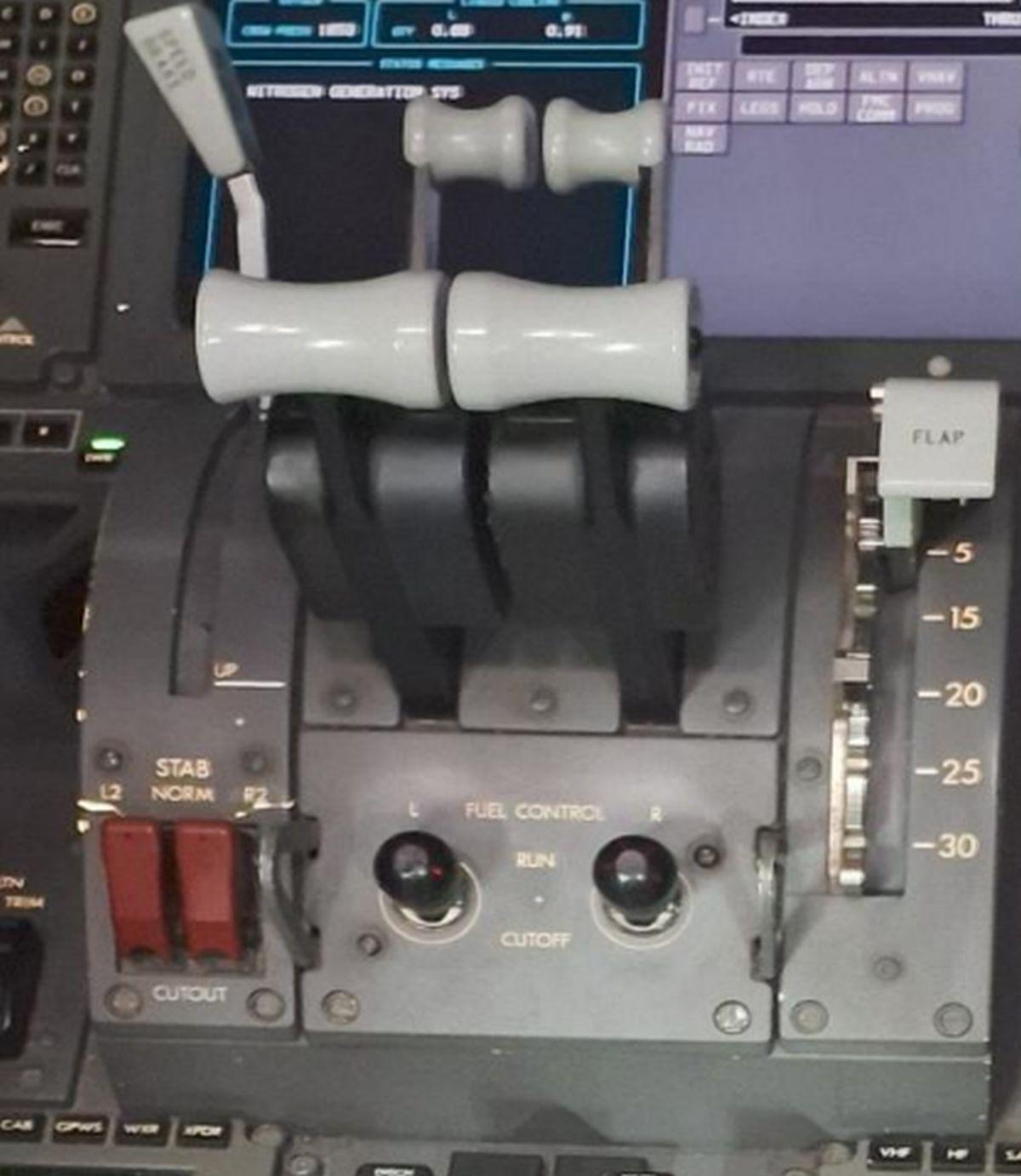
'...from the recovered part of the throttle quadrant -- the control panel that manages engine power -- it is hard to say at this stage if the locking mechanism was damaged in any way.'
From flying MiGs in the Indian Air Force to investigating fatal air crashes as part of India's first AAIB team, Captain Kishore Chinta has seen aviation from cockpit to crash site.
Now Chief Pilot at Sirius India Airlines, Captain Chinta adds important perspective to the AAIB's preliminary report on the tragic Ahmedabad crash that killed 260 people.
In the first part of this two-part interview with Prasanna D Zore/Rediff, he explains why this probe must go far deeper -- from microscopic and ultrasonic checks of the recovered throttle parts to rigorous analysis of the complex electronic webs that actually power modern jets.
With today's fly-by-wire systems, Captain Chinta says, even the throttle is merely a sensor feeding electronic brains. Disruptions anywhere -- from wiring fatigue to connector glitches -- cannot be dismissed.
He also highlights why identical fuel switch designs across Boeing fleets raise valid concerns, though any systemic lapses remain to be proven.
The AAIB's preliminary report points out that the fuel control switch design, including the locking feature, is the same part used across various Boeing aircraft, including the 737 that had earlier reported issues and the 787-8 that crashed in Ahmedabad on June 12.
Does this raise serious questions about how well Boeing managed cross-fleet risks, which the AAIB doesn't seem to fully explore?
As we speak, you can't really pinpoint that this was an aspect which was overlooked by Boeing or cross-fleet risk analysis. The design may be the same, but not necessarily that this similar fault would have happened on this particular aircraft across the 787 fleet.
The (Boeing 787) aircraft has been flying for eons now. Even a single instance like this would have definitely been flagged by one of the airline operators or the other.
But does that rule out the possibility? We cannot rule out any possibility. It is a possibility which needs to be investigated.
Based on the actual wreckage photographs, the fuel control switches do appear to be in the up, or 'on', position. Whether the investigators can determine from the recovered part of the throttle quadrant -- the control panel that manages engine power -- if the locking mechanism was damaged in any way is hard to say at this stage.
That will only be possible if the AAIB conducts a truly in-depth investigation, including microscopic and ultrasonic analyses of the throttle quadrant recovered from the crash site.
And this kind of analysis is mandatory for the AAIB to undertake before it submits its final report?
Absolutely. Absolutely.
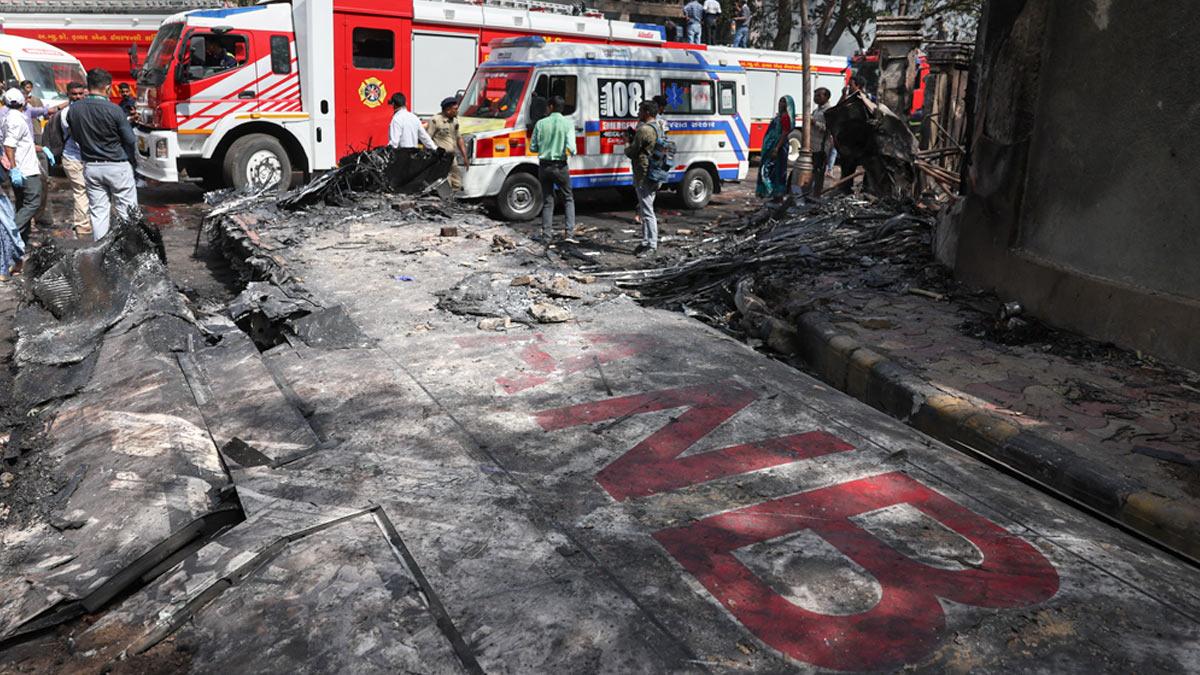
The maintenance records show that the throttle control module was replaced on the VT-ANB in 2019 and again in 2023, but for reasons not tied to the fuel control switches.
Do you believe the investigators should still have dug deeper before the release of final report to see if indirect factors like wiring harness, vibrations or connector fatigue could affect switch reliability?
Some experts are also saying that electrical glitches might have led to what happened.
These aspects will be looked into and have to be looked into by the AAIB and I'm sure they will do it by the book (and will find mention in the final report). Everything on a modern-day aircraft is electrical or electronic.
Even the throttle doesn't really physically move actually. It is just a sensor base.
No more is there any mechanical linkage of the throttle quadrant to any part of the engine. It's just that it physically moves. It gives sensory inputs to the electronic engine control (EEC -- computer that manages engine operations), which in turn gives electronic engine inputs to the FADEC (Full Authority Digital Engine Control -- the computerised engine management system), which will finally move the engines. And all these are electronic signals.
So if at any point of time there's a disruption, anything can happen. That's a possibility which cannot be ruled out in any modern day aircraft. The probability of such a disruption happening is checked at the manufacturing stage itself.
After the pilots moved the fuel control switches back to run, engine one partially recovered while engine two did not stabilise, says the AAIB's preliminary report.
At such low altitude, could this uneven power actually have made control even harder? Would you have liked to see the AAIB model these aerodynamic effects in more detail?
Even if one engine is producing some amount of thrust, vis-a-vis one not producing enough thrust, the Boeing 787 is equipped with something called thrust asymmetry control (TAC -- system that automatically compensates for unequal engine power). It's a fly-by-wire aircraft (aircraft controlled by electronic systems rather than direct mechanical controls). It really won't affect the control characteristics of the aircraft significantly.
If a fully powered single engine is working, you really don't have to do anything on the Boeing 787 to fly the airplane out all the way till 400 feet before you even touch the checklist.
There are no actions; there are no memory items (emergency procedures pilots must memorise) even till you hit 400 feet in case of a single engine failure.
So in this case, even with one engine partially running, it won't affect the control characteristics of the aircraft per se.
The report says that the RAT (Ram Air Turbine -- emergency power generator) worked as intended, yet the aircraft descended rapidly.
Shouldn't the preliminary report have included detailed diagrams or traces showing exactly which cockpit instruments and control surfaces continued to receive power and which lost power?
Not at the preliminary report stage. The preliminary report is only supposed to be a fact finding or data finding mission. It's supposed to paraphrase all the data which has been collected and put it down in a logical fashion without any inferences being made on probable causes in any way whatsoever.
At this stage, it is not the duty of the preliminary stage to elaborate on the workings of each system.